
Before Memmo my notes were scattered across PDFs. Now a workspace pulls everything into one place — I see exactly what's still left to study.
Has the revolution that led from the economy of the gift, characteristic of most precapitalist societies, to the economy of modern societies been accomplished in all spheres of life, as tacitly assumed by those who claim to apply the model of the profit-optimizing agent to every practice – to art, to education and even to marriage, seen as an exchange of economic services of production and reproduction? And is it totally accomplished even at the heart of the sphere most directly concerned with economic activity – the world of business?
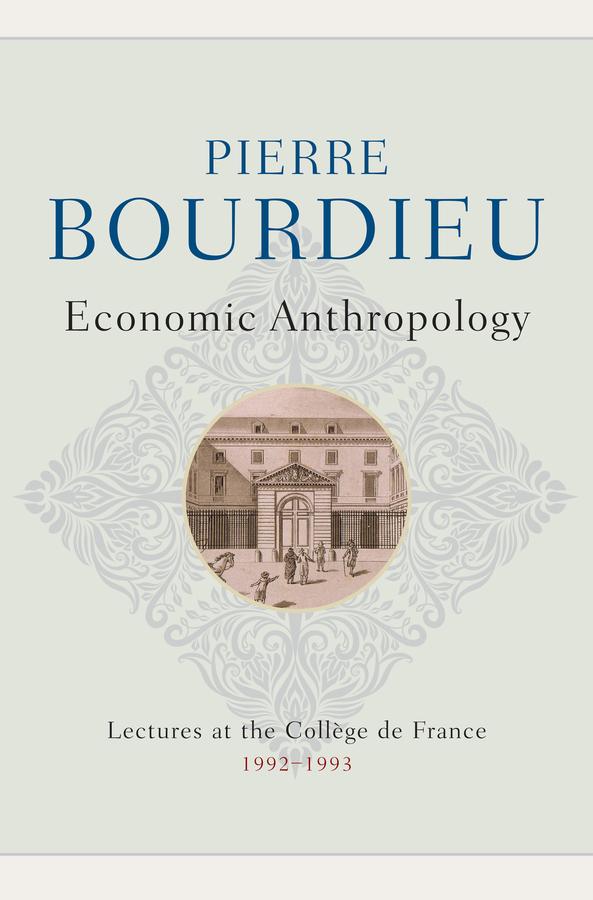
These and many other questions are absent from the dominant economic theories, which fail to take account of the economic and social conditions under which economic agents and their universe arise. In his lectures at the Collège de France in 1987-89, Pierre Bourdieu laid bare the assumptions of the imaginary anthropology that underlies economics in its dominant form and put forward an alternative view. He replaced the notion of a pure and perfect market with the notion of an economic field structured by the unequal distribution of different forms of capital and by relations of force and symbolic struggle. He replaced homo economicus – that sovereign individual with no qualities or qualifications other than a capacity for rational calculation – with an agent endowed with enduring dispositions, fashioned by social background and experience, both individual and collective. And thus, without having to appeal to a perfectly lucid calculating mind or to the logic of bounded rationality, he was able to account for the alignment of subjective expectations and objective opportunities that confers on the great majority of economic behaviour its 'reasonable' character.
Bourdieu's trenchant critique of dominant economic thought and his development of an alternative way of understanding economic activity, rooted in his notion of field and his theory of practice, will be of great interest to students and scholars in anthropology, sociology, economics and throughout the social sciences and humanities.
Before Memmo my notes were scattered across PDFs. Now a workspace pulls everything into one place — I see exactly what's still left to study.
Memmo's summaries are gold before exams. I don't have to re-read 800 pages two weeks before — just the important parts.
The AI chat has saved me the night before an exam more than once. I just keep asking until I get it — no waiting on a study group to reply.
The quizzes hit exactly what I need to know. Memmo tracks what I get stuck on — so I only practice what's worth it.
Flashcards with spaced repetition are magic. Memmo knows when I'm about to forget something and brings it back.
The AI podcasts are my favorite. I listen on my way to school and get a recap without sitting at a computer.

Handbok i kvalitativa metoder
281 kr

Hållbar utveckling: en introduktion för ingenjörer och andra problemlösare
334 kr

Brymans Samhällsvetenskapliga metoder
390 kr

Projektledning
491 kr

Den orättvisa hälsan: om socioekonomiska skillnader i hälsa och livslängd
326 kr

Organizational Leadership
429 kr

Vetenskapsteori för nybörjare
196 kr

På väg mot läraryrket
172 kr

Det sociala livet i skolan: Socialpsykologiska perspektiv
253 kr

Betygsättningens didaktik
151 kr

Personality
402 kr

Studying Leadership
404 kr

Managing Innovation
477 kr

Introduktion till samhällsvetenskaplig metod
347 kr

The Psychology of Sex and Gender
698 kr

Evidens och kunskap för socialt arbete
207 kr

Introduction to Leadership
605 kr