
Before Memmo my notes were scattered across PDFs. Now a workspace pulls everything into one place — I see exactly what's still left to study.
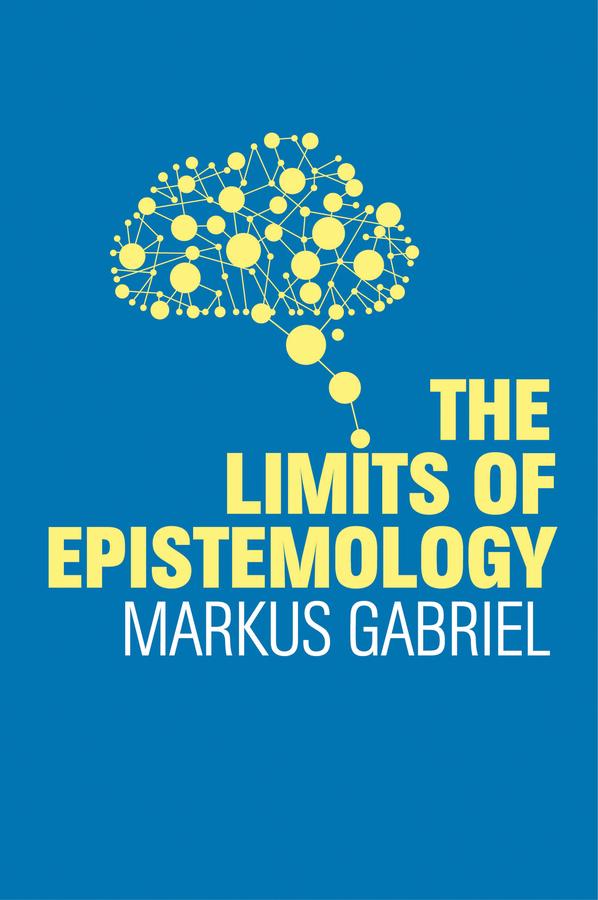
At the centre of modern epistemology lurks the problem of scepticism: how can we know that the forms of our cognition are compatible with the world? How can we state success conditions for knowledge claims without somehow transcending our discursive and fallible nature as knowers?
By distinguishing different forms of scepticism, Markus Gabriel shows how all objective knowledge relies on shared discourses and how the essential corrigibility of knowledge claims is a crucial condition of their objectivity. We should understand scepticism not so much as posing a threat, but as offering a vital lesson about the fallibility of discursive thinking. By heeding this lesson, we can begin to reintegrate the solipsistic subject of modern epistemology back into the community of actual knowers.
Taking his cue from Hegel, Wittgenstein and Brandom, Gabriel shows how intentionality as such is a public rather than a private phenomenon. He concedes that the sceptic can prove the necessary finitude of objective knowledge, but denies that this has to lead us into an aporia. Instead, it shows us the limits of the modern project of epistemology.
Through an examination of different kinds of sceptical paradoxes, Gabriel not only demonstrates their indispensable role within epistemological theorising, but also argues for the necessary failure of all totalizing knowledge claims. In this way, epistemology, as the discipline that claims knowledge about knowledge, begins to grasp its own fallibility and, as a result, the true nature of its objectivity.
The Limits of Epistemology will be of great value to students and scholars of philosophy.
Before Memmo my notes were scattered across PDFs. Now a workspace pulls everything into one place — I see exactly what's still left to study.
Memmo's summaries are gold before exams. I don't have to re-read 800 pages two weeks before — just the important parts.
The AI chat has saved me the night before an exam more than once. I just keep asking until I get it — no waiting on a study group to reply.
The quizzes hit exactly what I need to know. Memmo tracks what I get stuck on — so I only practice what's worth it.
Flashcards with spaced repetition are magic. Memmo knows when I'm about to forget something and brings it back.
The AI podcasts are my favorite. I listen on my way to school and get a recap without sitting at a computer.

Handbok i kvalitativa metoder
281 kr

Hållbar utveckling: en introduktion för ingenjörer och andra problemlösare
334 kr

Brymans Samhällsvetenskapliga metoder
390 kr

Projektledning
491 kr

Den orättvisa hälsan: om socioekonomiska skillnader i hälsa och livslängd
326 kr

Organizational Leadership
429 kr

Vetenskapsteori för nybörjare
196 kr

På väg mot läraryrket
172 kr

Det sociala livet i skolan: Socialpsykologiska perspektiv
253 kr

Betygsättningens didaktik
151 kr

Personality
402 kr

Studying Leadership
404 kr

Managing Innovation
477 kr

Introduktion till samhällsvetenskaplig metod
347 kr

The Psychology of Sex and Gender
698 kr

Evidens och kunskap för socialt arbete
207 kr

Introduction to Leadership
605 kr