
Before Memmo my notes were scattered across PDFs. Now a workspace pulls everything into one place — I see exactly what's still left to study.
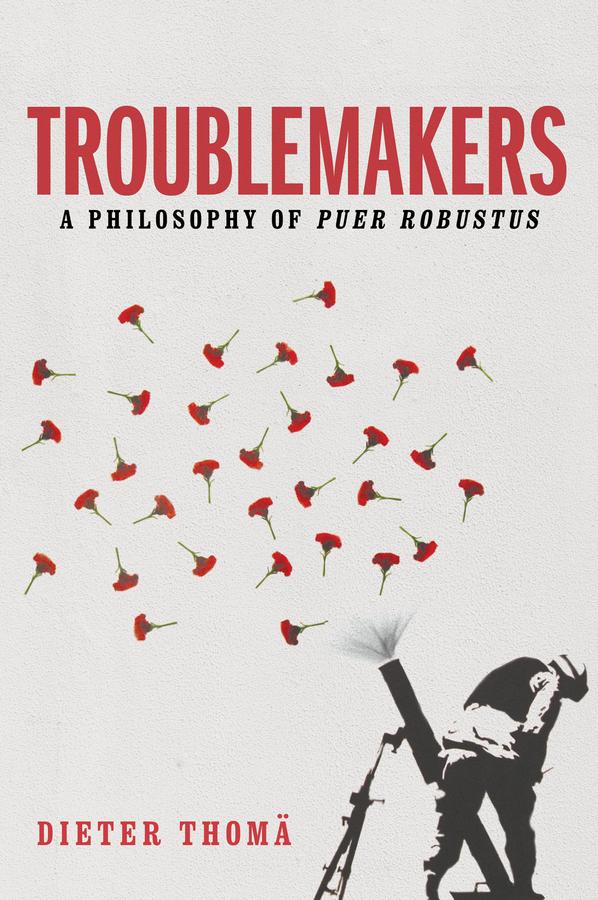
The political crises and upheavals of our age often originate from the periphery rather than the center of power. Figures like Edward Snowden, Julian Assange, and Chelsea Manning acted in ways that disrupted power, revealing truths that those in power wanted to keep hidden. They are thorns in the side of power, troublemakers in the eyes of the powerful, though their actions may be valuable and lead to positive changes.
In this important new book, Dieter Thomä examines the crucial but often overlooked function of these figures on the margins of society, developing a philosophy of troublemakers from the seventeenth century to the present day. Thomä takes as his starting point Hobbes’s idea of the puer robustus (literally “stout boy”), meaning a figure who rebels against order and authority. While Hobbes saw the puer robustus as a threat, he also recognized the potential, in the right conditions, for figures to rise up and become agents of positive change. Building on this notion, Thomä provides a rich survey of intellectuals who have been inspired by this idea over the past 300 years, from Rousseau, Diderot, Schiller, Victor Hugo, Marx, and Freud to Carl Schmitt, Leo Strauss, and Horkheimer, right up to the recent work of Badiou and Agamben. In doing so, he develops a typology of the puer robustus and a means by which we can evaluate and assess the troublemakers of our own times.
Thomä shows that troublemakers are an inescapable part of modernity, for as soon as social and political boundaries are defined, there will always be figures challenging them from the margins. This book will be of great interest not only to students and scholars in the humanities and social sciences but to anyone seeking to understand the crucial impact of these liminal figures on our world today.
Before Memmo my notes were scattered across PDFs. Now a workspace pulls everything into one place — I see exactly what's still left to study.
Memmo's summaries are gold before exams. I don't have to re-read 800 pages two weeks before — just the important parts.
The AI chat has saved me the night before an exam more than once. I just keep asking until I get it — no waiting on a study group to reply.
The quizzes hit exactly what I need to know. Memmo tracks what I get stuck on — so I only practice what's worth it.
Flashcards with spaced repetition are magic. Memmo knows when I'm about to forget something and brings it back.
The AI podcasts are my favorite. I listen on my way to school and get a recap without sitting at a computer.

Handbok i kvalitativa metoder
281 kr

Hållbar utveckling: en introduktion för ingenjörer och andra problemlösare
334 kr

Brymans Samhällsvetenskapliga metoder
390 kr

Projektledning
491 kr

Den orättvisa hälsan: om socioekonomiska skillnader i hälsa och livslängd
326 kr

Organizational Leadership
429 kr

Vetenskapsteori för nybörjare
196 kr

På väg mot läraryrket
172 kr

Det sociala livet i skolan: Socialpsykologiska perspektiv
253 kr

Betygsättningens didaktik
151 kr

Personality
402 kr

Studying Leadership
404 kr

Managing Innovation
477 kr

Introduktion till samhällsvetenskaplig metod
347 kr

The Psychology of Sex and Gender
698 kr

Evidens och kunskap för socialt arbete
207 kr

Introduction to Leadership
605 kr