
Before Memmo my notes were scattered across PDFs. Now a workspace pulls everything into one place — I see exactly what's still left to study.
Until quite recently, almost no philosophers trained in the continental tradition saw anything of value in realism. The situation in analytic philosophy was always different, but in continental philosophy realism was usually treated as a pseudo-problem. That is no longer the case.
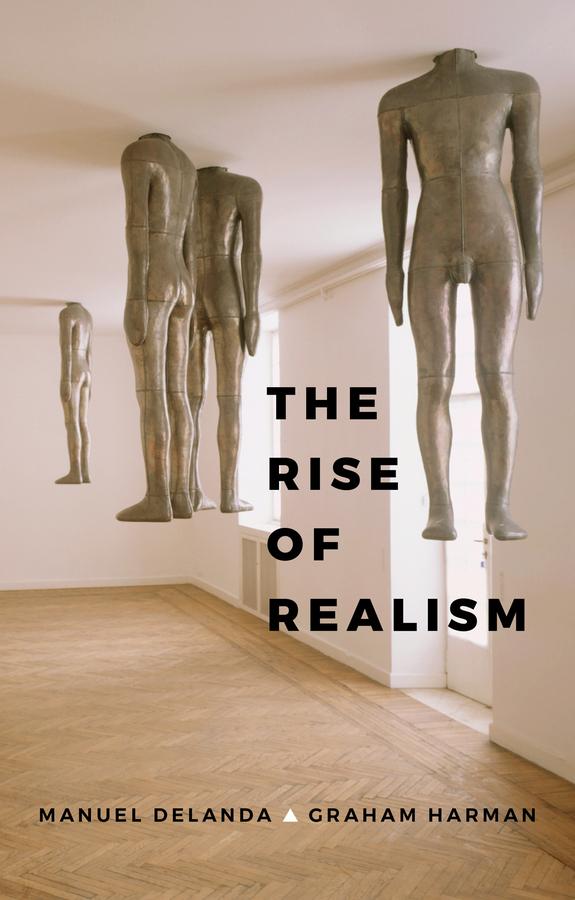
In this provocative new book, two leading philosophers examine the remarkable rise of realism in the continental tradition. While exploring the similarities and differences in their own positions, they also consider the work of others and assess rival trends in contemporary philosophy. They begin by discussing the relation between realism and materialism, which DeLanda links closely but which Harman tries to separate. Part Two covers the many different meanings of realism, with the two authors working together to develop an expanded definition of the term. Part Three features a spirited exchange on the respective virtues and drawbacks of DeLanda's realism of attractors and singularities and Harman's object-oriented theory. Part Four shifts to the question of the knowability of the real, as the authors discuss whether scientific knowledge does full justice to reality. In Part Five, they shift the focus to space, time, and science more generally, and here Harman offers a defence of actor-network theory despite its obvious anti-realist elements.
Lively, accessible and engaging, this book is the best attempt so far to clarify the different paths for realism in continental philosophy. It will be of great value to students and scholars of continental philosophy and to anyone interested in the cutting-edge debates in philosophy and critical theory today.
Before Memmo my notes were scattered across PDFs. Now a workspace pulls everything into one place — I see exactly what's still left to study.
Memmo's summaries are gold before exams. I don't have to re-read 800 pages two weeks before — just the important parts.
The AI chat has saved me the night before an exam more than once. I just keep asking until I get it — no waiting on a study group to reply.
The quizzes hit exactly what I need to know. Memmo tracks what I get stuck on — so I only practice what's worth it.
Flashcards with spaced repetition are magic. Memmo knows when I'm about to forget something and brings it back.
The AI podcasts are my favorite. I listen on my way to school and get a recap without sitting at a computer.

Handbok i kvalitativa metoder
281 kr

Hållbar utveckling: en introduktion för ingenjörer och andra problemlösare
334 kr

Brymans Samhällsvetenskapliga metoder
390 kr

Projektledning
491 kr

Den orättvisa hälsan: om socioekonomiska skillnader i hälsa och livslängd
326 kr

Vetenskapsteori för nybörjare
196 kr

Organizational Leadership
429 kr

På väg mot läraryrket
172 kr

Det sociala livet i skolan: Socialpsykologiska perspektiv
253 kr

Betygsättningens didaktik
151 kr

Personality
402 kr

Studying Leadership
404 kr

Managing Innovation
477 kr

Introduktion till samhällsvetenskaplig metod
347 kr

The Psychology of Sex and Gender
698 kr

Evidens och kunskap för socialt arbete
207 kr

Introduction to Leadership
605 kr