
Before Memmo my notes were scattered across PDFs. Now a workspace pulls everything into one place — I see exactly what's still left to study.
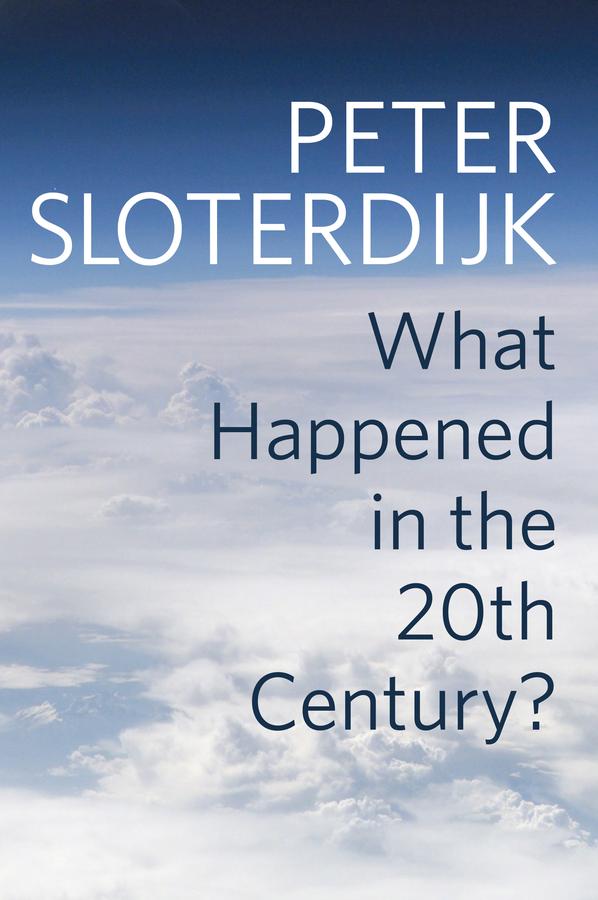
When we look back from the vantage point of the 21st century and ask ourselves what the previous century was all about, what do we see? Our first inclination is to focus on historical events: the 20th century was the age of two devastating world wars, of totalitarian regimes and terrible atrocities like the Holocaust – “the age of extremes,” to use Hobsbawm’s famous phrase. But in this new book, the philosopher Peter Sloterdijk argues that we will never understand the 20th century if we focus on events and ideologies. Rather, in his view, the predominant motif of the 20th century is what Badiou called a passion for the real, which manifests itself as the will to actualize the truth directly in the here and now.
Drawing on his Spheres trilogy, Sloterdijk interprets the actualization of the real in the 20th century as a passion for economic and technological “antigravitation”. The rise of consumerism and the easing of the burdens of human life by the constant deployment of new technologies have killed off the kind of radicalism that was rooted in the belief that power would rise from a material base of production. If the 20th century can still inspire us today, it is because the fundamental shift that it brought about opened the way for a critique of extremist reason, a post-Marxist theory of enrichment and a general economy of energy resources based on excess and dissipation.
While developing his highly original interpretation of the 20th century, Sloterdijk also addresses a series of related topics including the meaning of the Anthropocene, the domestication of humans and the significance of the sea. The volume also includes major new pieces on Derrida and on Heidegger’s politics. This work, by one of the most original thinkers today will appeal to students and scholars across the humanities and social sciences, as well as anyone interested in philosophy and critical theory.
Before Memmo my notes were scattered across PDFs. Now a workspace pulls everything into one place — I see exactly what's still left to study.
Memmo's summaries are gold before exams. I don't have to re-read 800 pages two weeks before — just the important parts.
The AI chat has saved me the night before an exam more than once. I just keep asking until I get it — no waiting on a study group to reply.
The quizzes hit exactly what I need to know. Memmo tracks what I get stuck on — so I only practice what's worth it.
Flashcards with spaced repetition are magic. Memmo knows when I'm about to forget something and brings it back.
The AI podcasts are my favorite. I listen on my way to school and get a recap without sitting at a computer.

Handbok i kvalitativa metoder
281 kr

Hållbar utveckling: en introduktion för ingenjörer och andra problemlösare
334 kr

Brymans Samhällsvetenskapliga metoder
390 kr

Projektledning
491 kr

Den orättvisa hälsan: om socioekonomiska skillnader i hälsa och livslängd
326 kr

Organizational Leadership
429 kr

Vetenskapsteori för nybörjare
196 kr

På väg mot läraryrket
172 kr

Det sociala livet i skolan: Socialpsykologiska perspektiv
253 kr

Betygsättningens didaktik
151 kr

Personality
402 kr

Studying Leadership
404 kr

Managing Innovation
477 kr

Introduktion till samhällsvetenskaplig metod
347 kr

The Psychology of Sex and Gender
698 kr

Evidens och kunskap för socialt arbete
207 kr

Introduction to Leadership
605 kr