
Before Memmo my notes were scattered across PDFs. Now a workspace pulls everything into one place — I see exactly what's still left to study.
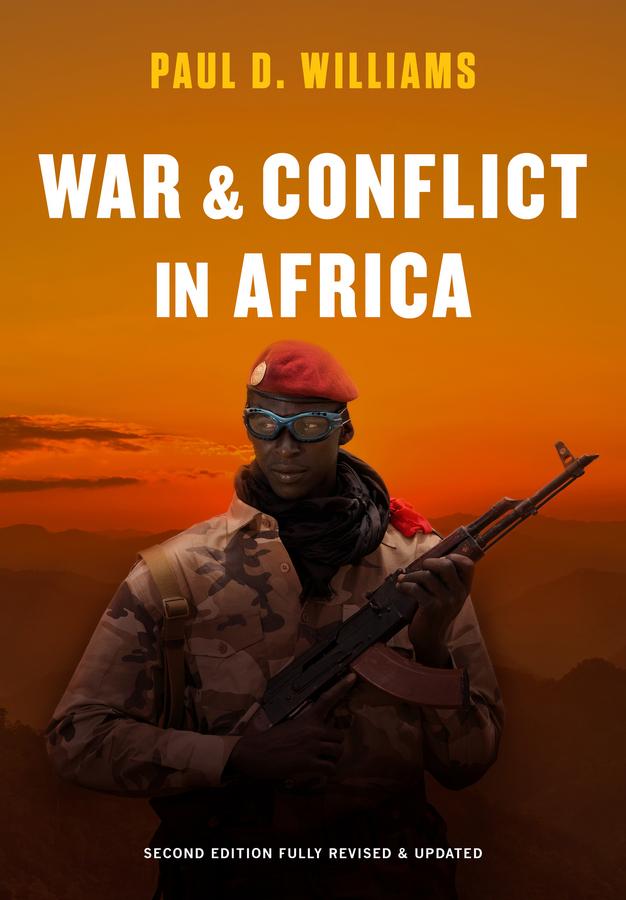
After the Cold War, Africa earned the dubious distinction of being the world's most bloody continent. But how can we explain this proliferation of armed conflicts? What caused them and what were their main characteristics? And what did the world's governments do to stop them?
In this fully revised and updated second edition of his popular text, Paul Williams offers an in-depth and wide-ranging assessment of more than six hundred armed conflicts which took place in Africa from 1990 to the present day - from the continental catastrophe in the Great Lakes region to the sprawling conflicts across the Sahel and the web of wars in the Horn of Africa. Taking a broad comparative approach to examine the political contexts in which these wars occurred, he explores the major patterns of organized violence, the key ingredients that provoked them and the major international responses undertaken to deliver lasting peace.
Part I, Contexts provides an overview of the most important attempts to measure the number, scale and location of Africa's armed conflicts and provides a conceptual and political sketch of the terrain of struggle upon which these wars were waged.
Part II, Ingredients analyses the role of five widely debated features of Africa's wars: the dynamics of neopatrimonial systems of governance; the construction and manipulation of ethnic identities; questions of sovereignty and self-determination; as well as the impact of natural resources and religion.
Part III, Responses, discusses four major international reactions to Africa's wars: attempts to build a new institutional architecture to help promote peace and security on the continent; this architecture's two main policy instruments, peacemaking initiatives and peace operations; and efforts to develop the continent.
War and Conflict in Africa will be essential reading for all students of international peace and security studies as well as Africa's international relations.
Before Memmo my notes were scattered across PDFs. Now a workspace pulls everything into one place — I see exactly what's still left to study.
Memmo's summaries are gold before exams. I don't have to re-read 800 pages two weeks before — just the important parts.
The AI chat has saved me the night before an exam more than once. I just keep asking until I get it — no waiting on a study group to reply.
The quizzes hit exactly what I need to know. Memmo tracks what I get stuck on — so I only practice what's worth it.
Flashcards with spaced repetition are magic. Memmo knows when I'm about to forget something and brings it back.
The AI podcasts are my favorite. I listen on my way to school and get a recap without sitting at a computer.

Handbok i kvalitativa metoder
281 kr

Hållbar utveckling: en introduktion för ingenjörer och andra problemlösare
334 kr

Brymans Samhällsvetenskapliga metoder
390 kr

Projektledning
491 kr

Den orättvisa hälsan: om socioekonomiska skillnader i hälsa och livslängd
326 kr

Vetenskapsteori för nybörjare
196 kr

Organizational Leadership
429 kr

På väg mot läraryrket
172 kr

Det sociala livet i skolan: Socialpsykologiska perspektiv
253 kr

Betygsättningens didaktik
151 kr

Personality
402 kr

Studying Leadership
404 kr

Managing Innovation
477 kr

Introduktion till samhällsvetenskaplig metod
347 kr

The Psychology of Sex and Gender
698 kr

Evidens och kunskap för socialt arbete
207 kr

Introduction to Leadership
605 kr