
Before Memmo my notes were scattered across PDFs. Now a workspace pulls everything into one place — I see exactly what's still left to study.
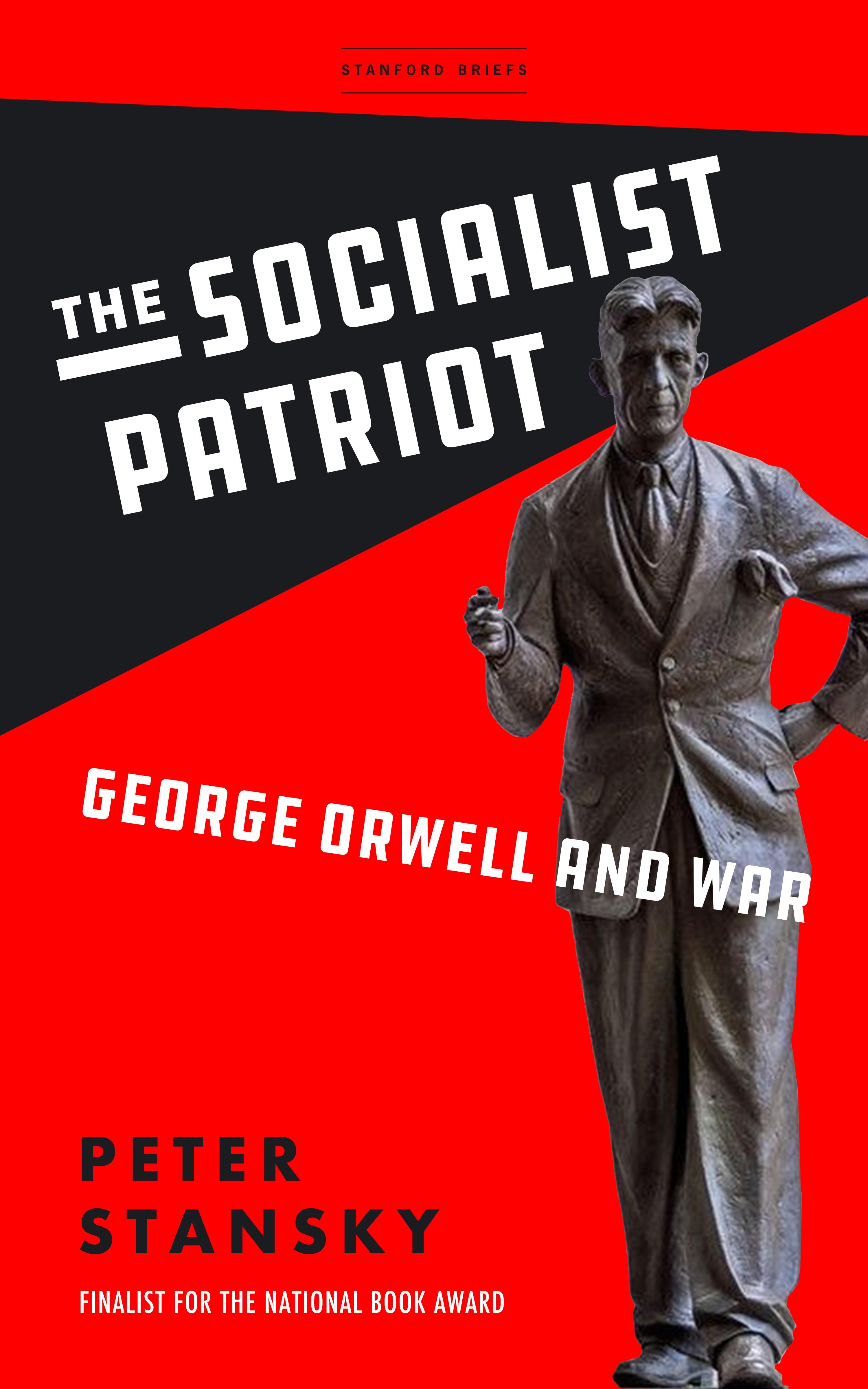
An incisive demonstration of how Orwell's body of work was defined by the four major conflicts that punctuated his life: World War I, the Spanish Civil War, World War II, and the Cold War.
Few English writers wielded a pen so sharply as George Orwell, the quintessential political writer of the twentieth century. His literary output at once responded to and sought to influence the tumultuous times in which he lived—decades during which Europe and eventually the entire world would be torn apart by war, while ideologies like fascism, socialism, and communism changed the stakes of global politics. In this study, Stanford historian and lifelong Orwell scholar Peter Stansky incisively demonstrates how Orwell's body of work was defined by the four major conflicts that punctuated his life: World War I, the Spanish Civil War, World War II, and the Cold War.
Young Orwell came of age against the backdrop of the First World War, and published his final book, Nineteen Eighty-Four, nearly half a century later, at the outset of the Cold War. The intervening three decades of Orwell's life were marked by radical shifts in his personal politics: briefly a staunch pacifist, he was finally a fully committed socialist following his involvement in the Spanish Civil War. But just before the outbreak of World War II, he had adopted a strong anti-pacifist position, stating that to be a pacifist was equivalent to being pro-Fascist.
By carefully combing through Orwell's published works, notably "My Country Right or Left," The Lion and the Unicorn, Animal Farm, and his most dystopian and prescient novel Nineteen Eighty-Four, Stansky teases apart Orwell's often paradoxical views on patriotism and socialism. The Socialist Patriot is ultimately an attempt to reconcile the apparent contradictions between Orwell's commitment to socialist ideals and his sharp critique of totalitarianism by demonstrating the centrality of his wartime experiences, giving twenty-first century readers greater insight into the inner world of one of the most influential writers of the modern age.
Before Memmo my notes were scattered across PDFs. Now a workspace pulls everything into one place — I see exactly what's still left to study.
Memmo's summaries are gold before exams. I don't have to re-read 800 pages two weeks before — just the important parts.
The AI chat has saved me the night before an exam more than once. I just keep asking until I get it — no waiting on a study group to reply.
The quizzes hit exactly what I need to know. Memmo tracks what I get stuck on — so I only practice what's worth it.
Flashcards with spaced repetition are magic. Memmo knows when I'm about to forget something and brings it back.
The AI podcasts are my favorite. I listen on my way to school and get a recap without sitting at a computer.

Handbok i kvalitativa metoder
281 kr

Hållbar utveckling: en introduktion för ingenjörer och andra problemlösare
334 kr

Brymans Samhällsvetenskapliga metoder
390 kr

Projektledning
491 kr

Den orättvisa hälsan: om socioekonomiska skillnader i hälsa och livslängd
326 kr

Vetenskapsteori för nybörjare
196 kr

Organizational Leadership
429 kr

På väg mot läraryrket
172 kr

Det sociala livet i skolan: Socialpsykologiska perspektiv
253 kr

Betygsättningens didaktik
151 kr

Personality
402 kr

Studying Leadership
404 kr

Managing Innovation
477 kr

Introduktion till samhällsvetenskaplig metod
347 kr

The Psychology of Sex and Gender
698 kr

Evidens och kunskap för socialt arbete
207 kr

Introduction to Leadership
605 kr