
Before Memmo my notes were scattered across PDFs. Now a workspace pulls everything into one place — I see exactly what's still left to study.
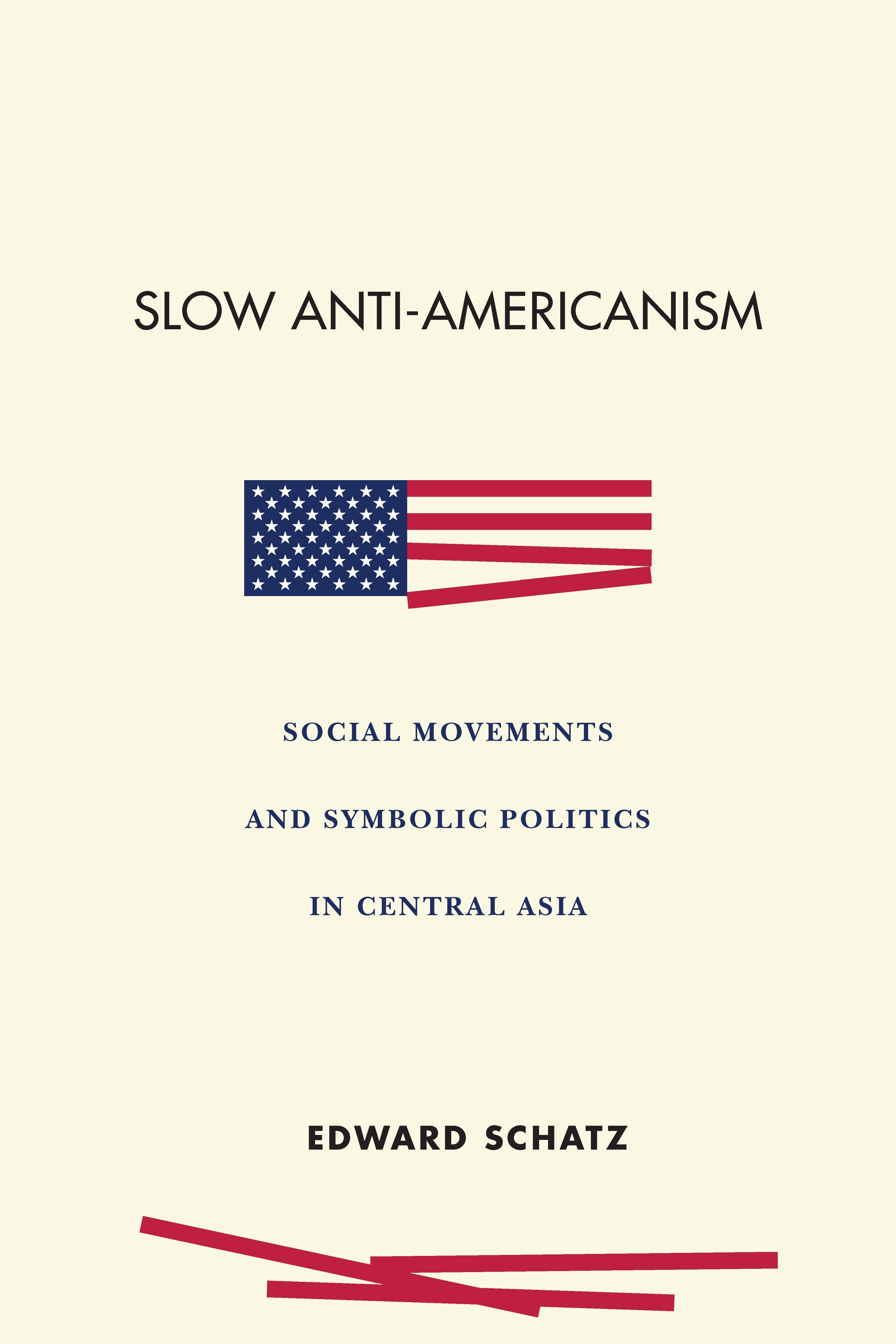
Negative views of the United States abound, but we know too little about how such views affect politics. Drawing on careful research on post-Soviet Central Asia, Edward Schatz argues that anti-Americanism is best seen not as a rising tide that swamps or as a conflagration that overwhelms. Rather, "America" is a symbolic resource that resides quietly in the mundane but always has potential value for social and political mobilizers. Using a wide range of evidence and a novel analytic framework, Schatz considers how Islamist movements, human rights activists, and labor mobilizers across Central Asia avail themselves of this fact, thus changing their ability to pursue their respective agendas. By refocusing our analytic gaze away from high politics, he affords us a clearer view of the slower-moving, partially occluded, and socially embedded processes that ground how "America" becomes political. In turn, we gain a nuanced appreciation of the downstream effects of US foreign policy choices and a sober sense of the challenges posed by the politics of traveling images.
Most treatments of anti-Americanism focus on politics in the realm of presidential elections and foreign policies. By focusing instead on symbols, Schatz lays bare how changing public attitudes shift social relations in politically significant ways, and considers how changing symbolic depictions of the United States recombine the raw material available for social mobilizers. Just like sediment traveling along waterways before reaching its final destination, the raw material that constitutes symbolic America can travel among various social groups, and can settle into place to form the basis of new social meanings. Symbolic America, Schatz shows us, matters for politics in Central Asia and beyond.
Before Memmo my notes were scattered across PDFs. Now a workspace pulls everything into one place — I see exactly what's still left to study.
Memmo's summaries are gold before exams. I don't have to re-read 800 pages two weeks before — just the important parts.
The AI chat has saved me the night before an exam more than once. I just keep asking until I get it — no waiting on a study group to reply.
The quizzes hit exactly what I need to know. Memmo tracks what I get stuck on — so I only practice what's worth it.
Flashcards with spaced repetition are magic. Memmo knows when I'm about to forget something and brings it back.
The AI podcasts are my favorite. I listen on my way to school and get a recap without sitting at a computer.

Handbok i kvalitativa metoder
281 kr

Hållbar utveckling: en introduktion för ingenjörer och andra problemlösare
334 kr

Brymans Samhällsvetenskapliga metoder
390 kr

Projektledning
491 kr

Den orättvisa hälsan: om socioekonomiska skillnader i hälsa och livslängd
326 kr

Vetenskapsteori för nybörjare
196 kr

Organizational Leadership
429 kr

På väg mot läraryrket
172 kr

Det sociala livet i skolan: Socialpsykologiska perspektiv
253 kr

Betygsättningens didaktik
151 kr

Personality
402 kr

Studying Leadership
404 kr

Managing Innovation
477 kr

Introduktion till samhällsvetenskaplig metod
347 kr

The Psychology of Sex and Gender
698 kr

Evidens och kunskap för socialt arbete
207 kr

Introduction to Leadership
605 kr