
Before Memmo my notes were scattered across PDFs. Now a workspace pulls everything into one place — I see exactly what's still left to study.
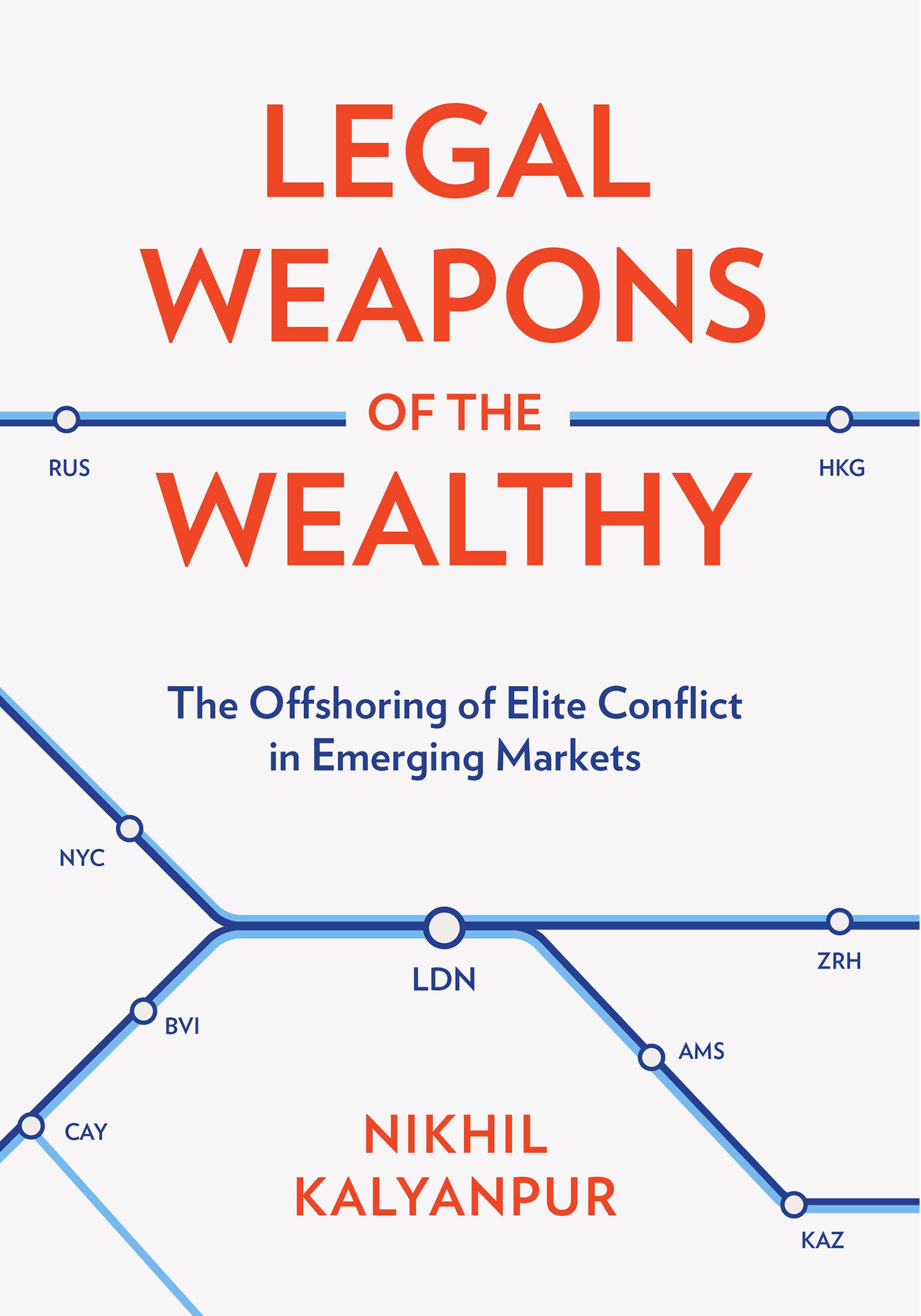
In Legal Weapons of the Wealthy, Nikhil Kalyanpur examines a striking feature of today's global legal order: the use of foreign courts by elites to settle domestic disputes.
On the surface, the "outsourcing" of disputes by elites from countries with fragile judiciaries looks like a search for fair treatment unavailable at home. Yet extraterritorial dispute resolution varies across such countries. Russian plutocrats, for instance, frequently litigate abroad, whereas Chinese and South African ones rarely do.
Kalyanpur argues that the pursuit of extraterritorial litigation depends on the balance of power between a state and its plutocracy. In contexts of state capture or state control, the transparency costs associated with transnational law deter plutocrats from seeking resolution abroad. But when the state and the plutocracy have relatively equal power, competing interests can lead to political clashes, with different actors asserting themselves. "Losers" of these clashes, locked out of their institutions, now have less to lose from those transparency costs and so seek resolution abroad. As these elites often escape with much of their wealth abroad, "winners" respond by weaponizing transnational legal institutions to seize rivals' offshore assets and ensure defeated rivals stay defeated.
Through cases from Russia and elsewhere, Kalyanpur unravels the connections between offshore finance, transnational litigation, and intra-elite warfare. He exposes how liberal courts serve as arenas for emerging market power struggles, globalizing conflicts begun at home. As billionaires continue amassing unprecedented power across democracies and autocracies alike, Legal Weapons of the Wealthy lays out how the architects of the liberal economic order defeated themselves by enabling rule by the rich.
Before Memmo my notes were scattered across PDFs. Now a workspace pulls everything into one place — I see exactly what's still left to study.
Memmo's summaries are gold before exams. I don't have to re-read 800 pages two weeks before — just the important parts.
The AI chat has saved me the night before an exam more than once. I just keep asking until I get it — no waiting on a study group to reply.
The quizzes hit exactly what I need to know. Memmo tracks what I get stuck on — so I only practice what's worth it.
Flashcards with spaced repetition are magic. Memmo knows when I'm about to forget something and brings it back.
The AI podcasts are my favorite. I listen on my way to school and get a recap without sitting at a computer.

Handbok i kvalitativa metoder
281 kr

Hållbar utveckling: en introduktion för ingenjörer och andra problemlösare
334 kr

Brymans Samhällsvetenskapliga metoder
390 kr

Projektledning
491 kr

Den orättvisa hälsan: om socioekonomiska skillnader i hälsa och livslängd
326 kr

Vetenskapsteori för nybörjare
196 kr

Organizational Leadership
429 kr

På väg mot läraryrket
172 kr

Det sociala livet i skolan: Socialpsykologiska perspektiv
253 kr

Betygsättningens didaktik
151 kr

Personality
402 kr

Studying Leadership
404 kr

Managing Innovation
477 kr

Introduktion till samhällsvetenskaplig metod
347 kr

The Psychology of Sex and Gender
698 kr

Evidens och kunskap för socialt arbete
207 kr

Introduction to Leadership
605 kr