
Before Memmo my notes were scattered across PDFs. Now a workspace pulls everything into one place — I see exactly what's still left to study.
Cowinner of the APSA Conflict Processes Section Book Award
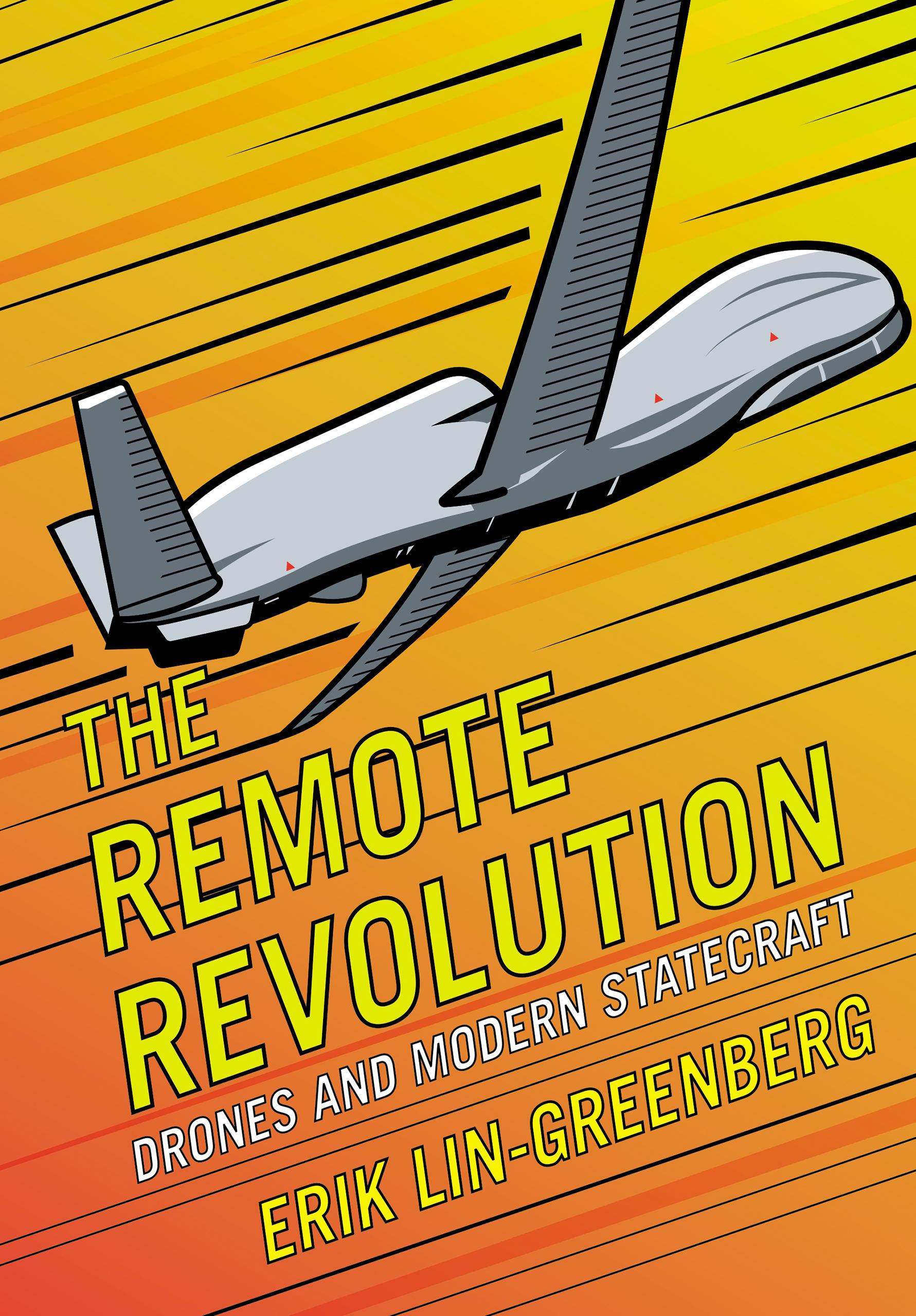
In The Remote Revolution Erik Lin-Greenberg shows that drones are rewriting the rules of international security—but not in ways one would expect.
Emerging technologies like drones are often believed to increase the likelihood of crises and war. By lowering the potential risks and human costs of military operations, they encourage decision-makers to deploy military force. Yet as Lin-Greenberg contends, operations involving drones are in fact less likely to evolve into broader, more intense conflicts than similar operations involving traditionally crewed assets. Even as drones increase the frequency of conflict, the decreased costs of their operations reduces the likelihood of conflict escalation.
Leveraging diverse types of evidence from original wargames, survey experiments, and cases of US and Israeli drone operations, Lin-Greenberg explores how drone operations lower risks of escalation. First, they enable states to gather more or better intelligence that may avert or reduce the chances of high-stakes conflict. Second, drone attacks are less likely to affront a target state's honor and therefore less likely to provoke aggressive responses. Lastly, leaders are less likely to take escalatory actions when drones are attacked than they are with incidents involving inhabited assets.
Lin-Greenberg's findings prove conclusively that drones are far less destabilizing than commonly argued. Drones add rungs to the proverbial "escalation ladder" and, in doing so, have brought about a fundamental change—a revolution—in the character of statecraft. With the use of unmanned technologies only set to grow in coming times, The Remote Revolution is critical reading about their possibilities and politics.
Before Memmo my notes were scattered across PDFs. Now a workspace pulls everything into one place — I see exactly what's still left to study.
Memmo's summaries are gold before exams. I don't have to re-read 800 pages two weeks before — just the important parts.
The AI chat has saved me the night before an exam more than once. I just keep asking until I get it — no waiting on a study group to reply.
The quizzes hit exactly what I need to know. Memmo tracks what I get stuck on — so I only practice what's worth it.
Flashcards with spaced repetition are magic. Memmo knows when I'm about to forget something and brings it back.
The AI podcasts are my favorite. I listen on my way to school and get a recap without sitting at a computer.

Handbok i kvalitativa metoder
281 kr

Hållbar utveckling: en introduktion för ingenjörer och andra problemlösare
334 kr

Brymans Samhällsvetenskapliga metoder
390 kr

Projektledning
491 kr

Den orättvisa hälsan: om socioekonomiska skillnader i hälsa och livslängd
326 kr

Vetenskapsteori för nybörjare
196 kr

Organizational Leadership
429 kr

På väg mot läraryrket
172 kr

Det sociala livet i skolan: Socialpsykologiska perspektiv
253 kr

Betygsättningens didaktik
151 kr

Personality
402 kr

Studying Leadership
404 kr

Managing Innovation
477 kr

Introduktion till samhällsvetenskaplig metod
347 kr

The Psychology of Sex and Gender
698 kr

Evidens och kunskap för socialt arbete
207 kr

Introduction to Leadership
605 kr