
Before Memmo my notes were scattered across PDFs. Now a workspace pulls everything into one place — I see exactly what's still left to study.
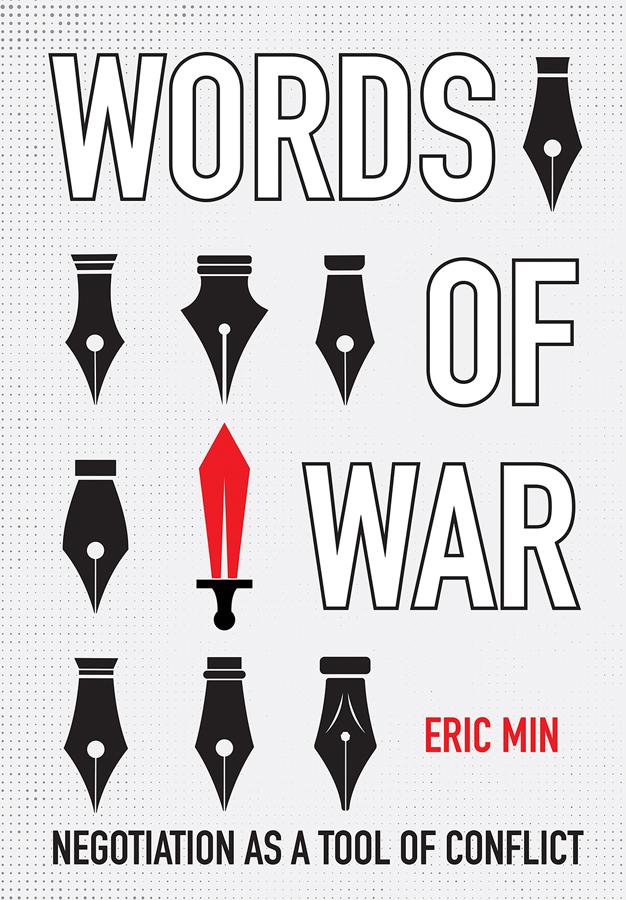
In Words of War, Eric Min pulls back the curtain on when, why, and how belligerents negotiate while fighting.
Of all interstate conflicts across the last two centuries, two-thirds have ended through negotiated agreement. Wartime diplomacy is thus commonly seen as a costless and mechanical process solely designed to end fighting. But as Min argues, that wartime negotiations are not just peacemaking tools. They are in fact a highly strategic activity that can also help states manage, fight, and potentially win wars.
To demonstrate that wartime talk does more than simply end hostilities, Min distinguishes between two kinds of negotiations: sincere and insincere. Whereas sincere negotiations are good faithhonest attempts to reach peace, insincere negotiations exploit diplomacy for some other purpose, such as currying gaining political support or remobilizing forces. Two factors determine whether and how belligerents will negotiate: the amount of pressure that outside parties can place on belligerents them to engage in diplomacy, and information obtained from fighting on the battlefield.
Combining statistical and computational text analyses with qualitative case studies ranging from the War of the Roman Republic to the Korean War, Min shows that negotiations are more likely to occur with strong external pressures. A combination of such pressures and indeterminate battlefield activity, however, will most likely leads to insincere negotiations that may stoke fighting rather than end it. By revealing that diplomacy can sometimes be counterproductive to peace, Words of War compels us to rethink the assumption that it "cannot hurt" to promote diplomacy during war.
Before Memmo my notes were scattered across PDFs. Now a workspace pulls everything into one place — I see exactly what's still left to study.
Memmo's summaries are gold before exams. I don't have to re-read 800 pages two weeks before — just the important parts.
The AI chat has saved me the night before an exam more than once. I just keep asking until I get it — no waiting on a study group to reply.
The quizzes hit exactly what I need to know. Memmo tracks what I get stuck on — so I only practice what's worth it.
Flashcards with spaced repetition are magic. Memmo knows when I'm about to forget something and brings it back.
The AI podcasts are my favorite. I listen on my way to school and get a recap without sitting at a computer.

Handbok i kvalitativa metoder
281 kr

Hållbar utveckling: en introduktion för ingenjörer och andra problemlösare
334 kr

Brymans Samhällsvetenskapliga metoder
390 kr

Projektledning
491 kr

Den orättvisa hälsan: om socioekonomiska skillnader i hälsa och livslängd
326 kr

Vetenskapsteori för nybörjare
196 kr

Organizational Leadership
429 kr

På väg mot läraryrket
172 kr

Det sociala livet i skolan: Socialpsykologiska perspektiv
253 kr

Betygsättningens didaktik
151 kr

Personality
402 kr

Studying Leadership
404 kr

Managing Innovation
477 kr

Introduktion till samhällsvetenskaplig metod
347 kr

The Psychology of Sex and Gender
698 kr

Evidens och kunskap för socialt arbete
207 kr

Introduction to Leadership
605 kr