
Before Memmo my notes were scattered across PDFs. Now a workspace pulls everything into one place — I see exactly what's still left to study.
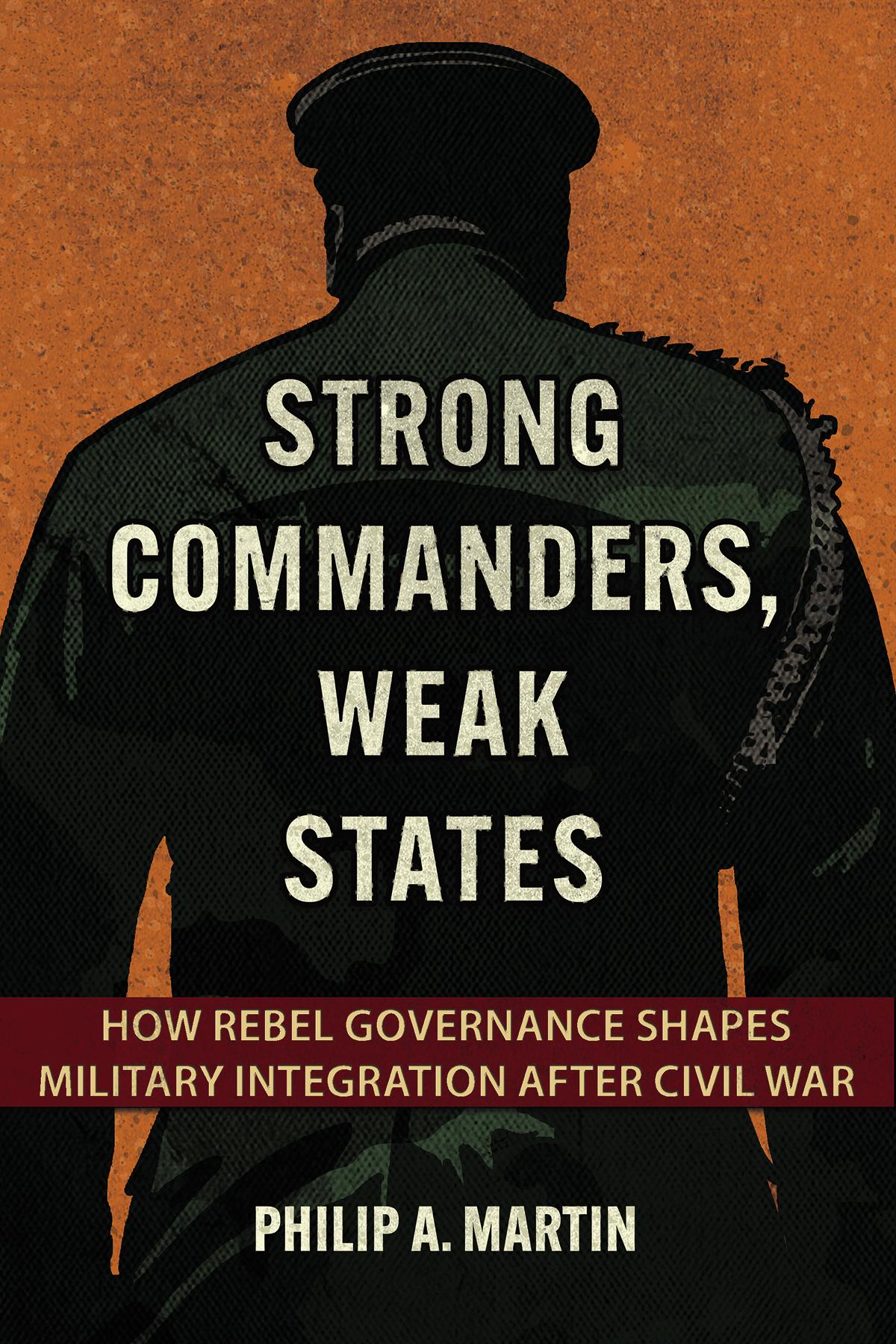
In Strong Commanders, Weak States, Philip A. Martin investigates a fundamental political challenge faced by post-conflict states: how to create obedient national militaries from the remnants of insurgent forces.
When civil wars end, non-state armed groups often integrate into post-conflict militaries. Yet rebel-military integration does not always happen smoothly. In some cases, former rebels cooperate with new leaders, forming powerful national armies that underpin postwar stability. In others, they resist the authority of new leaders, maintaining clandestine armed networks that disrupt centralized state-building.
Martin argues that how field commanders of non-state armed groups governed during the war explains this variation. Rebel commanders who build accountable governance systems gain strong social support from rebel-ruled communities, becoming locally embedded. Thanks to these community ties, which persist after the war, these embedded commanders have the leverage to push the central government for concessions, resist directives to disarm fighters, or even orchestrate coup d'états. Conversely, rebel commanders who governed coercively are less likely to sustain community ties. Without the ability to mobilize collective action after the war, these non-embedded commanders have stronger incentives to cooperate with new regime leaders.
Wielding in-depth evidence from Côte d'Ivoire and cases of rebel-military integration elsewhere, Martin shows that good governance during wartime can—ironically—lead to poor postwar state consolidation. Rather than preparing insurgents to be successful state builders, effective rebel governance can hinder post-conflict state-building. As costly peace operations come under increasing scrutiny, Strong Commanders, Weak States offers fresh guidance on how transitions to peace can better succeed.
Before Memmo my notes were scattered across PDFs. Now a workspace pulls everything into one place — I see exactly what's still left to study.
Memmo's summaries are gold before exams. I don't have to re-read 800 pages two weeks before — just the important parts.
The AI chat has saved me the night before an exam more than once. I just keep asking until I get it — no waiting on a study group to reply.
The quizzes hit exactly what I need to know. Memmo tracks what I get stuck on — so I only practice what's worth it.
Flashcards with spaced repetition are magic. Memmo knows when I'm about to forget something and brings it back.
The AI podcasts are my favorite. I listen on my way to school and get a recap without sitting at a computer.

Handbok i kvalitativa metoder
281 kr

Hållbar utveckling: en introduktion för ingenjörer och andra problemlösare
334 kr

Brymans Samhällsvetenskapliga metoder
390 kr

Projektledning
491 kr

Den orättvisa hälsan: om socioekonomiska skillnader i hälsa och livslängd
326 kr

Organizational Leadership
429 kr

Vetenskapsteori för nybörjare
196 kr

På väg mot läraryrket
172 kr

Det sociala livet i skolan: Socialpsykologiska perspektiv
253 kr

Betygsättningens didaktik
151 kr

Personality
402 kr

Studying Leadership
404 kr

Managing Innovation
477 kr

Introduktion till samhällsvetenskaplig metod
347 kr

The Psychology of Sex and Gender
698 kr

Evidens och kunskap för socialt arbete
207 kr

Introduction to Leadership
605 kr