
Before Memmo my notes were scattered across PDFs. Now a workspace pulls everything into one place — I see exactly what's still left to study.
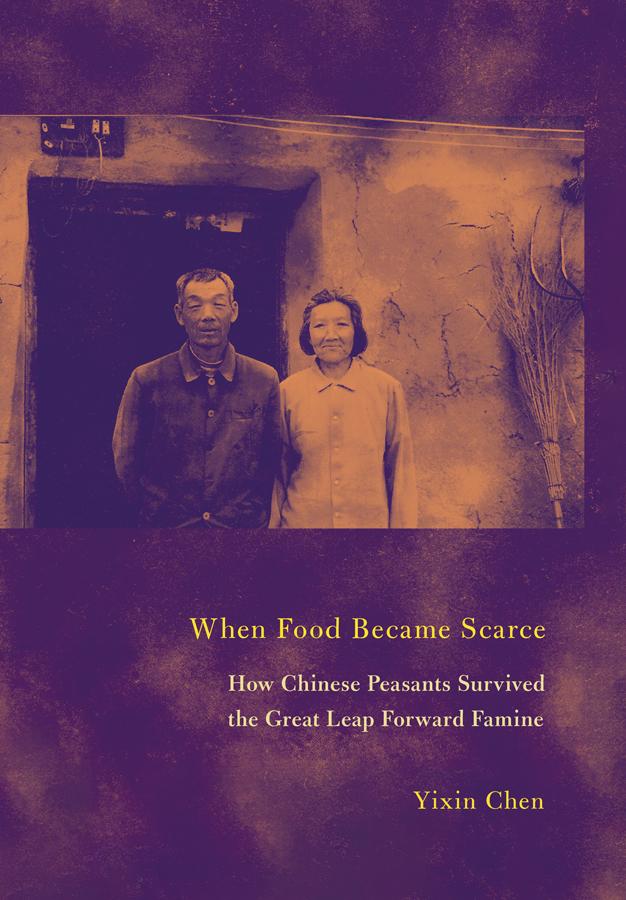
When Food Became Scarce is about the Great Leap Famine of 1958-61. Yixin Chen adopts a grassroots level analysis to explore an existential question concerning hundreds of millions of Chinese peasants: why did some peasants perish while others from the same villages facing the same collective problems of food scarcity survive?
Viewing the famine as a persistent ordeal, Chen identifies environment and lineage as two pivotal factors that influenced the rural populace's destiny. When food quotas under the Maoist communal dining system plummeted below subsistence or came to a halt, most individual villagers in the mountainous regions of southern China turned to their environment for alternative sustenance, ensuring their survival. More remarkably, across the nation, more peasants united in self-preservation strategies, concealing grains to elude excessive state requisitions, orchestrating food and crop riots, and collectively combating desperation. Given that the majority of Chinese villages were historically established on the foundation of consanguine relationships, creating an obligation among villagers to support one another due to shared ancestry, lineage emerged as a microlevel social mechanism that activated diverse forms of collective resistance. In villages where peasants effectively upheld their lineage organizations and adopted self-protective measures, their survival rates exceeded those of villages where the enforcement of Maoist Great Leap initiatives disrupted the lineage structure, leaving the communities more vulnerable. When Food Became Scare reorients the famine narrative, unpacking its intricacies from the perspective of the survival side.
Before Memmo my notes were scattered across PDFs. Now a workspace pulls everything into one place — I see exactly what's still left to study.
Memmo's summaries are gold before exams. I don't have to re-read 800 pages two weeks before — just the important parts.
The AI chat has saved me the night before an exam more than once. I just keep asking until I get it — no waiting on a study group to reply.
The quizzes hit exactly what I need to know. Memmo tracks what I get stuck on — so I only practice what's worth it.
Flashcards with spaced repetition are magic. Memmo knows when I'm about to forget something and brings it back.
The AI podcasts are my favorite. I listen on my way to school and get a recap without sitting at a computer.

Handbok i kvalitativa metoder
281 kr

Hållbar utveckling: en introduktion för ingenjörer och andra problemlösare
334 kr

Brymans Samhällsvetenskapliga metoder
390 kr

Projektledning
491 kr

Den orättvisa hälsan: om socioekonomiska skillnader i hälsa och livslängd
326 kr

Vetenskapsteori för nybörjare
196 kr

Organizational Leadership
429 kr

På väg mot läraryrket
172 kr

Det sociala livet i skolan: Socialpsykologiska perspektiv
253 kr

Betygsättningens didaktik
151 kr

Personality
402 kr

Studying Leadership
404 kr

Managing Innovation
477 kr

Introduktion till samhällsvetenskaplig metod
347 kr

The Psychology of Sex and Gender
698 kr

Evidens och kunskap för socialt arbete
207 kr

Introduction to Leadership
605 kr