
Before Memmo my notes were scattered across PDFs. Now a workspace pulls everything into one place — I see exactly what's still left to study.
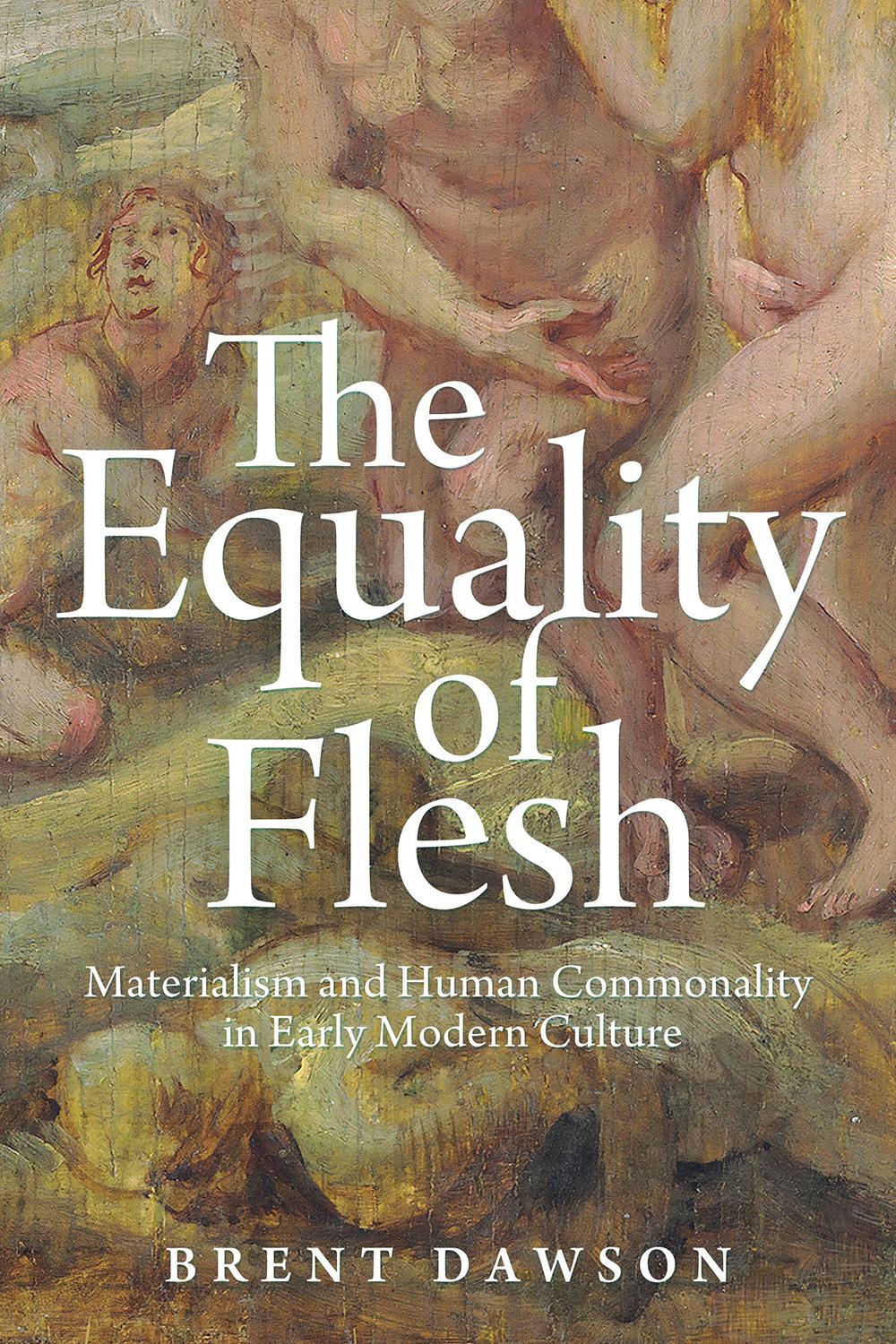
The Equality of Flesh traces a new genealogy of equality before its formalization under liberalism. While modern ideas of equality are defined through an inner human nature, Brent Dawson argues that the sixteenth and seventeenth centuries conceptualized equality as an ambivalent and profoundly bodily condition. Everyone was made from the same lowly matter and, as a result, shared the same set of vulnerabilities, needs, and passions. Responding to the political upheavals of colonialism and the intellectual turmoil of new natural philosophies, leading figures of the English Renaissance, including Edmund Spenser and William Shakespeare, anxiously imagined that bodily commonality might undermine differences of religion, race, and class.
As the period progressed, later authors developed the revolutionary possibilities of bodily equality even as new ideas of fixed racial inequality emerged. Some—like the utopian radical Gerrard Winstanley and the republican poet John Milton—challenged political absolutism through the idea of humans as base, embodied creatures. Others—like the heterodox philosopher Margaret Cavendish, the French theologian Isaac La Peyrère, and the libertine Cyrano de Bergerac—offered limited yet important interrogations of racial paradigms. This moment, Dawson shows, would pass, as bodily equality was marginalized in the liberal theories of John Locke and Thomas Hobbes. In its place, during the Enlightenment pseudoscientific racism would come to anchor inequality in the body. Contending with the lasting implications of material equality for modernity, The Equality of Flesh shows how increasingly vehement notions of racial difference eclipsed a nascent sense of human commonality rooted in the basic stuff of life.
Before Memmo my notes were scattered across PDFs. Now a workspace pulls everything into one place — I see exactly what's still left to study.
Memmo's summaries are gold before exams. I don't have to re-read 800 pages two weeks before — just the important parts.
The AI chat has saved me the night before an exam more than once. I just keep asking until I get it — no waiting on a study group to reply.
The quizzes hit exactly what I need to know. Memmo tracks what I get stuck on — so I only practice what's worth it.
Flashcards with spaced repetition are magic. Memmo knows when I'm about to forget something and brings it back.
The AI podcasts are my favorite. I listen on my way to school and get a recap without sitting at a computer.

Handbok i kvalitativa metoder
281 kr

Hållbar utveckling: en introduktion för ingenjörer och andra problemlösare
334 kr

Brymans Samhällsvetenskapliga metoder
390 kr

Projektledning
491 kr

Den orättvisa hälsan: om socioekonomiska skillnader i hälsa och livslängd
326 kr

Vetenskapsteori för nybörjare
196 kr

Organizational Leadership
429 kr

På väg mot läraryrket
172 kr

Det sociala livet i skolan: Socialpsykologiska perspektiv
253 kr

Betygsättningens didaktik
151 kr

Personality
402 kr

Studying Leadership
404 kr

Managing Innovation
477 kr

Introduktion till samhällsvetenskaplig metod
347 kr

The Psychology of Sex and Gender
698 kr

Evidens och kunskap för socialt arbete
207 kr

Introduction to Leadership
605 kr