
Before Memmo my notes were scattered across PDFs. Now a workspace pulls everything into one place — I see exactly what's still left to study.
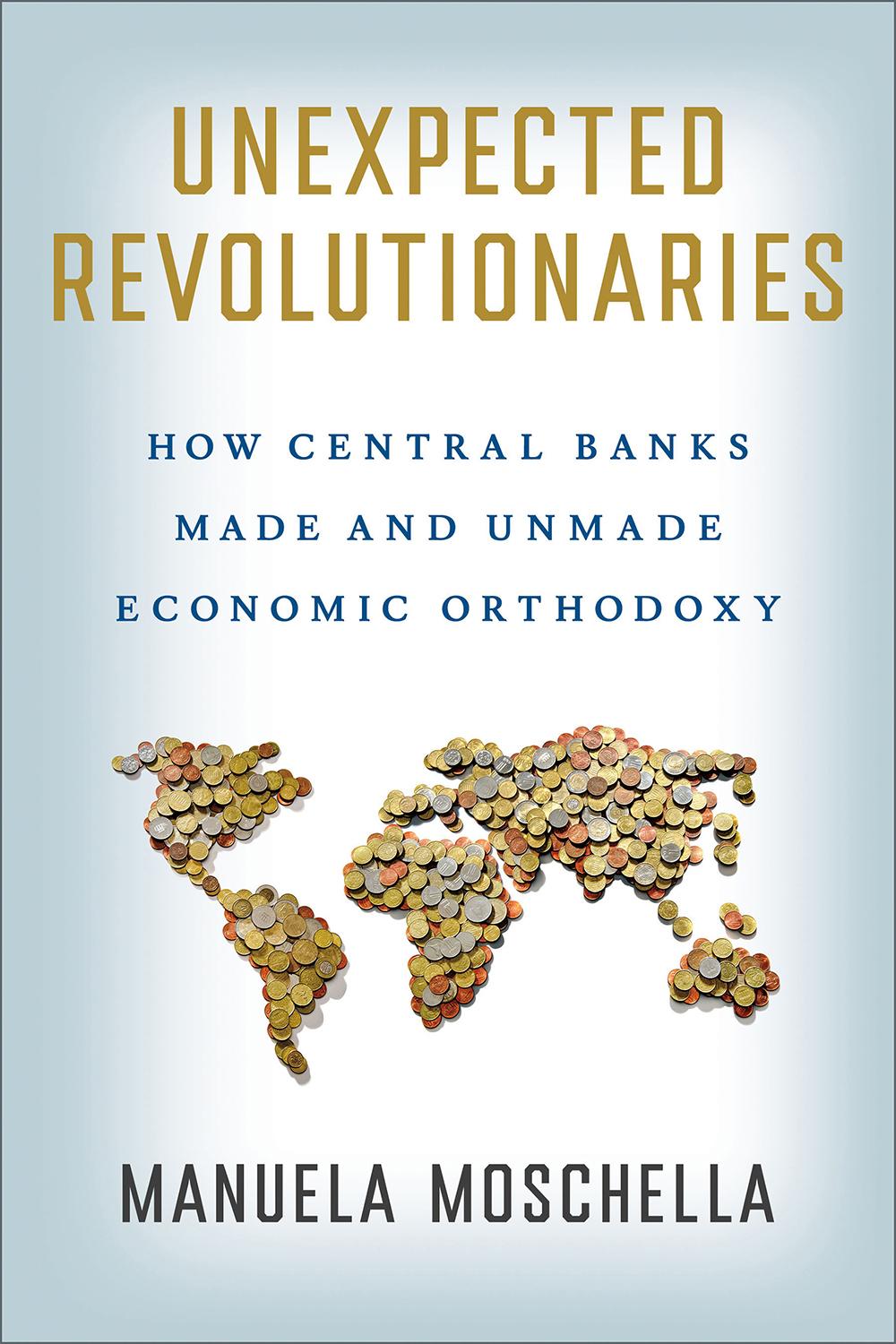
In Unexpected Revolutionaries, Manuela Moschella investigates the institutional transformation of central banks from the 1970s to the present.
Central banks are typically regarded as conservative, politically neutral institutions that uphold conventional macroeconomic wisdom. Yet in the wake of the 2008 global financial crisis and the 2020 COVID-19 crisis, central banks have upended observer expectations by implementing largely unknown and unconventional monetary policies. Far from abiding by well-established policy playbooks, central banks now engage in practices such as providing liquidity support for a wide range of financial institutions and quantitative easing. They have even stretched the remit of monetary policy into issues such as inequality and climate change.
Moschella argues that the political nature of central banks lies at the heart of these transformations. While formally independent, central banks need political support to justify their policies and powers, and to obtain it, they carefully manage their reputation among their audienceselected officials, market actors, and citizens. Challenged by reputational threats brought about by twenty-first-century recessionary and deflationary forces, central banks such as the Federal Reserve System and the European Central Bank strategically deviated from orthodox monetary policies to preempt or manage political backlash and to regain public trust. Central banks thus evolved into a new role only in coordination with fiscal authorities and on the back of public contestation.
Eye-opening and insightful, Unexpected Revolutionaries is necessary reading for discussions on the future of the neoliberal macroeconomic regime, the democratic oversight of monetary policymaking, and the role that central banks canor cannotplay in our domestic economies.
Before Memmo my notes were scattered across PDFs. Now a workspace pulls everything into one place — I see exactly what's still left to study.
Memmo's summaries are gold before exams. I don't have to re-read 800 pages two weeks before — just the important parts.
The AI chat has saved me the night before an exam more than once. I just keep asking until I get it — no waiting on a study group to reply.
The quizzes hit exactly what I need to know. Memmo tracks what I get stuck on — so I only practice what's worth it.
Flashcards with spaced repetition are magic. Memmo knows when I'm about to forget something and brings it back.
The AI podcasts are my favorite. I listen on my way to school and get a recap without sitting at a computer.

Handbok i kvalitativa metoder
281 kr

Hållbar utveckling: en introduktion för ingenjörer och andra problemlösare
334 kr

Brymans Samhällsvetenskapliga metoder
390 kr

Projektledning
491 kr

Den orättvisa hälsan: om socioekonomiska skillnader i hälsa och livslängd
326 kr

Organizational Leadership
429 kr

Vetenskapsteori för nybörjare
196 kr

På väg mot läraryrket
172 kr

Det sociala livet i skolan: Socialpsykologiska perspektiv
253 kr

Betygsättningens didaktik
151 kr

Personality
402 kr

Studying Leadership
404 kr

Managing Innovation
477 kr

Introduktion till samhällsvetenskaplig metod
347 kr

The Psychology of Sex and Gender
698 kr

Evidens och kunskap för socialt arbete
207 kr

Introduction to Leadership
605 kr