
Before Memmo my notes were scattered across PDFs. Now a workspace pulls everything into one place — I see exactly what's still left to study.
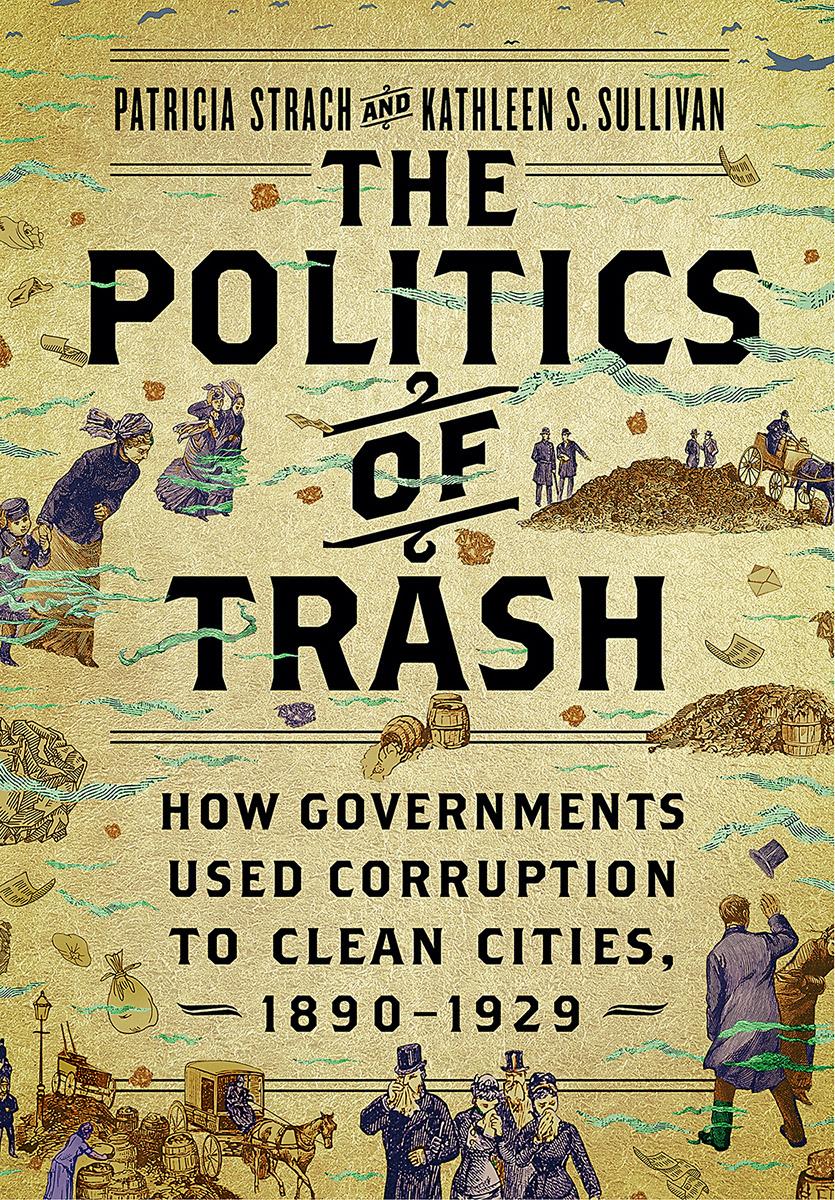
The Politics of Trash explains how municipal trash collection solved odorous urban problems using nongovernmental and often unseemly means. Focusing on the persistent problems of filth and the frustration of generations of reformers unable to clean their cities, Patricia Strach and Kathleen S. Sullivan tell a story of dirty politics and administrative innovation that made rapidly expanding American cities livable.
The solutions that professionals recommended to rid cities of overflowing waste cans, litter-filled privies, and animal carcasses were largely ignored by city governments. When the efforts of sanitarians, engineers, and reformers failed, public officials turned to the habits and tools of corruption as well as to gender and racial hierarchies.
Corruption often provided the political will for public officials to establish garbage collection programs. Effective waste collection involves translating municipal imperatives into new habits and arrangements in homes and other private spaces. To change domestic habits, officials relied on gender hierarchy to make the women of the white, middle-class households in charge of sanitation. When public and private trash cans overflowed, racial and ethnic prejudices were harnessed to single out scavengers, garbage collectors, and neighborhoods by race. These early informal efforts were slowly incorporated into formal administrative processes that created the public-private sanitation systems that prevail in most American cities today.
The Politics of Trash locates these hidden resources of governments to challenge presumptions about the formal mechanisms of governing and recovers the presence of residents at the margins, whose experiences can be as overlooked as garbage collection itself. This consideration of municipal garbage collection reveals how political development often relies on undemocratic means with long-term implications for further inequality. Focusing on the resources that cleaned American cities also shows the tenuous connection between political development and modernization.
Before Memmo my notes were scattered across PDFs. Now a workspace pulls everything into one place — I see exactly what's still left to study.
Memmo's summaries are gold before exams. I don't have to re-read 800 pages two weeks before — just the important parts.
The AI chat has saved me the night before an exam more than once. I just keep asking until I get it — no waiting on a study group to reply.
The quizzes hit exactly what I need to know. Memmo tracks what I get stuck on — so I only practice what's worth it.
Flashcards with spaced repetition are magic. Memmo knows when I'm about to forget something and brings it back.
The AI podcasts are my favorite. I listen on my way to school and get a recap without sitting at a computer.

Handbok i kvalitativa metoder
281 kr

Hållbar utveckling: en introduktion för ingenjörer och andra problemlösare
334 kr

Brymans Samhällsvetenskapliga metoder
390 kr

Projektledning
491 kr

Den orättvisa hälsan: om socioekonomiska skillnader i hälsa och livslängd
326 kr

Vetenskapsteori för nybörjare
196 kr

Organizational Leadership
429 kr

På väg mot läraryrket
172 kr

Det sociala livet i skolan: Socialpsykologiska perspektiv
253 kr

Betygsättningens didaktik
151 kr

Personality
402 kr

Studying Leadership
404 kr

Managing Innovation
477 kr

Introduktion till samhällsvetenskaplig metod
347 kr

The Psychology of Sex and Gender
698 kr

Evidens och kunskap för socialt arbete
207 kr

Introduction to Leadership
605 kr