
Before Memmo my notes were scattered across PDFs. Now a workspace pulls everything into one place — I see exactly what's still left to study.
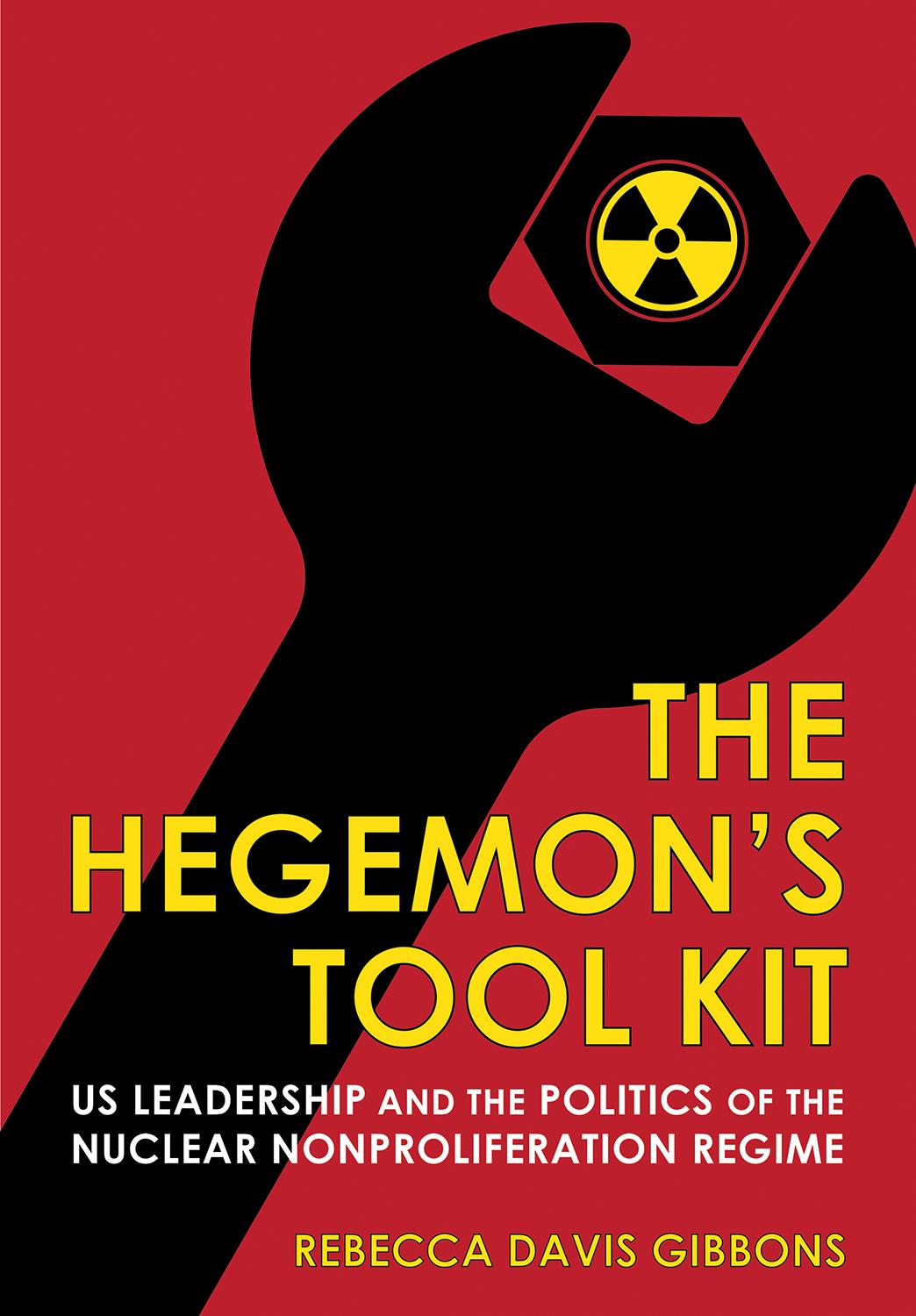
At a moment when the nuclear nonproliferation regime is under duress, Rebecca Davis Gibbons provides a trenchant analysis of the international system that has, for more than fifty years, controlled the spread of these catastrophic weapons. The Hegemon's Tool Kit details how that regime works and how, disastrously, it might falter.
In the early nuclear age, experts anticipated that all technologically-capable states would build these powerful devices. That did not happen. Widespread development of nuclear arms did not occur, in large part, because a global nuclear nonproliferation regime was created. By the late-1960s, the United States and the Soviet Union had drafted the Treaty on the Non-Proliferation of Nuclear Weapons (NPT), and across decades the regime has expanded, with more agreements and more nations participating. As a result, in 2022, only nine states possess nuclear weapons.
Why do most states in the international system adhere to the nuclear nonproliferation regime? The answer lies, Gibbons asserts, in decades of painstaking efforts undertaken by the US government. As the most powerful state during the nuclear age, the United States had many tools with which to persuade other states to join or otherwise support nonproliferation agreements.
The waning of US global influence, Gibbons shows in The Hegemon's Tool Kit, is a key threat to the nonproliferation regime. So, too, is the deepening global divide over progress on nuclear disarmament. To date, the Chinese government is not taking significant steps to support the nuclear nonproliferation regime, and as a result, the regime may face a harmful leadership gap.
Before Memmo my notes were scattered across PDFs. Now a workspace pulls everything into one place — I see exactly what's still left to study.
Memmo's summaries are gold before exams. I don't have to re-read 800 pages two weeks before — just the important parts.
The AI chat has saved me the night before an exam more than once. I just keep asking until I get it — no waiting on a study group to reply.
The quizzes hit exactly what I need to know. Memmo tracks what I get stuck on — so I only practice what's worth it.
Flashcards with spaced repetition are magic. Memmo knows when I'm about to forget something and brings it back.
The AI podcasts are my favorite. I listen on my way to school and get a recap without sitting at a computer.

Handbok i kvalitativa metoder
281 kr

Hållbar utveckling: en introduktion för ingenjörer och andra problemlösare
334 kr

Brymans Samhällsvetenskapliga metoder
390 kr

Projektledning
491 kr

Den orättvisa hälsan: om socioekonomiska skillnader i hälsa och livslängd
326 kr

Organizational Leadership
429 kr

Vetenskapsteori för nybörjare
196 kr

På väg mot läraryrket
172 kr

Det sociala livet i skolan: Socialpsykologiska perspektiv
253 kr

Betygsättningens didaktik
151 kr

Personality
402 kr

Studying Leadership
404 kr

Managing Innovation
477 kr

Introduktion till samhällsvetenskaplig metod
347 kr

The Psychology of Sex and Gender
698 kr

Evidens och kunskap för socialt arbete
207 kr

Introduction to Leadership
605 kr