
Before Memmo my notes were scattered across PDFs. Now a workspace pulls everything into one place — I see exactly what's still left to study.
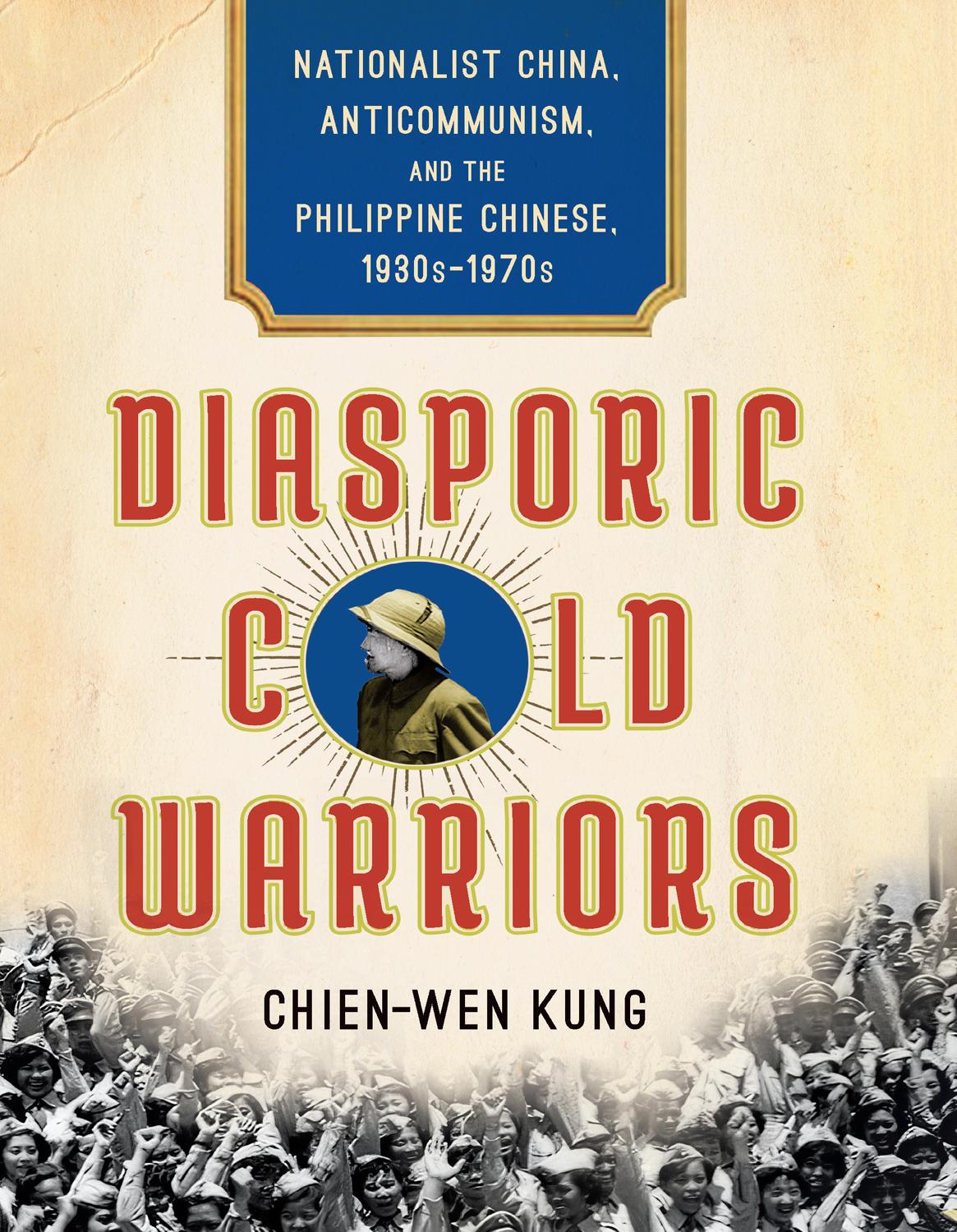
In Diasporic Cold Warriors, Chien-Wen Kung explains how the Chinese Nationalist Party (Kuomintang) sowed the seeds of anticommunism among the Philippine Chinese with the active participation of the Philippine state.
From the 1950s to the 1970s, Philippine Chinese were Southeast Asia's most exemplary Cold Warriors among overseas Chinese. During these decades, no Chinese community in the region was more vigilant in identifying and rooting out suspected communists from within its midst; none was as committed to mobilizing against the People's Republic of China as the one in the former US colony. Ironically, for all the fears of overseas Chinese communities' ties to the PRC at the time, the example of the Philippines shows that the "China" that intervened the most extensively in any Southeast Asian Chinese society during the Cold War was the Republic of China on Taiwan.
For the first time, Kung tells the story of the Philippine Chinese as pro-Taiwan, anticommunist partisans, tracing their evolving relationship with the KMT and successive Philippine governments over the mid-twentieth century. Throughout, he argues for a networked and transnational understanding of the ROC-KMT party-state and demonstrates that Taipei exercised a form of nonterritorial sovereignty over the Philippine Chinese with Manila's participation and consent. Challenging depoliticized narratives of cultural integration, he also contends that, because of the KMT, Chinese identity formation and practices of belonging in the Philippines were deeply infused with Cold War ideology.
Drawing on archival research and fieldwork in Taiwan, the Philippines, the United States, and China, Diasporic Cold Warriors reimagines the histories of the ROC, the KMT, and the Philippine Chinese, connecting them to the broader canvas of the Cold War and postcolonial nation-building in East and Southeast Asia.
Before Memmo my notes were scattered across PDFs. Now a workspace pulls everything into one place — I see exactly what's still left to study.
Memmo's summaries are gold before exams. I don't have to re-read 800 pages two weeks before — just the important parts.
The AI chat has saved me the night before an exam more than once. I just keep asking until I get it — no waiting on a study group to reply.
The quizzes hit exactly what I need to know. Memmo tracks what I get stuck on — so I only practice what's worth it.
Flashcards with spaced repetition are magic. Memmo knows when I'm about to forget something and brings it back.
The AI podcasts are my favorite. I listen on my way to school and get a recap without sitting at a computer.

Handbok i kvalitativa metoder
281 kr

Hållbar utveckling: en introduktion för ingenjörer och andra problemlösare
334 kr

Brymans Samhällsvetenskapliga metoder
390 kr

Projektledning
491 kr

Den orättvisa hälsan: om socioekonomiska skillnader i hälsa och livslängd
326 kr

Vetenskapsteori för nybörjare
196 kr

Organizational Leadership
429 kr

På väg mot läraryrket
172 kr

Det sociala livet i skolan: Socialpsykologiska perspektiv
253 kr

Betygsättningens didaktik
151 kr

Personality
402 kr

Studying Leadership
404 kr

Managing Innovation
477 kr

Introduktion till samhällsvetenskaplig metod
347 kr

The Psychology of Sex and Gender
698 kr

Evidens och kunskap för socialt arbete
207 kr

Introduction to Leadership
605 kr