
Before Memmo my notes were scattered across PDFs. Now a workspace pulls everything into one place — I see exactly what's still left to study.
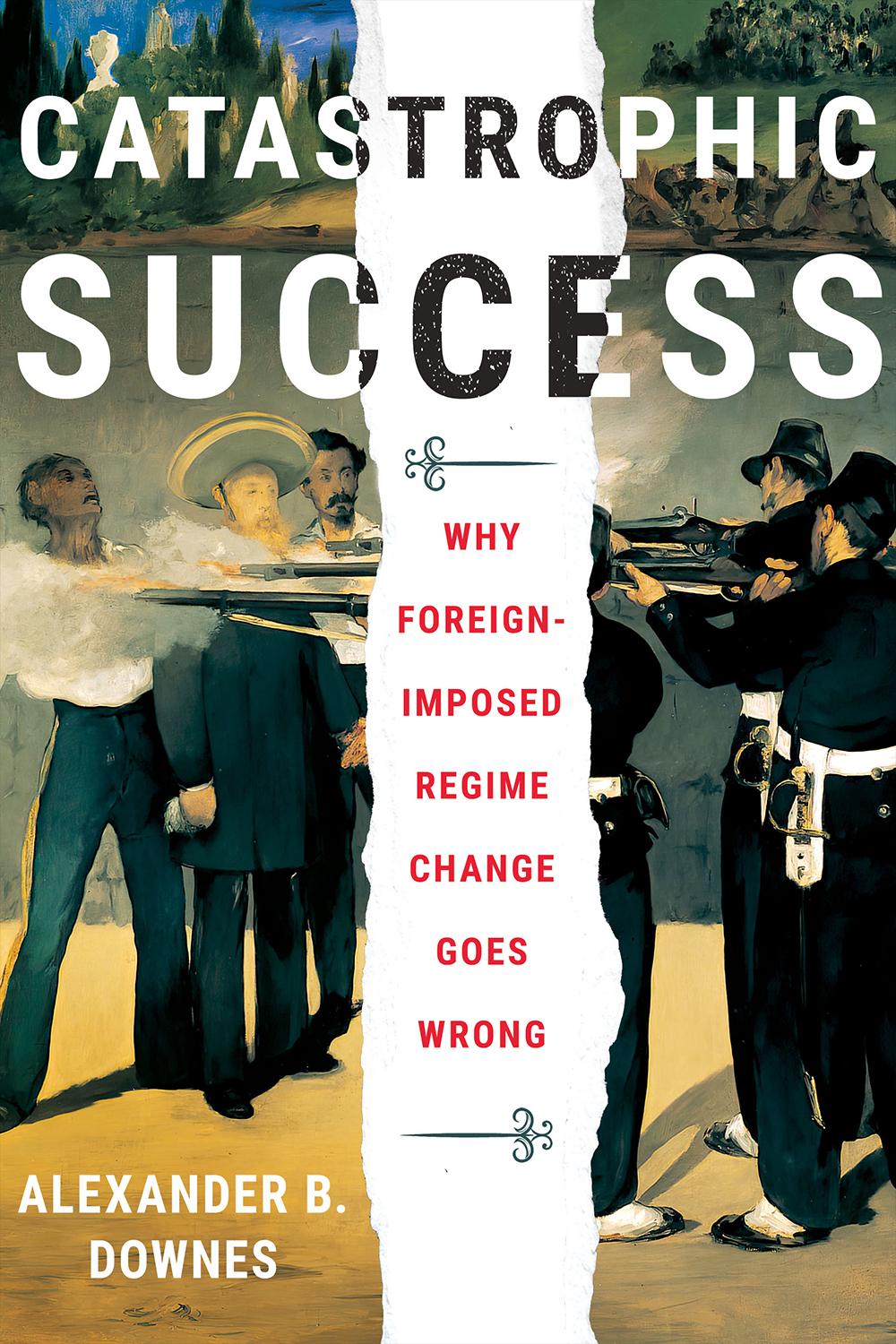
In Catastrophic Success, Alexander B. Downes compiles all instances of regime change around the world over the past two centuries. Drawing on this impressive data set, Downes shows that regime change increases the likelihood of civil war and violent leader removal in target states and fails to reduce the probability of conflict between intervening states and their targets. As Downes demonstrates, when a state confronts an obstinate or dangerous adversary, the lure of toppling its government and establishing a friendly administration is strong. The historical record, however, shows that foreign-imposed regime change is, in the long term, neither cheap, easy, nor consistently successful. The strategic impulse to forcibly oust antagonistic or non-compliant regimes overlooks two key facts. First, the act of overthrowing a foreign government sometimes causes its military to disintegrate, sending thousands of armed men into the countryside where they often wage an insurgency against the intervener. Second, externally-imposed leaders face a domestic audience in addition to an external one, and the two typically want different things. These divergent preferences place imposed leaders in a quandary: taking actions that please one invariably alienates the other. Regime change thus drives a wedge between external patrons and their domestic protégés or between protégés and their people. Catastrophic Success provides sober counsel for leaders and diplomats. Regime change may appear an expeditious solution, but states are usually better off relying on other tools of influence, such as diplomacy. Regime change, Downes urges, should be reserved for exceptional cases. Interveners must recognize that, absent a rare set of promising preconditions, regime change often instigates a new period of uncertainty and conflict that impedes their interests from being realized.
Before Memmo my notes were scattered across PDFs. Now a workspace pulls everything into one place — I see exactly what's still left to study.
Memmo's summaries are gold before exams. I don't have to re-read 800 pages two weeks before — just the important parts.
The AI chat has saved me the night before an exam more than once. I just keep asking until I get it — no waiting on a study group to reply.
The quizzes hit exactly what I need to know. Memmo tracks what I get stuck on — so I only practice what's worth it.
Flashcards with spaced repetition are magic. Memmo knows when I'm about to forget something and brings it back.
The AI podcasts are my favorite. I listen on my way to school and get a recap without sitting at a computer.

Handbok i kvalitativa metoder
281 kr

Hållbar utveckling: en introduktion för ingenjörer och andra problemlösare
334 kr

Brymans Samhällsvetenskapliga metoder
390 kr

Projektledning
491 kr

Den orättvisa hälsan: om socioekonomiska skillnader i hälsa och livslängd
326 kr

Organizational Leadership
429 kr

Vetenskapsteori för nybörjare
196 kr

På väg mot läraryrket
172 kr

Det sociala livet i skolan: Socialpsykologiska perspektiv
253 kr

Betygsättningens didaktik
151 kr

Personality
402 kr

Studying Leadership
404 kr

Managing Innovation
477 kr

Introduktion till samhällsvetenskaplig metod
347 kr

The Psychology of Sex and Gender
698 kr

Evidens och kunskap för socialt arbete
207 kr

Introduction to Leadership
605 kr