
Before Memmo my notes were scattered across PDFs. Now a workspace pulls everything into one place — I see exactly what's still left to study.
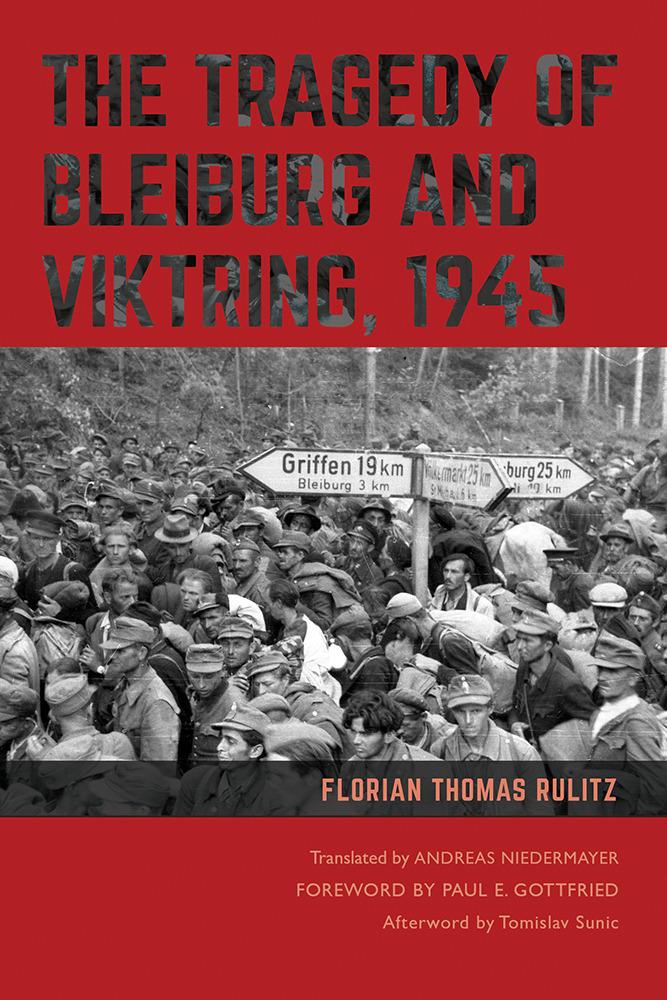
The atrocities and mass murders committed by Josip Broz Tito's Partisan units of the Yugoslav Army immediately after the Second World War had no place in the conscience of Socialist Yugoslavia. More than once, the annual Croatian commemoration of the Bleiburg victims was subject to attacks carried out by the socialist Yugoslav state. Abroad in the West, on Austrian soil, the Yugoslav secret service (UDBA) did not shy away from murdering the protagonist of the Croatian memory culture, Nicola Martinovic, as late as 1975. The official history was aligned with a firm interpretational paradigm that called for a glorification of the anti-fascist "people's liberation resistance." With the breakup of Yugoslavia and its socialist regime in 1991, the identity-establishing accounts of contemporary witnesses, which had mainly been cherished in exile circles abroad, increasingly reached public awareness in Croatia and Slovenia.
In the 1990s Croatia witnessed the emergence of a memory that had been suppressed by the socialist-Yugoslav regime—namely the Bleiburg tragedy. The situation in Slovenia was similar in terms of identity and remembrance culture. Among the Slovenes, the communist crimes committed during the turmoil are known as the drama of Viktring or the Viktring tragedy, named after the largest refugee camp of the Slovenes. Reports on the communist postwar crimes and on the countless discoveries of mass gravesites have also begun circulating in the media of the German-speaking world in the last few years. Florian Rulitz's meticulously researched book, now available for the first time in English, provides a corrective to the historical memory that had been previously accepted as truth. Rulitz focuses on two essential questions. First, did the so-called "final encirclement battles" indeed occur in Carinthia in the Ferlach/Hollenburg/Viktring and Dravograd/Poljana/Bleiburg areas, resulting in military victories for the Yugoslav Army? Second, were the battles after the capitulation fought by the refugees with the aim of reaching the British-controlled areas in Carinthia? To answer these questions, Rulitz presents a detailed reconstruction of those days in May 1945. He furthermore considers the question of the murders on Austrian territory, which were hushed up in Partisan literature and presented as casualties of the final military operations. This groundbreaking study will interest scholars and students of modern European history.
Before Memmo my notes were scattered across PDFs. Now a workspace pulls everything into one place — I see exactly what's still left to study.
Memmo's summaries are gold before exams. I don't have to re-read 800 pages two weeks before — just the important parts.
The AI chat has saved me the night before an exam more than once. I just keep asking until I get it — no waiting on a study group to reply.
The quizzes hit exactly what I need to know. Memmo tracks what I get stuck on — so I only practice what's worth it.
Flashcards with spaced repetition are magic. Memmo knows when I'm about to forget something and brings it back.
The AI podcasts are my favorite. I listen on my way to school and get a recap without sitting at a computer.

Handbok i kvalitativa metoder
281 kr

Hållbar utveckling: en introduktion för ingenjörer och andra problemlösare
334 kr

Brymans Samhällsvetenskapliga metoder
390 kr

Projektledning
491 kr

Den orättvisa hälsan: om socioekonomiska skillnader i hälsa och livslängd
326 kr

Vetenskapsteori för nybörjare
196 kr

Organizational Leadership
429 kr

På väg mot läraryrket
172 kr

Det sociala livet i skolan: Socialpsykologiska perspektiv
253 kr

Betygsättningens didaktik
151 kr

Personality
402 kr

Studying Leadership
404 kr

Managing Innovation
477 kr

Introduktion till samhällsvetenskaplig metod
347 kr

The Psychology of Sex and Gender
698 kr

Evidens och kunskap för socialt arbete
207 kr

Introduction to Leadership
605 kr