
Before Memmo my notes were scattered across PDFs. Now a workspace pulls everything into one place — I see exactly what's still left to study.
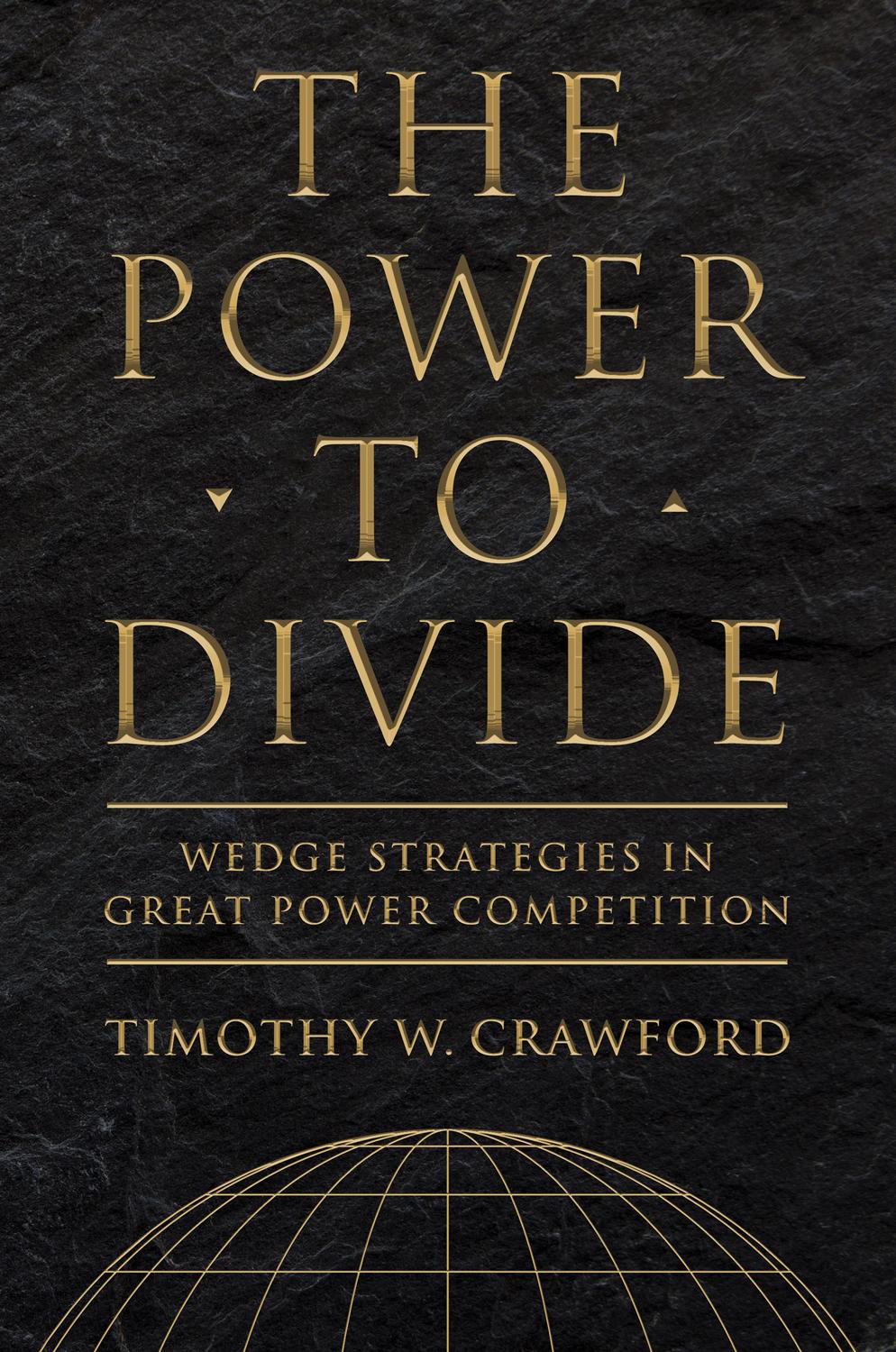
Timothy W. Crawford's The Power to Divide examines the use of wedge strategies, a form of divisive statecraft designed to isolate adversaries from allies and potential supporters to gain key advantages. With a multidimensional argument about the power of accommodation in competition, and a survey of alliance diplomacy around both World Wars, The Power to Divide artfully analyzes the past and future performance of wedge strategy in great power politics.
Crawford argues that nations attempting to use wedge strategy do best when they credibly accommodate likely or established allies of their enemies. He also argues that a divider's own alliances can pose obstacles to success and explains the conditions that help dividers overcome them. He advances these claims in eight focused studies of alliance diplomacy surrounding the World Wars, derived from published official documents and secondary histories. Through those narratives, Crawford adeptly assesses the record of countries that tried an accommodative wedge strategy, and why ultimately, they succeeded or failed. These calculated actions often became turning points, desired or not, in a nation's established power.
For policymakers today facing threats to power from great power competitors, Crawford argues that a deeper historical and theoretical grasp of the role of these wedge strategies in alliance politics and grand strategy is necessary. Crawford drives home the contemporary relevance of the analysis with a survey of China's potential to use such strategies to divide India from the US, and the United States' potential to use them to forestall a China-Russia alliance, and closes with a review of key theoretical insights for policy.
Before Memmo my notes were scattered across PDFs. Now a workspace pulls everything into one place — I see exactly what's still left to study.
Memmo's summaries are gold before exams. I don't have to re-read 800 pages two weeks before — just the important parts.
The AI chat has saved me the night before an exam more than once. I just keep asking until I get it — no waiting on a study group to reply.
The quizzes hit exactly what I need to know. Memmo tracks what I get stuck on — so I only practice what's worth it.
Flashcards with spaced repetition are magic. Memmo knows when I'm about to forget something and brings it back.
The AI podcasts are my favorite. I listen on my way to school and get a recap without sitting at a computer.

Handbok i kvalitativa metoder
281 kr

Hållbar utveckling: en introduktion för ingenjörer och andra problemlösare
334 kr

Brymans Samhällsvetenskapliga metoder
390 kr

Projektledning
491 kr

Den orättvisa hälsan: om socioekonomiska skillnader i hälsa och livslängd
326 kr

Organizational Leadership
429 kr

Vetenskapsteori för nybörjare
196 kr

På väg mot läraryrket
172 kr

Det sociala livet i skolan: Socialpsykologiska perspektiv
253 kr

Betygsättningens didaktik
151 kr

Personality
402 kr

Studying Leadership
404 kr

Managing Innovation
477 kr

Introduktion till samhällsvetenskaplig metod
347 kr

The Psychology of Sex and Gender
698 kr

Evidens och kunskap för socialt arbete
207 kr

Introduction to Leadership
605 kr