
Before Memmo my notes were scattered across PDFs. Now a workspace pulls everything into one place — I see exactly what's still left to study.
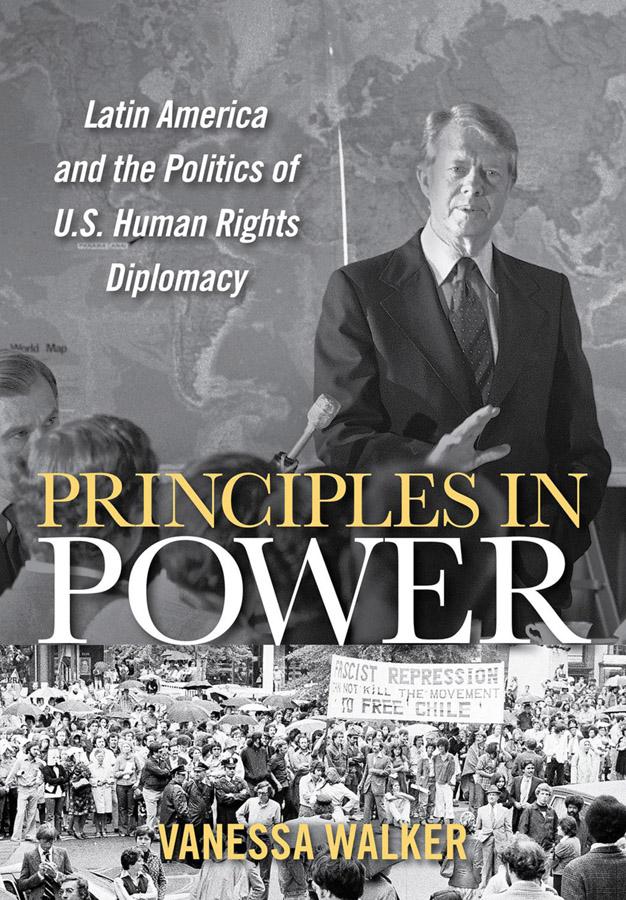
Vanessa Walker's Principles in Power explores the relationship between policy makers and nongovernment advocates in Latin America and the United States government in order to explain the rise of anti-interventionist human rights policies uniquely critical of U.S. power during the Cold War. Walker shows that the new human rights policies of the 1970s were based on a complex dynamic of domestic and foreign considerations that was rife with tensions between the seats of power in the United States and Latin America, and the growing activist movement that sought to reform them.
By addressing the development of U.S. diplomacy and politics alongside that of activist networks, especially in Chile and Argentina, Walker shows that Latin America was central to the policy assumptions that shaped the Carter administration's foreign policy agenda. The coup that ousted the socialist president of Chile, Salvador Allende, sparked new human rights advocacy as a direct result of U.S. policies that supported authoritarian regimes in the name of Cold War security interests. From 1973 onward, the attention of Washington and capitals around the globe turned to Latin America as the testing ground for the viability of a new paradigm for U.S. power.
This approach, oriented around human rights, required collaboration among activists and state officials in places as diverse as Buenos Aires, Santiago, and Washington, DC. Principles in Power tells the complicated story of the potentials and limits of partnership between government and nongovernment actors. Analyzing how different groups deployed human rights language to reform domestic and international power, Walker explores the multiple and often conflicting purposes of U.S. human rights policy.
Before Memmo my notes were scattered across PDFs. Now a workspace pulls everything into one place — I see exactly what's still left to study.
Memmo's summaries are gold before exams. I don't have to re-read 800 pages two weeks before — just the important parts.
The AI chat has saved me the night before an exam more than once. I just keep asking until I get it — no waiting on a study group to reply.
The quizzes hit exactly what I need to know. Memmo tracks what I get stuck on — so I only practice what's worth it.
Flashcards with spaced repetition are magic. Memmo knows when I'm about to forget something and brings it back.
The AI podcasts are my favorite. I listen on my way to school and get a recap without sitting at a computer.

Handbok i kvalitativa metoder
281 kr

Hållbar utveckling: en introduktion för ingenjörer och andra problemlösare
334 kr

Brymans Samhällsvetenskapliga metoder
390 kr

Projektledning
491 kr

Den orättvisa hälsan: om socioekonomiska skillnader i hälsa och livslängd
326 kr

Organizational Leadership
429 kr

Vetenskapsteori för nybörjare
196 kr

På väg mot läraryrket
172 kr

Det sociala livet i skolan: Socialpsykologiska perspektiv
253 kr

Betygsättningens didaktik
151 kr

Personality
402 kr

Studying Leadership
404 kr

Managing Innovation
477 kr

Introduktion till samhällsvetenskaplig metod
347 kr

The Psychology of Sex and Gender
698 kr

Evidens och kunskap för socialt arbete
207 kr

Introduction to Leadership
605 kr