
Before Memmo my notes were scattered across PDFs. Now a workspace pulls everything into one place — I see exactly what's still left to study.
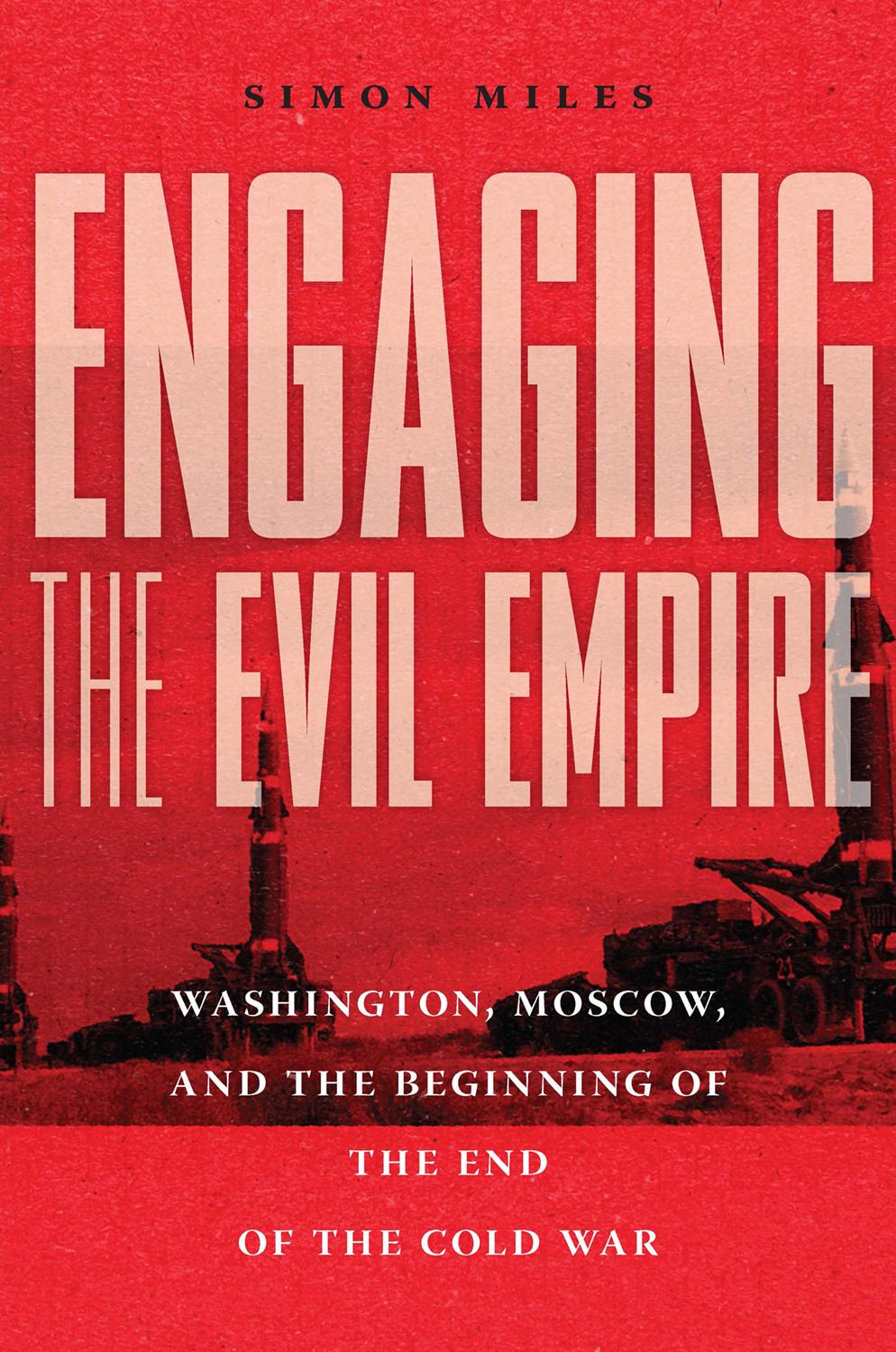
In a narrative-redefining approach, Engaging the Evil Empire dramatically alters how we look at the beginning of the end of the Cold War. Tracking key events in US-Soviet relations across the years between 1980 and 1985, Simon Miles shows that covert engagement gave way to overt conversation as both superpowers determined that open diplomacy was the best means of furthering their own, primarily competitive, goals. Miles narrates the history of these dramatic years, as President Ronald Reagan consistently applied a disciplined carrot-and-stick approach, reaching out to Moscow while at the same time excoriating the Soviet system and building up US military capabilities.
The received wisdom in diplomatic circles is that the beginning of the end of the Cold War came from changing policy preferences and that President Reagan in particular opted for a more conciliatory and less bellicose diplomatic approach. In reality, Miles clearly demonstrates, Reagan and ranking officials in the National Security Council had determined that the United States enjoyed a strategic margin of error that permitted it to engage Moscow overtly.
As US grand strategy developed, so did that of the Soviet Union. Engaging the Evil Empire covers five critical years of Cold War history when Soviet leaders tried to reduce tensions between the two nations in order to gain economic breathing room and, to ensure domestic political stability, prioritize expenditures on butter over those on guns. Miles's bold narrative shifts the focus of Cold War historians away from exclusive attention on Washington by focusing on the years of back-channel communiqués and internal strategy debates in Moscow as well as Prague and East Berlin.
Before Memmo my notes were scattered across PDFs. Now a workspace pulls everything into one place — I see exactly what's still left to study.
Memmo's summaries are gold before exams. I don't have to re-read 800 pages two weeks before — just the important parts.
The AI chat has saved me the night before an exam more than once. I just keep asking until I get it — no waiting on a study group to reply.
The quizzes hit exactly what I need to know. Memmo tracks what I get stuck on — so I only practice what's worth it.
Flashcards with spaced repetition are magic. Memmo knows when I'm about to forget something and brings it back.
The AI podcasts are my favorite. I listen on my way to school and get a recap without sitting at a computer.

Handbok i kvalitativa metoder
281 kr

Hållbar utveckling: en introduktion för ingenjörer och andra problemlösare
334 kr

Brymans Samhällsvetenskapliga metoder
390 kr

Projektledning
491 kr

Den orättvisa hälsan: om socioekonomiska skillnader i hälsa och livslängd
326 kr

Vetenskapsteori för nybörjare
196 kr

Organizational Leadership
429 kr

På väg mot läraryrket
172 kr

Det sociala livet i skolan: Socialpsykologiska perspektiv
253 kr

Betygsättningens didaktik
151 kr

Personality
402 kr

Studying Leadership
404 kr

Managing Innovation
477 kr

Introduktion till samhällsvetenskaplig metod
347 kr

The Psychology of Sex and Gender
698 kr

Evidens och kunskap för socialt arbete
207 kr

Introduction to Leadership
605 kr