
Before Memmo my notes were scattered across PDFs. Now a workspace pulls everything into one place — I see exactly what's still left to study.
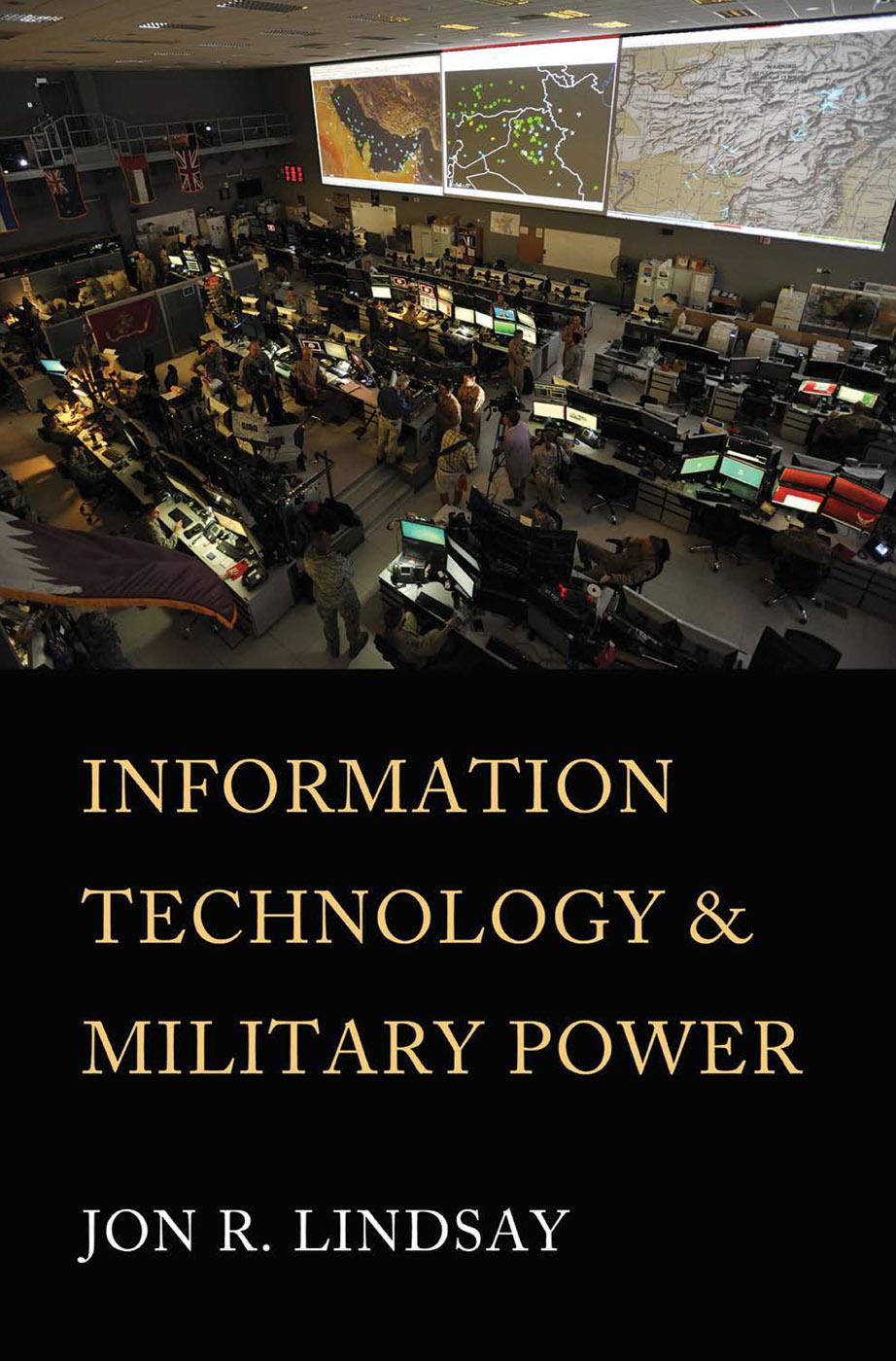
Militaries with state-of-the-art information technology sometimes bog down in confusing conflicts. To understand why, it is important to understand the micro-foundations of military power in the information age, and this is exactly what Jon R. Lindsay's Information Technology and Military Power gives us. As Lindsay shows, digital systems now mediate almost every effort to gather, store, display, analyze, and communicate information in military organizations. He highlights how personnel now struggle with their own information systems as much as with the enemy.
Throughout this foray into networked technology in military operations, we see how information practice—the ways in which practitioners use technology in actual operations—shapes the effectiveness of military performance. The quality of information practice depends on the interaction between strategic problems and organizational solutions. Information Technology and Military Power explores information practice through a series of detailed historical cases and ethnographic studies of military organizations at war. Lindsay explains why the US military, despite all its technological advantages, has struggled for so long in unconventional conflicts against weaker adversaries. This same perspective suggests that the US retains important advantages against advanced competitors like China that are less prepared to cope with the complexity of information systems in wartime. Lindsay argues convincingly that a better understanding of how personnel actually use technology can inform the design of command and control, improve the net assessment of military power, and promote reforms to improve military performance. Warfighting problems and technical solutions keep on changing, but information practice is always stuck in between.
Before Memmo my notes were scattered across PDFs. Now a workspace pulls everything into one place — I see exactly what's still left to study.
Memmo's summaries are gold before exams. I don't have to re-read 800 pages two weeks before — just the important parts.
The AI chat has saved me the night before an exam more than once. I just keep asking until I get it — no waiting on a study group to reply.
The quizzes hit exactly what I need to know. Memmo tracks what I get stuck on — so I only practice what's worth it.
Flashcards with spaced repetition are magic. Memmo knows when I'm about to forget something and brings it back.
The AI podcasts are my favorite. I listen on my way to school and get a recap without sitting at a computer.

Handbok i kvalitativa metoder
281 kr

Hållbar utveckling: en introduktion för ingenjörer och andra problemlösare
334 kr

Brymans Samhällsvetenskapliga metoder
390 kr

Projektledning
491 kr

Den orättvisa hälsan: om socioekonomiska skillnader i hälsa och livslängd
326 kr

Vetenskapsteori för nybörjare
196 kr

Organizational Leadership
429 kr

På väg mot läraryrket
172 kr

Det sociala livet i skolan: Socialpsykologiska perspektiv
253 kr

Betygsättningens didaktik
151 kr

Personality
402 kr

Studying Leadership
404 kr

Managing Innovation
477 kr

Introduktion till samhällsvetenskaplig metod
347 kr

The Psychology of Sex and Gender
698 kr

Evidens och kunskap för socialt arbete
207 kr

Introduction to Leadership
605 kr