
Before Memmo my notes were scattered across PDFs. Now a workspace pulls everything into one place — I see exactly what's still left to study.
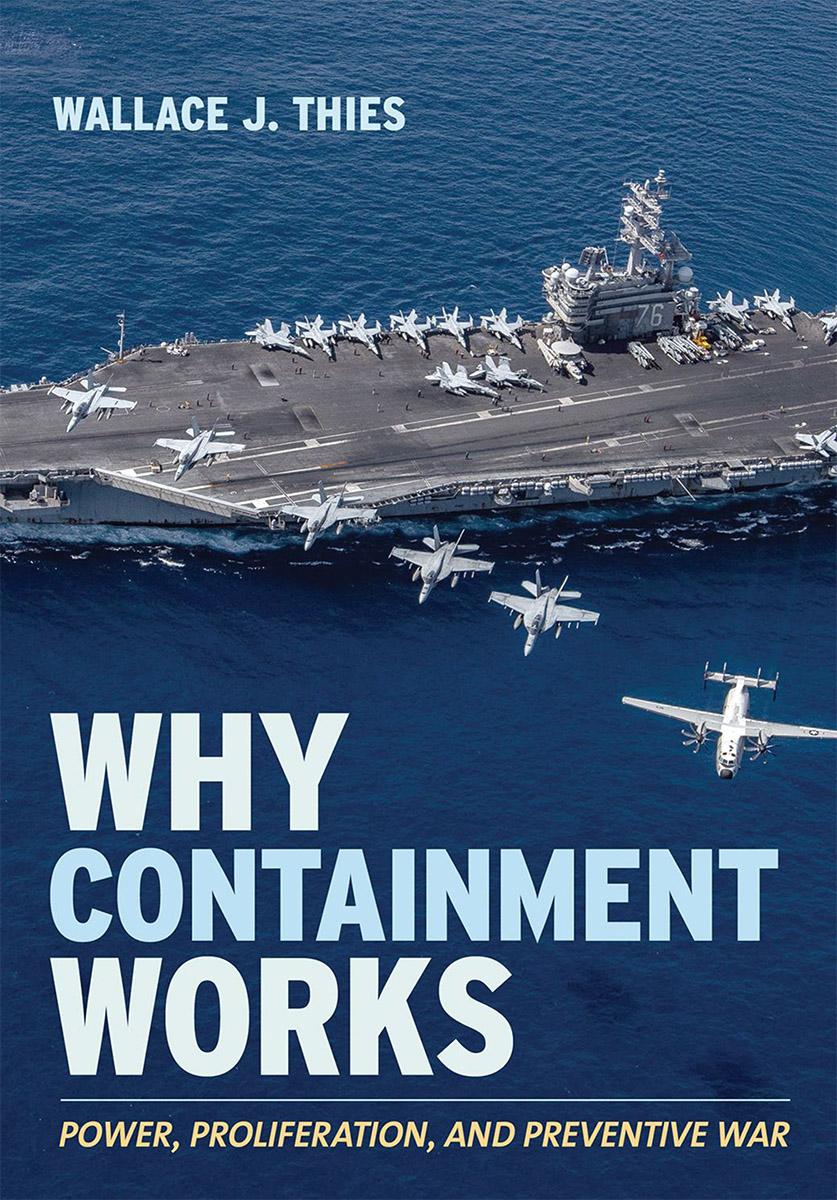
Why Containment Works examines the conduct of American foreign policy during and after the Cold War through the lens of applied policy analysis. Wallace J. Thies argues that the Bush Doctrine after 2002 was a theory of victory—a coherent strategic view that tells a state how best to transform scarce resources into useful military assets, and how to employ those assets in conflicts. He contrasts prescriptions derived from the Bush Doctrine with an alternative theory of victory, one based on containment and deterrence, which US presidents employed for much of the Cold War period. There are, he suggests, multiple reasons for believing that containment was working well against Saddam Hussein's Iraq after the first Gulf War and that there was no need to invade Iraq in 2003.
Thies reexamines five cases of containment drawn from the Cold War and the post-Cold War world. Each example, Thies suggests, offered US officials a choice between reliance on traditional notions of containment and reliance on a more forceful approach. To what extent did reliance on rival theories of victory—containment versus first strike—contribute to a successful outcome? Might these cases have been resolved more quickly, at lower cost, and more favorably to American interests if US officials had chosen a different mix of the coercive and deterrent tools available to them? Thies suggests that the conventional wisdom about containment was often wrong: a superpower like the United States has such vast resources at its disposal that it could easily thwart Libya, Iraq, and Iran by means other than open war.
Before Memmo my notes were scattered across PDFs. Now a workspace pulls everything into one place — I see exactly what's still left to study.
Memmo's summaries are gold before exams. I don't have to re-read 800 pages two weeks before — just the important parts.
The AI chat has saved me the night before an exam more than once. I just keep asking until I get it — no waiting on a study group to reply.
The quizzes hit exactly what I need to know. Memmo tracks what I get stuck on — so I only practice what's worth it.
Flashcards with spaced repetition are magic. Memmo knows when I'm about to forget something and brings it back.
The AI podcasts are my favorite. I listen on my way to school and get a recap without sitting at a computer.

Handbok i kvalitativa metoder
281 kr

Hållbar utveckling: en introduktion för ingenjörer och andra problemlösare
334 kr

Brymans Samhällsvetenskapliga metoder
390 kr

Projektledning
491 kr

Den orättvisa hälsan: om socioekonomiska skillnader i hälsa och livslängd
326 kr

Organizational Leadership
429 kr

Vetenskapsteori för nybörjare
196 kr

På väg mot läraryrket
172 kr

Det sociala livet i skolan: Socialpsykologiska perspektiv
253 kr

Betygsättningens didaktik
151 kr

Personality
402 kr

Studying Leadership
404 kr

Managing Innovation
477 kr

Introduktion till samhällsvetenskaplig metod
347 kr

The Psychology of Sex and Gender
698 kr

Evidens och kunskap för socialt arbete
207 kr

Introduction to Leadership
605 kr