
Before Memmo my notes were scattered across PDFs. Now a workspace pulls everything into one place — I see exactly what's still left to study.
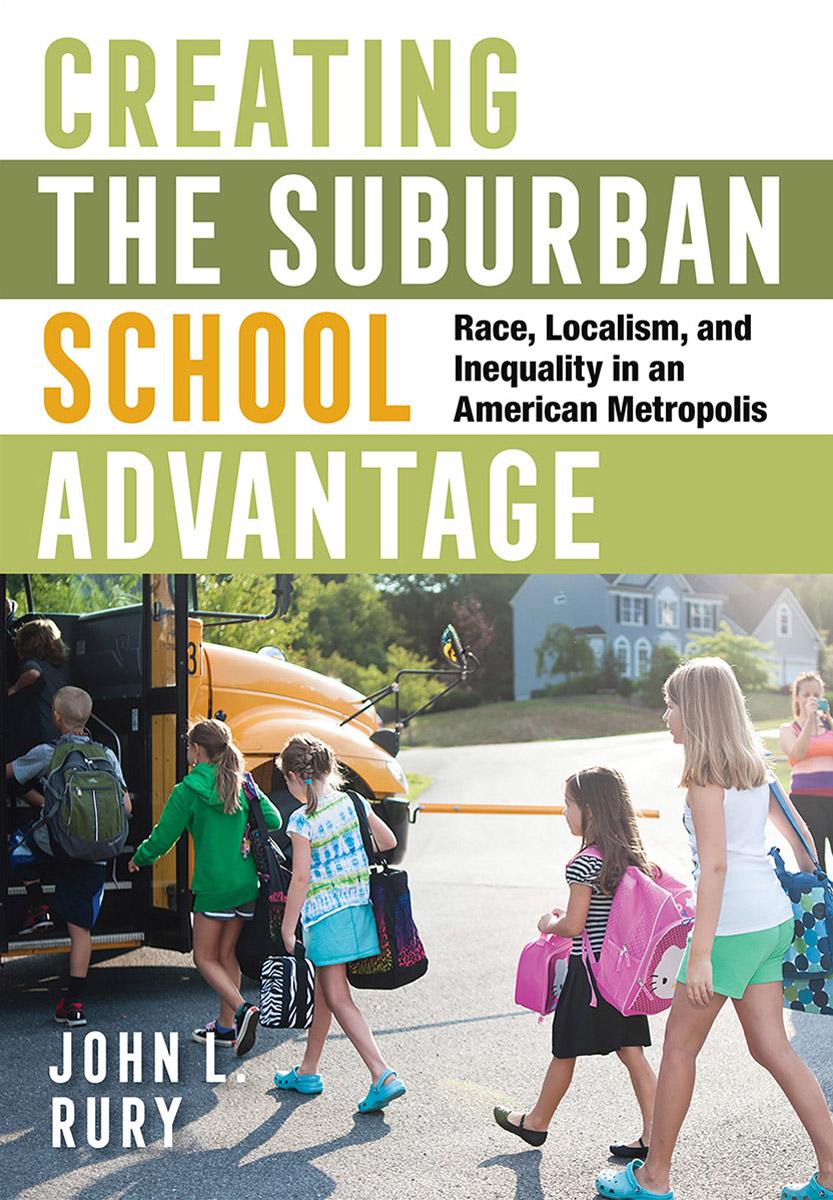
Creating the Suburban School Advantage explains how American suburban school districts gained a competitive edge over their urban counterparts. John L. Rury provides a national overview of the process, focusing on the period between 1950 and 1980, and presents a detailed study of metropolitan Kansas City, a region representative of trends elsewhere.
While big-city districts once were widely seen as superior and attracted families seeking the best educational opportunities for their children, suburban school systems grew rapidly in the post–World War II era as middle-class and more affluent families moved to those communities. As Rury relates, at the same time, economically dislocated African Americans migrated from the South to center-city neighborhoods, testing the capacity of urban institutions. As demographic trends drove this urban-suburban divide, a suburban ethos of localism contributed to the socioeconomic exclusion that became a hallmark of outlying school systems. School districts located wholly or partly within the municipal boundaries of Kansas City, Missouri, make for revealing cases that illuminate our understanding of these national patterns.
As Rury demonstrates, struggles to achieve greater educational equity and desegregation in urban centers contributed to so-called white flight and what Senator Daniel Patrick Moynihan considered to be a crisis of urban education in 1965. Despite the often valiant efforts made to serve inner city children and bolster urban school districts, this exodus, Rury cogently argues, created a new metropolitan educational hierarchy—a mirror image of the urban-centric model that had prevailed before World War II. The stubborn perception that suburban schools are superior, based on test scores and budgets, has persisted into the twenty-first century and instantiates today's metropolitan landscape of social, economic, and educational inequality.
Before Memmo my notes were scattered across PDFs. Now a workspace pulls everything into one place — I see exactly what's still left to study.
Memmo's summaries are gold before exams. I don't have to re-read 800 pages two weeks before — just the important parts.
The AI chat has saved me the night before an exam more than once. I just keep asking until I get it — no waiting on a study group to reply.
The quizzes hit exactly what I need to know. Memmo tracks what I get stuck on — so I only practice what's worth it.
Flashcards with spaced repetition are magic. Memmo knows when I'm about to forget something and brings it back.
The AI podcasts are my favorite. I listen on my way to school and get a recap without sitting at a computer.

Handbok i kvalitativa metoder
281 kr

Hållbar utveckling: en introduktion för ingenjörer och andra problemlösare
334 kr

Brymans Samhällsvetenskapliga metoder
390 kr

Projektledning
491 kr

Den orättvisa hälsan: om socioekonomiska skillnader i hälsa och livslängd
326 kr

Organizational Leadership
429 kr

Vetenskapsteori för nybörjare
196 kr

På väg mot läraryrket
172 kr

Det sociala livet i skolan: Socialpsykologiska perspektiv
253 kr

Betygsättningens didaktik
151 kr

Personality
402 kr

Studying Leadership
404 kr

Managing Innovation
477 kr

Introduktion till samhällsvetenskaplig metod
347 kr

The Psychology of Sex and Gender
698 kr

Evidens och kunskap för socialt arbete
207 kr

Introduction to Leadership
605 kr