
Before Memmo my notes were scattered across PDFs. Now a workspace pulls everything into one place — I see exactly what's still left to study.
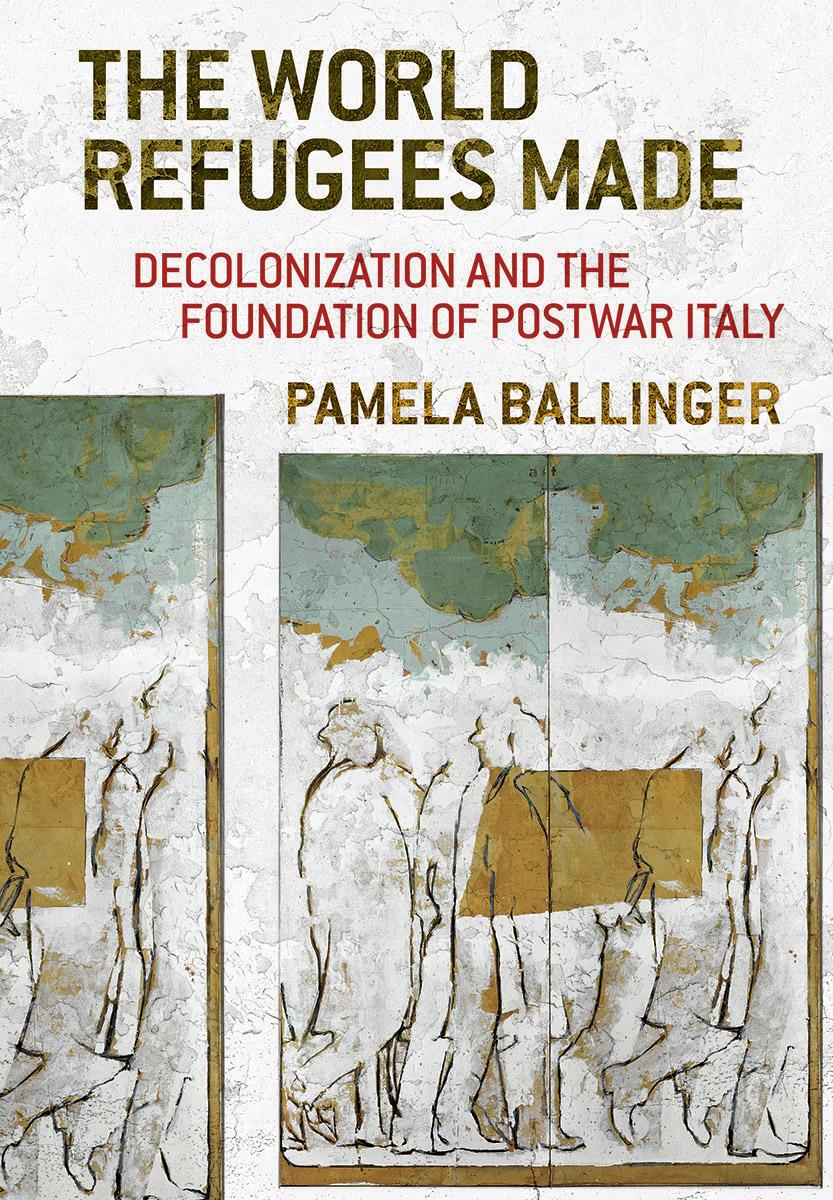
In The World Refugees Made, Pamela Ballinger explores Italy's remaking in light of the loss of a wide range of territorial possessions—colonies, protectorates, and provinces—in Africa and the Balkans, the repatriation of Italian nationals from those territories, and the integration of these "national refugees" into a country devastated by war and overwhelmed by foreign displaced persons from Eastern Europe. Post-World War II Italy served as an important laboratory, in which categories differentiating foreign refugees (who had crossed national boundaries) from national refugees (those who presumably did not) were debated, refined, and consolidated. Such distinctions resonated far beyond that particular historical moment, informing legal frameworks that remain in place today. Offering an alternative genealogy of the postwar international refugee regime, Ballinger focuses on the consequences of one of its key omissions: the ineligibility from international refugee status of those migrants who became classified as national refugees.
The presence of displaced persons also posed the complex question of who belonged, culturally and legally, in an Italy that was territorially and politically reconfigured by decolonization. The process of demarcating types of refugees thus represented a critical moment for Italy, one that endorsed an ethnic conception of identity that citizenship laws made explicit. Such an understanding of identity remains salient, as Italians still invoke language and race as bases of belonging in the face of mass immigration and ongoing refugee emergencies. Ballinger's analysis of the postwar international refugee regime and Italian decolonization illuminates the study of human rights history, humanitarianism, postwar reconstruction, fascism and its aftermaths, and modern Italian history.
Open Access edition funded by the National Endowment for the Humanities
Before Memmo my notes were scattered across PDFs. Now a workspace pulls everything into one place — I see exactly what's still left to study.
Memmo's summaries are gold before exams. I don't have to re-read 800 pages two weeks before — just the important parts.
The AI chat has saved me the night before an exam more than once. I just keep asking until I get it — no waiting on a study group to reply.
The quizzes hit exactly what I need to know. Memmo tracks what I get stuck on — so I only practice what's worth it.
Flashcards with spaced repetition are magic. Memmo knows when I'm about to forget something and brings it back.
The AI podcasts are my favorite. I listen on my way to school and get a recap without sitting at a computer.

Handbok i kvalitativa metoder
281 kr

Hållbar utveckling: en introduktion för ingenjörer och andra problemlösare
334 kr

Brymans Samhällsvetenskapliga metoder
390 kr

Projektledning
491 kr

Den orättvisa hälsan: om socioekonomiska skillnader i hälsa och livslängd
326 kr

Organizational Leadership
429 kr

Vetenskapsteori för nybörjare
196 kr

På väg mot läraryrket
172 kr

Det sociala livet i skolan: Socialpsykologiska perspektiv
253 kr

Betygsättningens didaktik
151 kr

Personality
402 kr

Studying Leadership
404 kr

Managing Innovation
477 kr

Introduktion till samhällsvetenskaplig metod
347 kr

The Psychology of Sex and Gender
698 kr

Evidens och kunskap för socialt arbete
207 kr

Introduction to Leadership
605 kr