
Before Memmo my notes were scattered across PDFs. Now a workspace pulls everything into one place — I see exactly what's still left to study.
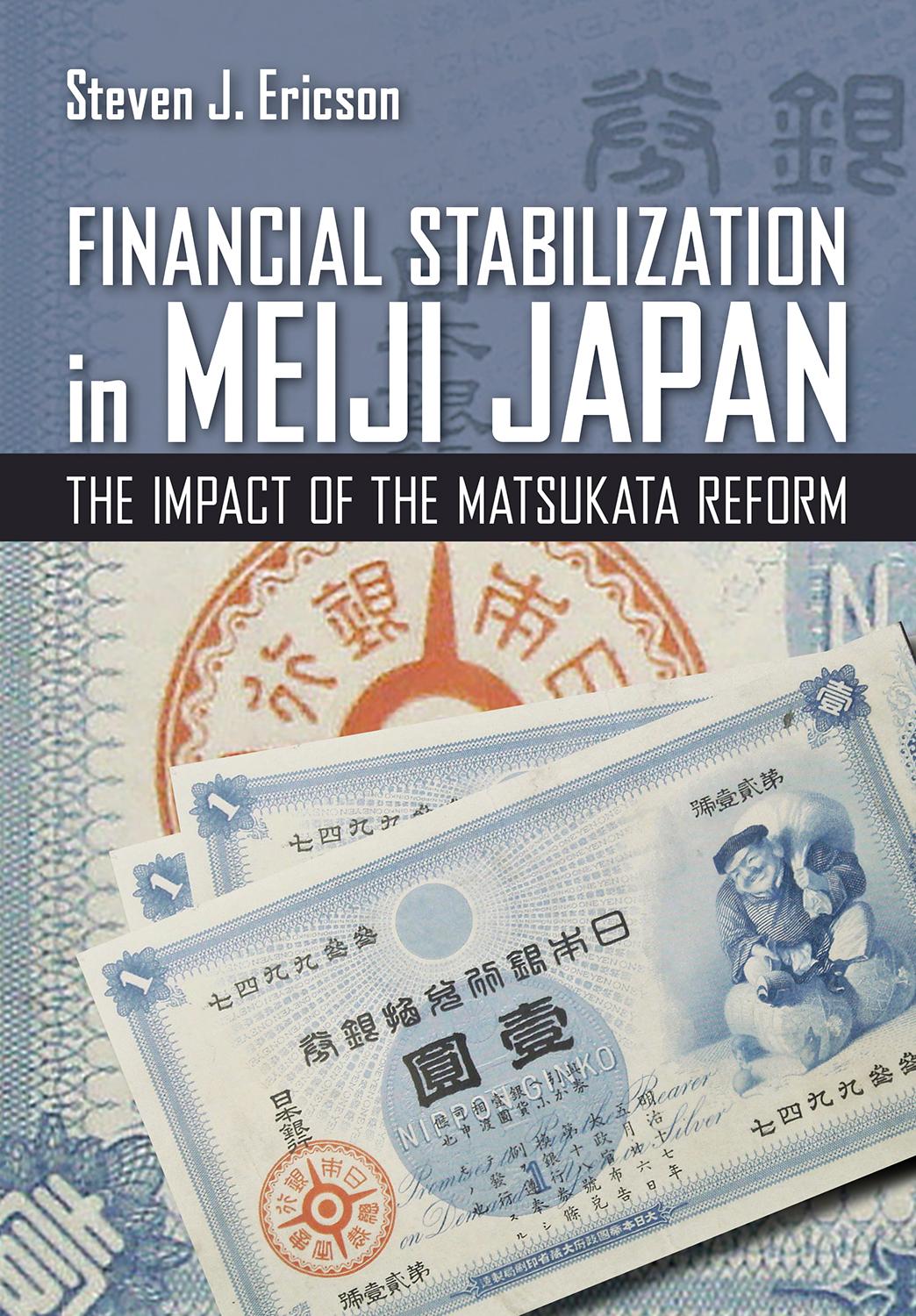
With a new look at the 1880s financial reforms in Japan, Steven J. Ericson's Financial Stabilization in Meiji Japan overturns widely held views of the program carried out by Finance Minister Matsukata Masayoshi. As Ericson shows, rather than constituting an orthodox financial-stabilization program—a sort of precursor of the "neoliberal" reforms promoted by the IMF in the 1980s and 1990s—Matsukata's policies differed in significant ways from both classical economic liberalism and neoliberal orthodoxy.
The Matsukata financial reform has become famous largely for the wrong reasons, and Ericson sets the record straight. He shows that Matsukata intended to pursue fiscal retrenchment and budget-balancing when he became finance minister in late 1881. Various exigencies, including foreign military crises and a worsening domestic depression, compelled him instead to increase spending by running deficits and floating public bonds. Though he drastically reduced the money supply, he combined the positive and contractionary policies of his immediate predecessors to pull off a program of "expansionary austerity" paralleling state responses to financial crisis elsewhere in the world both then and now.
Through a new and much-needed recalibration of this pivotal financial reform, Financial Stabilization in Meiji Japan demonstrates that, in several ways, ranging from state-led export promotion to the creation of a government-controlled central bank, Matsukata advanced policies that were more in line with a nationalist, developmentalist approach than with a liberal economic one. Ericson shows that Matsukata Masayoshi was far from a rigid adherent of classical economic liberalism.
Before Memmo my notes were scattered across PDFs. Now a workspace pulls everything into one place — I see exactly what's still left to study.
Memmo's summaries are gold before exams. I don't have to re-read 800 pages two weeks before — just the important parts.
The AI chat has saved me the night before an exam more than once. I just keep asking until I get it — no waiting on a study group to reply.
The quizzes hit exactly what I need to know. Memmo tracks what I get stuck on — so I only practice what's worth it.
Flashcards with spaced repetition are magic. Memmo knows when I'm about to forget something and brings it back.
The AI podcasts are my favorite. I listen on my way to school and get a recap without sitting at a computer.

Handbok i kvalitativa metoder
281 kr

Hållbar utveckling: en introduktion för ingenjörer och andra problemlösare
334 kr

Brymans Samhällsvetenskapliga metoder
390 kr

Projektledning
491 kr

Den orättvisa hälsan: om socioekonomiska skillnader i hälsa och livslängd
326 kr

Organizational Leadership
429 kr

Vetenskapsteori för nybörjare
196 kr

På väg mot läraryrket
172 kr

Det sociala livet i skolan: Socialpsykologiska perspektiv
253 kr

Betygsättningens didaktik
151 kr

Personality
402 kr

Studying Leadership
404 kr

Managing Innovation
477 kr

Introduktion till samhällsvetenskaplig metod
347 kr

The Psychology of Sex and Gender
698 kr

Evidens och kunskap för socialt arbete
207 kr

Introduction to Leadership
605 kr