
Before Memmo my notes were scattered across PDFs. Now a workspace pulls everything into one place — I see exactly what's still left to study.
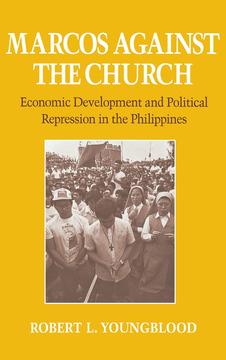
The election of Ferdinand Marcos to the presidency of the Republic of the Philippines coincided with the conclusion of the work of Vatican II in 1965; and Marcos's dictatorial policies would inevitably clash with the Vatican's call for the clergy to advocate greater social justice for the poor. In this authoritative account of the role of the Catholic Church in the recent history of the Philippines, Robert L. Youngblood traces the political engagement of the Church over the twenty years between Marcos's election and his ouster from power in 1986.
Drawing upon extensive research, Youngblood explains how, although church and state professed to share the goal of improving the welfare of the poor, Marcos's economic development policies and oppressive rule created church opposition which helped accelerate the collapse of his regime. Youngblood considers the evolution of church programs from social action projects, such as the organization of cooperatives and credit unions, to the development of social justice programs that emphasized the creation of more democratic and caring communities. He examines the dynamics by which the leaders of the Philippine Roman Catholic and Protestant churches moved from a brief period of goodwill toward the Marcos dictatorship to considerable opposition by the late 1970s, as church-sponsored work among the poor was increasingly viewed by the regime as subversive. Youngblood shows that after the assassination of Benigno Aquino, Jr., in 1983, the deterioration of the standard of living of average Filipinos, along with Marcos's repressive policies toward the churches and other abuses in the name of national security, were factors which impelled powerful church figures to actively oppose the dictatorship.
Tracing the internal deliberations of the Philippine churches as they came to take the lead in opposing human rights abuses, Marcos against the Church deepens our understanding of problematic relations between church and state. Historians and social scientists interested in the Philippines and modern Southeast Asia, historians of religion, political scientists working in comparative politics and political development, and others concerned with issues of human rights will want to read it.
Before Memmo my notes were scattered across PDFs. Now a workspace pulls everything into one place — I see exactly what's still left to study.
Memmo's summaries are gold before exams. I don't have to re-read 800 pages two weeks before — just the important parts.
The AI chat has saved me the night before an exam more than once. I just keep asking until I get it — no waiting on a study group to reply.
The quizzes hit exactly what I need to know. Memmo tracks what I get stuck on — so I only practice what's worth it.
Flashcards with spaced repetition are magic. Memmo knows when I'm about to forget something and brings it back.
The AI podcasts are my favorite. I listen on my way to school and get a recap without sitting at a computer.

Handbok i kvalitativa metoder
281 kr

Hållbar utveckling: en introduktion för ingenjörer och andra problemlösare
334 kr

Brymans Samhällsvetenskapliga metoder
390 kr

Projektledning
491 kr

Den orättvisa hälsan: om socioekonomiska skillnader i hälsa och livslängd
326 kr

Vetenskapsteori för nybörjare
196 kr

Organizational Leadership
429 kr

På väg mot läraryrket
172 kr

Det sociala livet i skolan: Socialpsykologiska perspektiv
253 kr

Betygsättningens didaktik
151 kr

Personality
402 kr

Studying Leadership
404 kr

Managing Innovation
477 kr

Introduktion till samhällsvetenskaplig metod
347 kr

The Psychology of Sex and Gender
698 kr

Evidens och kunskap för socialt arbete
207 kr

Introduction to Leadership
605 kr