
Before Memmo my notes were scattered across PDFs. Now a workspace pulls everything into one place — I see exactly what's still left to study.
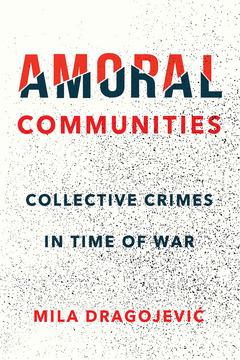
In Amoral Communities, Mila Dragojević examines how conditions conducive to atrocities against civilians are created during wartime in some communities. She identifies the exclusion of moderates and the production of borders as the main processes. In these places, political and ethnic identities become linked and targeted violence against civilians becomes both tolerated and justified by the respective authorities as a necessary sacrifice for a greater political goal.
Dragojević augments the literature on genocide and civil wars by demonstrating how violence can be used as a political strategy, and how communities, as well as individuals, remember episodes of violence against civilians. The communities on which she focuses are Croatia in the 1990s and Uganda and Guatemala in the 1980s. In each case Dragojević considers how people who have lived peacefully as neighbors for many years are suddenly transformed into enemies, yet intracommunal violence is not ubiquitous throughout the conflict zone; rather, it is specific to particular regions or villages within those zones. Reporting on the varying wartime experiences of individuals, she adds depth, emotion, and objectivity to the historical and socioeconomic conditions that shaped each conflict.
Furthermore, as Amoral Communities describes, the exclusion of moderates and the production of borders limit individuals' freedom to express their views, work to prevent the possible defection of members of an in-group, and facilitate identification of individuals who are purportedly a threat. Even before mass killings begin, Dragojević finds, these and similar changes will have transformed particular villages or regions into amoral communities, places where the definition of crime changes and violence is justified as a form of self-defense by perpetrators.
Before Memmo my notes were scattered across PDFs. Now a workspace pulls everything into one place — I see exactly what's still left to study.
Memmo's summaries are gold before exams. I don't have to re-read 800 pages two weeks before — just the important parts.
The AI chat has saved me the night before an exam more than once. I just keep asking until I get it — no waiting on a study group to reply.
The quizzes hit exactly what I need to know. Memmo tracks what I get stuck on — so I only practice what's worth it.
Flashcards with spaced repetition are magic. Memmo knows when I'm about to forget something and brings it back.
The AI podcasts are my favorite. I listen on my way to school and get a recap without sitting at a computer.

Handbok i kvalitativa metoder
281 kr

Hållbar utveckling: en introduktion för ingenjörer och andra problemlösare
334 kr

Brymans Samhällsvetenskapliga metoder
390 kr

Projektledning
491 kr

Den orättvisa hälsan: om socioekonomiska skillnader i hälsa och livslängd
326 kr

Vetenskapsteori för nybörjare
196 kr

Organizational Leadership
429 kr

På väg mot läraryrket
172 kr

Det sociala livet i skolan: Socialpsykologiska perspektiv
253 kr

Betygsättningens didaktik
151 kr

Personality
402 kr

Studying Leadership
404 kr

Managing Innovation
477 kr

Introduktion till samhällsvetenskaplig metod
347 kr

The Psychology of Sex and Gender
698 kr

Evidens och kunskap för socialt arbete
207 kr

Introduction to Leadership
605 kr