
Before Memmo my notes were scattered across PDFs. Now a workspace pulls everything into one place — I see exactly what's still left to study.
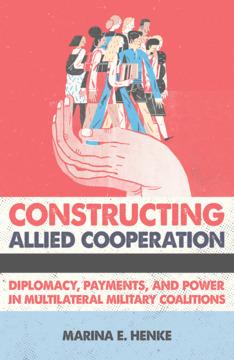
How do states overcome problems of collective action in the face of human atrocities, terrorism and the threat of weapons of mass destruction? How does international burden-sharing in this context look like: between the rich and the poor; the big and the small? These are the questions Marina E. Henke addresses in her new book Constructing Allied Cooperation. Through qualitative and quantitative analysis of 80 multilateral military coalitions, Henke demonstrates that coalitions do not emerge naturally. Rather, pivotal states deliberately build them. They develop operational plans and bargain suitable third parties into the coalition, purposefully using their bilateral and multilateral diplomatic connections—what Henke terms diplomatic embeddedness—as a resource. As Constructing Allied Cooperation shows, these ties constitute an invaluable state capability to engage others in collective action: they are tools to construct cooperation.
Pulling apart the strategy behind multilateral military coalition-building, Henke looks at the ramifications and side effects as well. As she notes, via these ties, pivotal states have access to private information on the deployment preferences of potential coalition participants. Moreover, they facilitate issue-linkages and side-payments and allow states to overcome problems of credible commitments. Finally, pivotal states can use common institutional contacts (IO officials) as cooperation brokers, and they can convert common institutional venues into fora for negotiating coalitions.
The theory and evidence presented by Henke force us to revisit the conventional wisdom on how cooperation in multilateral military operations comes about. The author generates new insights with respect to who is most likely to join a given multilateral intervention, what factors influence the strength and capacity of individual coalitions, and what diplomacy and diplomatic ties are good for. Moreover, as the Trump administration promotes an "America First" policy and withdraws from international agreements and the United Kingdom completes Brexit, Constructing Allied Cooperation is an important reminder that international security cannot be delinked from more mundane forms of cooperation; multilateral military coalitions thrive or fail depending on the breadth and depth of existing social and diplomatic networks.
Before Memmo my notes were scattered across PDFs. Now a workspace pulls everything into one place — I see exactly what's still left to study.
Memmo's summaries are gold before exams. I don't have to re-read 800 pages two weeks before — just the important parts.
The AI chat has saved me the night before an exam more than once. I just keep asking until I get it — no waiting on a study group to reply.
The quizzes hit exactly what I need to know. Memmo tracks what I get stuck on — so I only practice what's worth it.
Flashcards with spaced repetition are magic. Memmo knows when I'm about to forget something and brings it back.
The AI podcasts are my favorite. I listen on my way to school and get a recap without sitting at a computer.

Handbok i kvalitativa metoder
281 kr

Hållbar utveckling: en introduktion för ingenjörer och andra problemlösare
334 kr

Brymans Samhällsvetenskapliga metoder
390 kr

Projektledning
491 kr

Den orättvisa hälsan: om socioekonomiska skillnader i hälsa och livslängd
326 kr

Organizational Leadership
429 kr

Vetenskapsteori för nybörjare
196 kr

På väg mot läraryrket
172 kr

Det sociala livet i skolan: Socialpsykologiska perspektiv
253 kr

Betygsättningens didaktik
151 kr

Personality
402 kr

Studying Leadership
404 kr

Managing Innovation
477 kr

Introduktion till samhällsvetenskaplig metod
347 kr

The Psychology of Sex and Gender
698 kr

Evidens och kunskap för socialt arbete
207 kr

Introduction to Leadership
605 kr