
Before Memmo my notes were scattered across PDFs. Now a workspace pulls everything into one place — I see exactly what's still left to study.
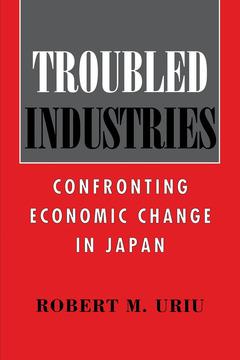
Robert M. Uriu analyzes the industrial policy-making process in Japan for industries faced with sudden economic decline. He takes exception to the traditional view that policy bureaucrats in Japan are autonomous and insulated from societal pressures, arguing that the private sector in Japan has been actively involved in developing and implementing industrial policy.
After carefully defining his conceptual framework, Uriu presents case studies of four industries: cotton spinning, steelmaking in minimills, synthetic fibers, and ship building, along with less detailed examinations of coal mining, aluminum smelting, paper, and steelmaking in integrated mills. These industries, he suggests, have sought public policies that enable them to manage competition domestically. In particular, they have fostered cartels to control production or capacity levels in an attempt to stabilize their industry's conditions. In textiles, steel, and ships, Uriu focuses on several of the industries most important to Japan's early postwar economic successes, the very ones first to confront the problems of decline and adjustment.
Uriu also shows how Japan's policy choices more recently have become constrained by changes in the domestic antitrust environment and in Japan's external relations. In particular, pressures from Japan's trading partners have limited the policy tools available to Tokyo. As a result, industries have experienced increasing difficulties over time in managing competition in the domestic market. Analysts need to integrate domestic and international factors more carefully, Uriu argues, in order to trace more accurately the interactions between industry actors and the policy environment they face.
Before Memmo my notes were scattered across PDFs. Now a workspace pulls everything into one place — I see exactly what's still left to study.
Memmo's summaries are gold before exams. I don't have to re-read 800 pages two weeks before — just the important parts.
The AI chat has saved me the night before an exam more than once. I just keep asking until I get it — no waiting on a study group to reply.
The quizzes hit exactly what I need to know. Memmo tracks what I get stuck on — so I only practice what's worth it.
Flashcards with spaced repetition are magic. Memmo knows when I'm about to forget something and brings it back.
The AI podcasts are my favorite. I listen on my way to school and get a recap without sitting at a computer.

Handbok i kvalitativa metoder
281 kr

Hållbar utveckling: en introduktion för ingenjörer och andra problemlösare
334 kr

Brymans Samhällsvetenskapliga metoder
390 kr

Projektledning
491 kr

Den orättvisa hälsan: om socioekonomiska skillnader i hälsa och livslängd
326 kr

Vetenskapsteori för nybörjare
196 kr

Organizational Leadership
429 kr

På väg mot läraryrket
172 kr

Det sociala livet i skolan: Socialpsykologiska perspektiv
253 kr

Betygsättningens didaktik
151 kr

Personality
402 kr

Studying Leadership
404 kr

Managing Innovation
477 kr

Introduktion till samhällsvetenskaplig metod
347 kr

The Psychology of Sex and Gender
698 kr

Evidens och kunskap för socialt arbete
207 kr

Introduction to Leadership
605 kr