
Before Memmo my notes were scattered across PDFs. Now a workspace pulls everything into one place — I see exactly what's still left to study.
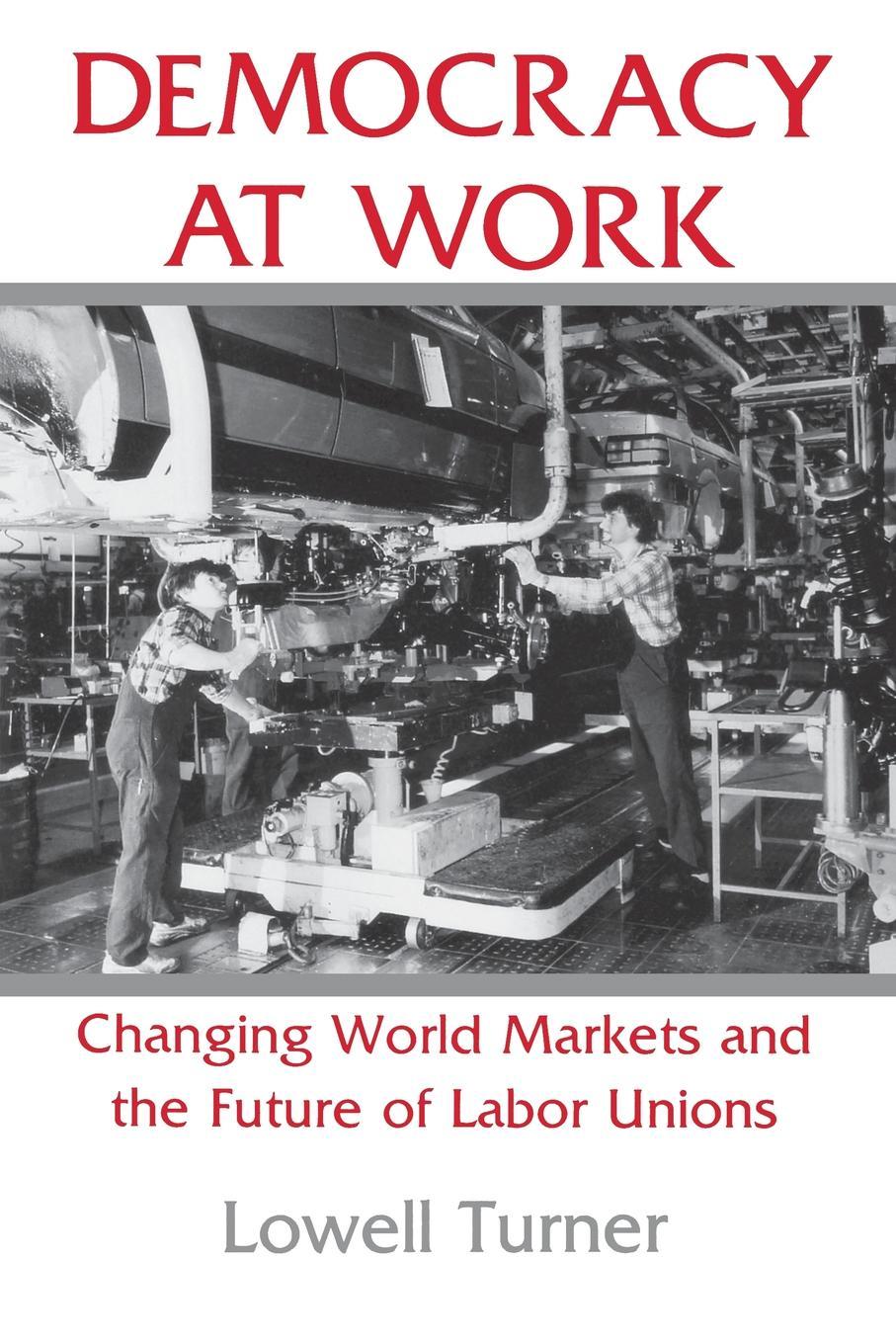
West Germany from 1949 to 1990 was a story of virtually unparalleled political and economic success. This economic miracle incorporated a well-functioning political democracy, expanded to include a social partnership system of economic representation. Then the Wall came down. Economic crisis in the East—industrial collapse, massive layoffs, a demoralized workforce—triggered gloomy predictions. Was this the beginning of the end for the widely admired German model?
Lowell Turner has extensively researched the German transformation in the 1990s. Indeed, in 1993 he was at the factory gates at Siemens in Rostock for the first major strike in post-Cold War eastern Germany. In that strike, and in a series of other incisively analyzed workplace and job developments in eastern Germany, he shows the remarkable resilience and flexibility of the German social partnership and the contribution of its institutions to unification. His controversial and, to some, radical findings will stimulate debate at home and abroad.
Moving from world markets to the shop floor, this book is an ambitious and comprehensive analysis of the fate of contemporary unions in industrial societies. The international results of intensified competition and technological advance have stimulated much policy debate, but Lowell Turner is interested in clarifying a phenomenon that is far less widely understood: the political effects of new work organization on labor and management.
Noting that the same cluster of production innovation and technological change has produced widely contrasting crossnational industrial relations outcomes, Turner provides a detailed, systematic study of the politics of new work organization at selected auto plants in the United States and Germany. He then examines in a more schematic fashion the telecommunications and apparel industries of those countries, as well as developments elsewhere. Exploring diverse patterns of union-management relations, he demonstrates the importance of existing national institutions and patterns of labor-management-state bargaining as sources of variation in work reorganization and in the collective representation of workers' interests. Particular national institutions of worker interest representation, he argues, shape managerial decisions and hence national industry responses to intensified competition in world markets. His industry-by-industry comparison explains why the American labor movement has declined in influence over the last decade, while the labor movements in Germany and several other countries have not. Further observations on the situation in Britain, Italy, Sweden, and Japan give depth and specificity to the terms of his argument. Most important, perhaps, Turner's analysis shows the conditions necessary for stable industrial relations settlements and a resurgence of union influence in the contemporary world economy.
As interest grows in international business and comparative industrial relations, Democracy at Work will attract the attention of political scientists, economists, sociologists, and industrial and labor relations specialists, as well as representatives of labor, business, and government.
Before Memmo my notes were scattered across PDFs. Now a workspace pulls everything into one place — I see exactly what's still left to study.
Memmo's summaries are gold before exams. I don't have to re-read 800 pages two weeks before — just the important parts.
The AI chat has saved me the night before an exam more than once. I just keep asking until I get it — no waiting on a study group to reply.
The quizzes hit exactly what I need to know. Memmo tracks what I get stuck on — so I only practice what's worth it.
Flashcards with spaced repetition are magic. Memmo knows when I'm about to forget something and brings it back.
The AI podcasts are my favorite. I listen on my way to school and get a recap without sitting at a computer.

Handbok i kvalitativa metoder
281 kr

Hållbar utveckling: en introduktion för ingenjörer och andra problemlösare
334 kr

Brymans Samhällsvetenskapliga metoder
390 kr

Projektledning
491 kr

Den orättvisa hälsan: om socioekonomiska skillnader i hälsa och livslängd
326 kr

Organizational Leadership
429 kr

Vetenskapsteori för nybörjare
196 kr

På väg mot läraryrket
172 kr

Det sociala livet i skolan: Socialpsykologiska perspektiv
253 kr

Betygsättningens didaktik
151 kr

Personality
402 kr

Studying Leadership
404 kr

Managing Innovation
477 kr

Introduktion till samhällsvetenskaplig metod
347 kr

The Psychology of Sex and Gender
698 kr

Evidens och kunskap för socialt arbete
207 kr

Introduction to Leadership
605 kr