
Before Memmo my notes were scattered across PDFs. Now a workspace pulls everything into one place — I see exactly what's still left to study.
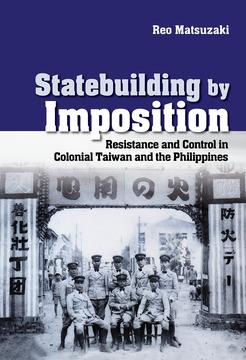
How do modern states emerge from the turmoil of undergoverned spaces? This is the question Reo Matsuzaki ponders in Statebuilding by Imposition. Comparing Taiwan and the Philippines under the colonial rule of Japan and the United States, in the late nineteenth and early twentieth centuries, he shows similar situations produce different outcomes and yet lead us to one conclusion.
Contemporary statebuilding efforts by the US and the UN start from the premise that strong states can and should be constructed through the establishment of representative government institutions, a liberalized economy, and laws that protect private property and advance personal liberties. But when statebuilding runs into widespread popular resistance, as it did in both Taiwan the Philippines, statebuilding success depends on reconfiguring the very fabric of society, embracing local elites rather than the broad population, and giving elites the power to discipline the people. In Taiwan under Japanese rule, local elites behaved as obedient and effective intermediaries and contributed to government authority; in the Philippines under US rule, they became the very cause of the state's weakness by aggrandizing wealth, corrupting the bureaucracy, and obstructing policy enforcement. As Statebuilding by Imposition details, Taiwanese and Filipino history teaches us that the imposition of democracy is no guarantee of success when forming a new state and that illiberal actions may actually be more effective. Matsuzaki's controversial political history forces us to question whether statebuilding, given what it would take for this to result in the construction of a strong state, is the best way to address undergoverned spaces in the world today.
Before Memmo my notes were scattered across PDFs. Now a workspace pulls everything into one place — I see exactly what's still left to study.
Memmo's summaries are gold before exams. I don't have to re-read 800 pages two weeks before — just the important parts.
The AI chat has saved me the night before an exam more than once. I just keep asking until I get it — no waiting on a study group to reply.
The quizzes hit exactly what I need to know. Memmo tracks what I get stuck on — so I only practice what's worth it.
Flashcards with spaced repetition are magic. Memmo knows when I'm about to forget something and brings it back.
The AI podcasts are my favorite. I listen on my way to school and get a recap without sitting at a computer.

Handbok i kvalitativa metoder
281 kr

Hållbar utveckling: en introduktion för ingenjörer och andra problemlösare
334 kr

Brymans Samhällsvetenskapliga metoder
390 kr

Projektledning
491 kr

Den orättvisa hälsan: om socioekonomiska skillnader i hälsa och livslängd
326 kr

Vetenskapsteori för nybörjare
196 kr

Organizational Leadership
429 kr

På väg mot läraryrket
172 kr

Det sociala livet i skolan: Socialpsykologiska perspektiv
253 kr

Betygsättningens didaktik
151 kr

Personality
402 kr

Studying Leadership
404 kr

Managing Innovation
477 kr

Introduktion till samhällsvetenskaplig metod
347 kr

The Psychology of Sex and Gender
698 kr

Evidens och kunskap för socialt arbete
207 kr

Introduction to Leadership
605 kr