
Before Memmo my notes were scattered across PDFs. Now a workspace pulls everything into one place — I see exactly what's still left to study.
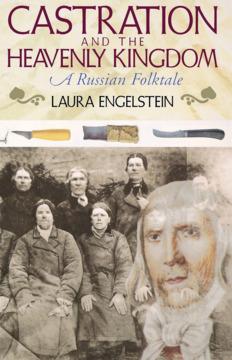
Of the many sects that broke from the official Russian Orthodox church in the eighteenth century, one was universally despised. Its members were peasants from the Russian heartland skilled in the arts of animal husbandry who turned their knives on themselves to become "eunuchs for the kingdom of heaven's sake." Convinced that salvation came only with the literal excision of the instruments of sin, they were known as Skoptsy (the self-castrated). Their community thrived well into the twentieth century, when it was destroyed in the Stalinist Terror.
In a major feat of historical reconstruction, Laura Engelstein tells the sect's astonishing tale. She describes the horrified reactions to the sect by outsiders, including outraged bureaucrats, physicians, and theologians. More important, she allows the Skoptsy a say in defining the contours of their history and the meaning behind their sacrifice. Her deft handling of their letters and notebooks lends her book unusual depth and pathos, and she provides a heartbreaking account of willing exile and of religious belief so strong that its adherents accepted terrible pain and the denial of a basic human experience. Although the Skoptsy express joy at their salvation, the words of even the most fervent believers reveal the psychological suffering of life on society's margins.
No foreign tribe or exotic import, the sect drew its members from the larger peasant society where marriage was expected and adulthood began with the wedding night. Set apart by the very act that guaranteed their redemption, these "lambs of God" became adept at concealing their sectarian identity as they interacted with their Orthodox neighbors. Interaction was necessary, Engelstein explains, since the survival of the Skoptsy depended upon recruitment of new members and on success in agriculture and trade.
Realizing that some prejudices have changed little over the centuries, Engelstein cautions that "we must not cast the shadow of our own distress on the story of the Skoptsy. Their physical suffering was something they willingly embraced." In Castration and the Heavenly Kingdom, she has produced a remarkable history that also illuminates the mysteries of the human heart.
Before Memmo my notes were scattered across PDFs. Now a workspace pulls everything into one place — I see exactly what's still left to study.
Memmo's summaries are gold before exams. I don't have to re-read 800 pages two weeks before — just the important parts.
The AI chat has saved me the night before an exam more than once. I just keep asking until I get it — no waiting on a study group to reply.
The quizzes hit exactly what I need to know. Memmo tracks what I get stuck on — so I only practice what's worth it.
Flashcards with spaced repetition are magic. Memmo knows when I'm about to forget something and brings it back.
The AI podcasts are my favorite. I listen on my way to school and get a recap without sitting at a computer.

Handbok i kvalitativa metoder
281 kr

Hållbar utveckling: en introduktion för ingenjörer och andra problemlösare
334 kr

Brymans Samhällsvetenskapliga metoder
390 kr

Projektledning
491 kr

Den orättvisa hälsan: om socioekonomiska skillnader i hälsa och livslängd
326 kr

Organizational Leadership
429 kr

Vetenskapsteori för nybörjare
196 kr

På väg mot läraryrket
172 kr

Det sociala livet i skolan: Socialpsykologiska perspektiv
253 kr

Betygsättningens didaktik
151 kr

Personality
402 kr

Studying Leadership
404 kr

Managing Innovation
477 kr

Introduktion till samhällsvetenskaplig metod
347 kr

The Psychology of Sex and Gender
698 kr

Evidens och kunskap för socialt arbete
207 kr

Introduction to Leadership
605 kr