
Before Memmo my notes were scattered across PDFs. Now a workspace pulls everything into one place — I see exactly what's still left to study.
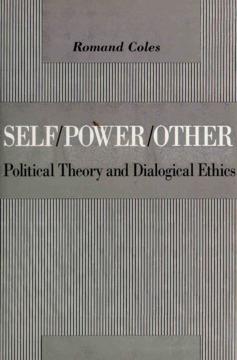
Romand Coles here explores the writings of Augustine, Foucault, and Merleau-Ponty in order to fashion an ethos that emphasizes the value of dialogical relationships between the self and others. In his view, each of these thinkers has made significant contributions that must figure in any reconsideration of the relationship between the self, ethics, and power.
Whereas Augustine saw depth as the dimension of freedom and truth, according to Coles's reading, Foucault regarded depth as "that dimension in which we rout out the other and constitute ourselves in light of hegemonic norms implanted deep within us." After drawing out those aspects of Foucault's thought which point toward a "dialogical artistic ethics," Coles explores Merleau-Ponty's philosophy of depth, arguing that it elucidates the "intercorporeality" of the world in a way that emphasizes the value of our dialogical relations with different others. In conclusion, he brings the three thinkers together to assess their rhetorical and philosophical similarities and differences, and to argue against the tendency to see all post-modern thought as nihilistic and incapable of developing an ethico-political stance.
Coles's highly original work seeks to provide an alternative to the positions that have structured most recent debate in political philosophy. Thus, his book points up difficulties in both the individualist and the communitarian readings of politics and ethics, even as it seriously explores the ethical dimensions and possibilities of post-modernist thought. His attempt to develop an ethos based on a specific conception of selves and the world enables him to cast provocative light on the continuing dialogue between rationalists and relativists about the nature of both selves and our social and political institutions.
Before Memmo my notes were scattered across PDFs. Now a workspace pulls everything into one place — I see exactly what's still left to study.
Memmo's summaries are gold before exams. I don't have to re-read 800 pages two weeks before — just the important parts.
The AI chat has saved me the night before an exam more than once. I just keep asking until I get it — no waiting on a study group to reply.
The quizzes hit exactly what I need to know. Memmo tracks what I get stuck on — so I only practice what's worth it.
Flashcards with spaced repetition are magic. Memmo knows when I'm about to forget something and brings it back.
The AI podcasts are my favorite. I listen on my way to school and get a recap without sitting at a computer.

Handbok i kvalitativa metoder
281 kr

Hållbar utveckling: en introduktion för ingenjörer och andra problemlösare
334 kr

Brymans Samhällsvetenskapliga metoder
390 kr

Projektledning
491 kr

Den orättvisa hälsan: om socioekonomiska skillnader i hälsa och livslängd
326 kr

Organizational Leadership
429 kr

Vetenskapsteori för nybörjare
196 kr

På väg mot läraryrket
172 kr

Det sociala livet i skolan: Socialpsykologiska perspektiv
253 kr

Betygsättningens didaktik
151 kr

Personality
402 kr

Studying Leadership
404 kr

Managing Innovation
477 kr

Introduktion till samhällsvetenskaplig metod
347 kr

The Psychology of Sex and Gender
698 kr

Evidens och kunskap för socialt arbete
207 kr

Introduction to Leadership
605 kr