
Before Memmo my notes were scattered across PDFs. Now a workspace pulls everything into one place — I see exactly what's still left to study.
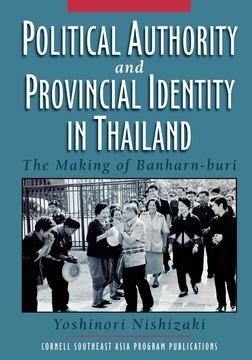
The powerful Thai politician Banharn Silpa-archa has been disparaged as a corrupt operator who for years channeled excessive state funds into developing his own rural province. This book reinterprets Banharm's career and offers a detailed portrait of the voters who support him. Relying on extensive interviews, the author shows how Banharm's constituents have developed a strong provincial identity based on their pride in his advancement of their province, Suphanburi, which many now call "Banharm-buri," the place of Banharm. Yoshinori Nishizaki's analysis challenges simplistic perceptions of rural Thai voters and raises vital questions about contemporary democracy in Thailand.
Yoshinori Nishizaki's close and thorough examination of the numerous public construction projects sponsored and even personally funded by Banharn clearly illustrates this politician's canny abilities and tireless, meticulous oversight of his domain. Banharn's constituents are aware that Suphanburi was long considered a "backward" province by other Thais—notably the Bangkok elite. Suphanburians hold the neglectful central government responsible for their province's former sorry condition and humiliating reputation. Banharn has successfully identified himself as the antithesis to the inefficient central state by promoting rapid "development" and advertising his own role in that development through well-publicized donations, public ceremonies, and visits to the sites of new buildings and highways.
Much standard literature on rural politics and society in Thailand and other democratizing countries in Southeast Asia would categorize this politician as a typical "strongman," the boss of a semiviolent patronage network that squeezes votes out of the people. That standard analysis would utterly fail to recognize and understand the grassroots realities of Suphanburi that Nishizaki has captured in his study. This compassionate, well-grounded analysis challenges simplistic perceptions of rural Thai voters and raises vital questions about contemporary democracy in Thailand.
Before Memmo my notes were scattered across PDFs. Now a workspace pulls everything into one place — I see exactly what's still left to study.
Memmo's summaries are gold before exams. I don't have to re-read 800 pages two weeks before — just the important parts.
The AI chat has saved me the night before an exam more than once. I just keep asking until I get it — no waiting on a study group to reply.
The quizzes hit exactly what I need to know. Memmo tracks what I get stuck on — so I only practice what's worth it.
Flashcards with spaced repetition are magic. Memmo knows when I'm about to forget something and brings it back.
The AI podcasts are my favorite. I listen on my way to school and get a recap without sitting at a computer.

Handbok i kvalitativa metoder
281 kr

Hållbar utveckling: en introduktion för ingenjörer och andra problemlösare
334 kr

Brymans Samhällsvetenskapliga metoder
390 kr

Projektledning
491 kr

Den orättvisa hälsan: om socioekonomiska skillnader i hälsa och livslängd
326 kr

Vetenskapsteori för nybörjare
196 kr

Organizational Leadership
429 kr

På väg mot läraryrket
172 kr

Det sociala livet i skolan: Socialpsykologiska perspektiv
253 kr

Betygsättningens didaktik
151 kr

Personality
402 kr

Studying Leadership
404 kr

Managing Innovation
477 kr

Introduktion till samhällsvetenskaplig metod
347 kr

The Psychology of Sex and Gender
698 kr

Evidens och kunskap för socialt arbete
207 kr

Introduction to Leadership
605 kr