
Before Memmo my notes were scattered across PDFs. Now a workspace pulls everything into one place — I see exactly what's still left to study.
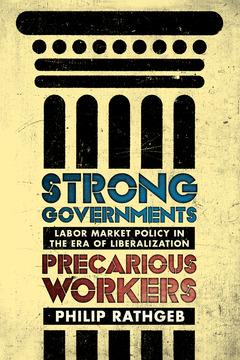
Why do some European welfare states protect unemployed and inadequately employed workers ("outsiders") from economic uncertainty better than others? Philip Rathgeb's study of labor market policy change in three somewhat-similar small states—Austria, Denmark, and Sweden—explores this fundamental question. He does so by examining the distribution of power between trade unions and political parties, attempting to bridge these two lines of research—trade unions and party politics—that, with few exceptions, have advanced without a mutual exchange.
Inclusive trade unions have high political stakes in the protection of outsiders, because they incorporate workers at risk of unemployment into their representational outlook. Yet, the impact of union preferences has declined over time, with a shift in the balance of class power from labor to capital across the Western world. National governments have accordingly prioritized flexibility for employers over the social protection of outsiders. As a result, organized labor can only protect outsiders when governments are reliant on union consent for successful consensus mobilization. When governments have a united majority of seats, on the other hand, they are strong enough to exclude unions. Strong Governments, Precarious Workers calls into question the electoral responsiveness of national governments—and thus political parties—to the social needs of an increasingly numerous group of precarious workers. In the end, Rathgeb concludes that the weaker the government, the stronger the capacity of organized labor to enhance the social protection of precarious workers.
Before Memmo my notes were scattered across PDFs. Now a workspace pulls everything into one place — I see exactly what's still left to study.
Memmo's summaries are gold before exams. I don't have to re-read 800 pages two weeks before — just the important parts.
The AI chat has saved me the night before an exam more than once. I just keep asking until I get it — no waiting on a study group to reply.
The quizzes hit exactly what I need to know. Memmo tracks what I get stuck on — so I only practice what's worth it.
Flashcards with spaced repetition are magic. Memmo knows when I'm about to forget something and brings it back.
The AI podcasts are my favorite. I listen on my way to school and get a recap without sitting at a computer.

Handbok i kvalitativa metoder
281 kr

Hållbar utveckling: en introduktion för ingenjörer och andra problemlösare
334 kr

Brymans Samhällsvetenskapliga metoder
390 kr

Projektledning
491 kr

Den orättvisa hälsan: om socioekonomiska skillnader i hälsa och livslängd
326 kr

Vetenskapsteori för nybörjare
196 kr

Organizational Leadership
429 kr

På väg mot läraryrket
172 kr

Det sociala livet i skolan: Socialpsykologiska perspektiv
253 kr

Betygsättningens didaktik
151 kr

Personality
402 kr

Studying Leadership
404 kr

Managing Innovation
477 kr

Introduktion till samhällsvetenskaplig metod
347 kr

The Psychology of Sex and Gender
698 kr

Evidens och kunskap för socialt arbete
207 kr

Introduction to Leadership
605 kr