
Before Memmo my notes were scattered across PDFs. Now a workspace pulls everything into one place — I see exactly what's still left to study.
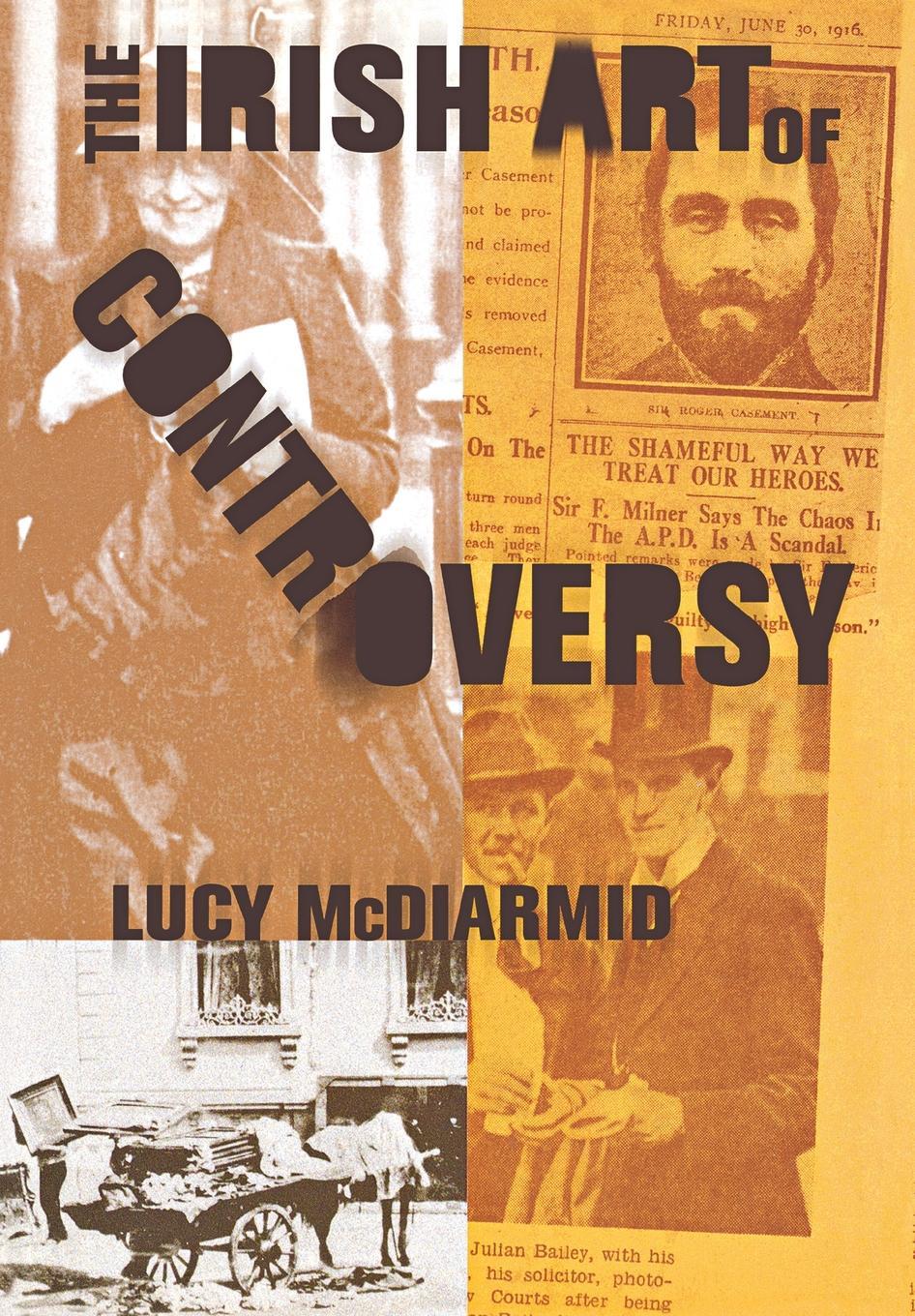
Controversies are high drama: in them people speak lines as colorful and passionate as any recited on stage. In the years before the 1916 Rising, public battles were fought in Ireland over French paintings, a maverick priest, Dublin slum children, and theatrical censorship. Controversy was "popular," wrote George Moore, especially "when accompanied with the breaking of chairs."
In her new book, Lucy McDiarmid offers a witty and illuminating account of these and other controversies, antagonistic exchanges with no single or no obvious high ground. They merit attention, in her view, not because the Irish are more combative than other peoples, but because controversies functioned centrally in the debate over Irish national identity. They offered to everyone direct or vicarious involvement in public life: the question they articulated was not "Irish Ireland or English Ireland" but "whose Irish Ireland" would dominate when independence was finally achieved.
The Irish Art of Controversy recovers the histories of "the man who died for the language," Father O'Hickey, who defied the bishops in his fight for Irish Gaelic; Lady Gregory and Bernard Shaw's defense of the Abbey Theatre against Dublin Castle; and the 1913 "Save the Dublin Kiddies" campaign, in which priests attacked socialists over custody of Catholic children. The notorious Roger Casement—British consul, Irish rebel, humanitarian, poet—forms the subject of the last chapter, which offers the definitive commentary on the long-lasting controversy over his diaries.
McDiarmid's use of archival sources, especially little-known private letters, indicates the way intimate exchanges, as well as cartoons, ballads, and editorials, may exist within a public narrative. In its original treatment of the rich material Yeats called "intemperate speech," The Irish Art of Controversy suggests new ways of thinking about modern Ireland and about controversy's bluff, bravado, and improvisational flair.
Before Memmo my notes were scattered across PDFs. Now a workspace pulls everything into one place — I see exactly what's still left to study.
Memmo's summaries are gold before exams. I don't have to re-read 800 pages two weeks before — just the important parts.
The AI chat has saved me the night before an exam more than once. I just keep asking until I get it — no waiting on a study group to reply.
The quizzes hit exactly what I need to know. Memmo tracks what I get stuck on — so I only practice what's worth it.
Flashcards with spaced repetition are magic. Memmo knows when I'm about to forget something and brings it back.
The AI podcasts are my favorite. I listen on my way to school and get a recap without sitting at a computer.

Handbok i kvalitativa metoder
281 kr

Hållbar utveckling: en introduktion för ingenjörer och andra problemlösare
334 kr

Brymans Samhällsvetenskapliga metoder
390 kr

Projektledning
491 kr

Den orättvisa hälsan: om socioekonomiska skillnader i hälsa och livslängd
326 kr

Vetenskapsteori för nybörjare
196 kr

Organizational Leadership
429 kr

På väg mot läraryrket
172 kr

Det sociala livet i skolan: Socialpsykologiska perspektiv
253 kr

Betygsättningens didaktik
151 kr

Personality
402 kr

Studying Leadership
404 kr

Managing Innovation
477 kr

Introduktion till samhällsvetenskaplig metod
347 kr

The Psychology of Sex and Gender
698 kr

Evidens och kunskap för socialt arbete
207 kr

Introduction to Leadership
605 kr