
Before Memmo my notes were scattered across PDFs. Now a workspace pulls everything into one place — I see exactly what's still left to study.
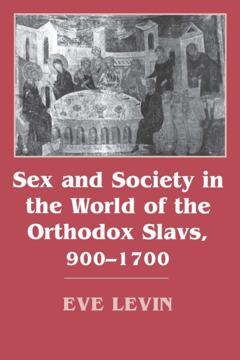
In this pioneering book, Eve Levin explores sexual behavior among the peoples of Serbia, Bulgaria, and Russia from their conversion to Christianity in the ninth and tenth centuries until the end of the seventeenth century. By ranging across all these societies, Levin is able to fulfill three basic aims: to delineate the general character of sexuality among the Orthodox Slavs, to enrich that account by drawing our attention to regional variations in the sexual mores of these peoples, and to draw suggestive comparisons between the world of the medieval Orthodox Slavs and their contemporaries in the Latin West.
Levin begins with a study of the ecclesiastical image of sexuality as expressed in didactic and literary texts, showing that the Orthodox Church was deeply suspicious of sexuality. Her second chapter, on canon law and marfiage, examines the conditions for marriage, divorce, and remarriage, the obligation of the conjugal relationship, and the impact of these rules on social order. Levin looks at church regulations concerning sexual relations among relatives by blood, marriage, spiritual kinship, and adoption in Chapter Three, and she devotes Chapter Four to prohibited sexual practices, both inside and outside of marriage. In the fifth chapter she studies Russian and South Slavic responses to rape, and demonstrates that these societies simultaneously censured violence against women and sanctioned the attitudes and social structures that justified it. Chapter Six deals with the rules on sexual conduct for the clergy, whose job it was to enforce sexual precepts. Throughout her work, Levin argues that, despite its conviction that sexual expression was diabolical, the medieval Orthodox Church approached sexual matters in a surprisingly practical way; its official sexual ethic corresponded to a great degree with popular views.
Historians of the Slavic world, both medieval and modern, will welcome this accessible study. It should also attract comparativists who work in such fields as church history, the history of women and the family, and the history of sexuality.
Before Memmo my notes were scattered across PDFs. Now a workspace pulls everything into one place — I see exactly what's still left to study.
Memmo's summaries are gold before exams. I don't have to re-read 800 pages two weeks before — just the important parts.
The AI chat has saved me the night before an exam more than once. I just keep asking until I get it — no waiting on a study group to reply.
The quizzes hit exactly what I need to know. Memmo tracks what I get stuck on — so I only practice what's worth it.
Flashcards with spaced repetition are magic. Memmo knows when I'm about to forget something and brings it back.
The AI podcasts are my favorite. I listen on my way to school and get a recap without sitting at a computer.

Handbok i kvalitativa metoder
281 kr

Hållbar utveckling: en introduktion för ingenjörer och andra problemlösare
334 kr

Brymans Samhällsvetenskapliga metoder
390 kr

Projektledning
491 kr

Den orättvisa hälsan: om socioekonomiska skillnader i hälsa och livslängd
326 kr

Vetenskapsteori för nybörjare
196 kr

Organizational Leadership
429 kr

På väg mot läraryrket
172 kr

Det sociala livet i skolan: Socialpsykologiska perspektiv
253 kr

Betygsättningens didaktik
151 kr

Personality
402 kr

Studying Leadership
404 kr

Managing Innovation
477 kr

Introduktion till samhällsvetenskaplig metod
347 kr

The Psychology of Sex and Gender
698 kr

Evidens och kunskap för socialt arbete
207 kr

Introduction to Leadership
605 kr