
Before Memmo my notes were scattered across PDFs. Now a workspace pulls everything into one place — I see exactly what's still left to study.
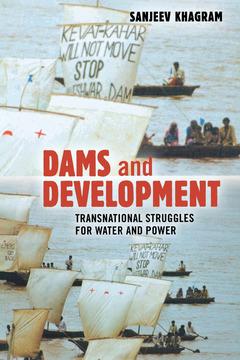
Big dams built for irrigation, power, water supply, and other purposes were among the most potent symbols of economic development for much of the twentieth century. Of late they have become a lightning rod for challenges to this vision of development as something planned by elites with scant regard for environmental and social consequences—especially for the populations that are displaced as their homelands are flooded. In this book, Sanjeev Khagram traces changes in our ideas of what constitutes appropriate development through the shifting transnational dynamics of big dam construction.
Khagram tells the story of a growing, but contentious, world society that features novel and increasingly efficacious norms of appropriate behavior in such areas as human rights and environmental protection. The transnational coalitions and networks led by nongovernmental groups that espouse such norms may seem weak in comparison with states, corporations, and such international agencies as the World Bank. Yet they became progressively more effective at altering the policies and practices of these historically more powerful actors and organizations from the 1970s on.
Khagram develops these claims in a detailed ethnographic account of the transnational struggles around the Narmada River Valley Dam Projects in central India, a huge complex of thirty large and more than three thousand small dams. He offers further substantiation through a comparative historical analysis of the political economy of big dam projects in India, Brazil, South Africa, and China as well as by examining the changing behavior of international agencies and global companies. The author concludes with a discussion of the World Commission on Dams, an innovative attempt in the late 1990s to generate new norms among conflicting stakeholders.
Before Memmo my notes were scattered across PDFs. Now a workspace pulls everything into one place — I see exactly what's still left to study.
Memmo's summaries are gold before exams. I don't have to re-read 800 pages two weeks before — just the important parts.
The AI chat has saved me the night before an exam more than once. I just keep asking until I get it — no waiting on a study group to reply.
The quizzes hit exactly what I need to know. Memmo tracks what I get stuck on — so I only practice what's worth it.
Flashcards with spaced repetition are magic. Memmo knows when I'm about to forget something and brings it back.
The AI podcasts are my favorite. I listen on my way to school and get a recap without sitting at a computer.

Handbok i kvalitativa metoder
281 kr

Hållbar utveckling: en introduktion för ingenjörer och andra problemlösare
334 kr

Brymans Samhällsvetenskapliga metoder
390 kr

Projektledning
491 kr

Den orättvisa hälsan: om socioekonomiska skillnader i hälsa och livslängd
326 kr

Organizational Leadership
429 kr

Vetenskapsteori för nybörjare
196 kr

På väg mot läraryrket
172 kr

Det sociala livet i skolan: Socialpsykologiska perspektiv
253 kr

Betygsättningens didaktik
151 kr

Personality
402 kr

Studying Leadership
404 kr

Managing Innovation
477 kr

Introduktion till samhällsvetenskaplig metod
347 kr

The Psychology of Sex and Gender
698 kr

Evidens och kunskap för socialt arbete
207 kr

Introduction to Leadership
605 kr