
Before Memmo my notes were scattered across PDFs. Now a workspace pulls everything into one place — I see exactly what's still left to study.
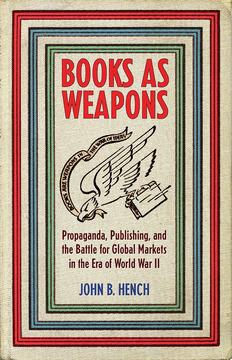
Only weeks after the D-Day invasion of June 6, 1944, a surprising cargo—crates of books—joined the flood of troop reinforcements, weapons and ammunition, food, and medicine onto Normandy beaches. The books were destined for French bookshops, to be followed by millions more American books (in translation but also in English) ultimately distributed throughout Europe and the rest of the world. The British were doing similar work, which was uneasily coordinated with that of the Americans within the Psychological Warfare Division of General Eisenhower's Supreme Headquarters, Allied Expeditionary Force, under General Eisenhower's command.
Books As Weapons tells the little-known story of the vital partnership between American book publishers and the U.S. government to put carefully selected recent books highlighting American history and values into the hands of civilians liberated from Axis forces. The government desired to use books to help "disintoxicate" the minds of these people from the Nazi and Japanese propaganda and censorship machines and to win their friendship. This objective dovetailed perfectly with U.S. publishers' ambitions to find new profits in international markets, which had been dominated by Britain, France, and Germany before their book trades were devastated by the war. Key figures on both the trade and government sides of the program considered books "the most enduring propaganda of all" and thus effective "weapons in the war of ideas," both during the war and afterward, when the Soviet Union flexed its military might and demonstrated its propaganda savvy. Seldom have books been charged with greater responsibility or imbued with more significance.
John B. Hench leavens this fully international account of the programs with fascinating vignettes set in the war rooms of Washington and London, publishers' offices throughout the world, and the jeeps in which information officers drove over bomb-rutted roads to bring the books to people who were hungering for them. Books as Weapons provides context for continuing debates about the relationship between government and private enterprise and the image of the United States abroad.
To see an interview with John Hench conducted by C-SPAN at the 2010 annual conference of the Organization of American Historians, visit: http://www.c-spanvideo.org/program/id/222522.
Before Memmo my notes were scattered across PDFs. Now a workspace pulls everything into one place — I see exactly what's still left to study.
Memmo's summaries are gold before exams. I don't have to re-read 800 pages two weeks before — just the important parts.
The AI chat has saved me the night before an exam more than once. I just keep asking until I get it — no waiting on a study group to reply.
The quizzes hit exactly what I need to know. Memmo tracks what I get stuck on — so I only practice what's worth it.
Flashcards with spaced repetition are magic. Memmo knows when I'm about to forget something and brings it back.
The AI podcasts are my favorite. I listen on my way to school and get a recap without sitting at a computer.

Handbok i kvalitativa metoder
281 kr

Hållbar utveckling: en introduktion för ingenjörer och andra problemlösare
334 kr

Brymans Samhällsvetenskapliga metoder
390 kr

Projektledning
491 kr

Den orättvisa hälsan: om socioekonomiska skillnader i hälsa och livslängd
326 kr

Vetenskapsteori för nybörjare
196 kr

Organizational Leadership
429 kr

På väg mot läraryrket
172 kr

Det sociala livet i skolan: Socialpsykologiska perspektiv
253 kr

Betygsättningens didaktik
151 kr

Personality
402 kr

Studying Leadership
404 kr

Managing Innovation
477 kr

Introduktion till samhällsvetenskaplig metod
347 kr

The Psychology of Sex and Gender
698 kr

Evidens och kunskap för socialt arbete
207 kr

Introduction to Leadership
605 kr