
Before Memmo my notes were scattered across PDFs. Now a workspace pulls everything into one place — I see exactly what's still left to study.
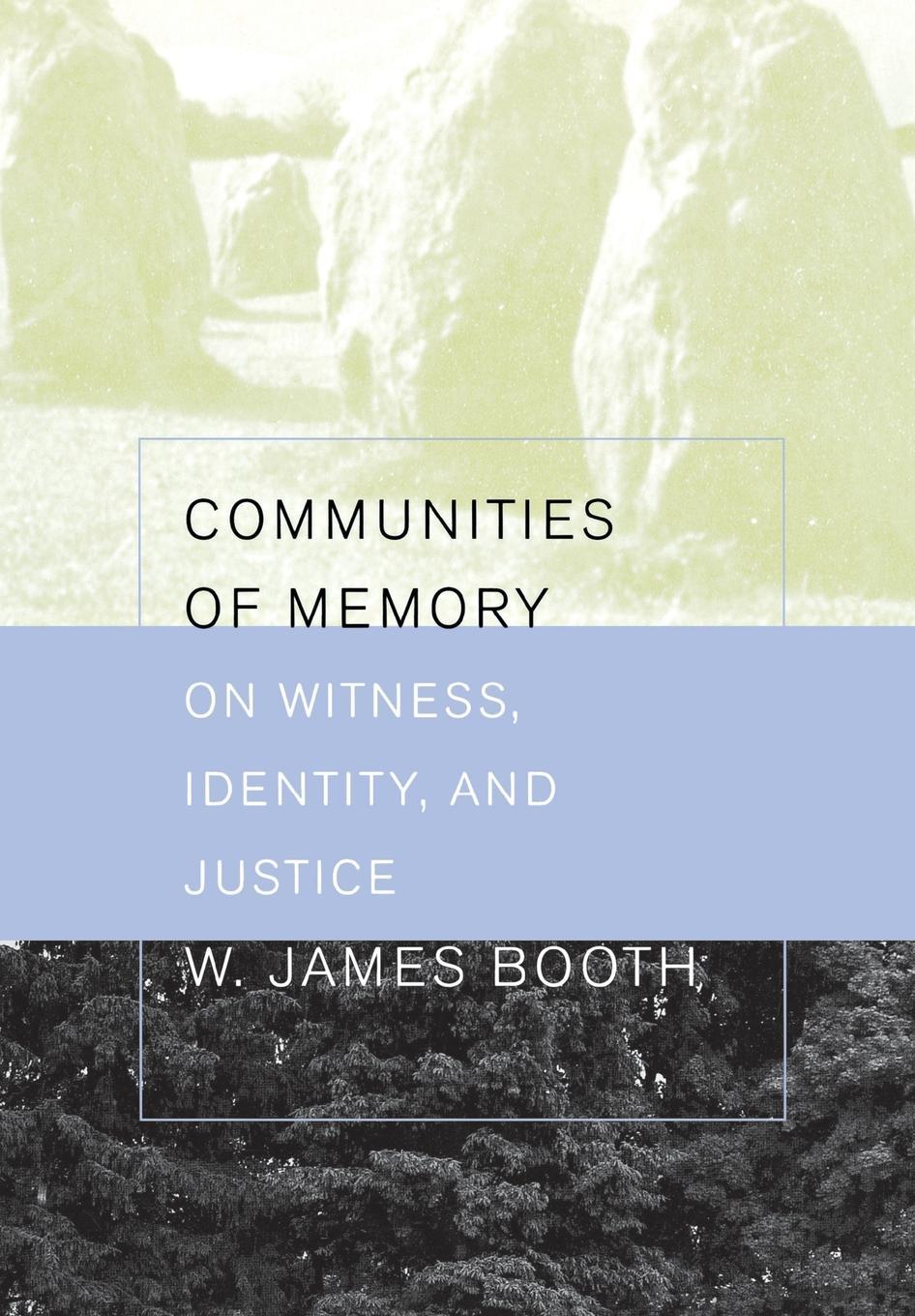
"Memory has fueled merciless, violent strife, and it has been at the core of reconciliation and reconstruction. It has been used to justify great crimes, and yet it is central to the pursuit of justice. In these and more everyday ways, we live surrounded by memory, individual and social: in our habits, our names, the places where we live, street names, libraries, archives, and our citizenship, institutions, and laws. Still, we wonder what to make of memory and its gifts, though sometimes we are hardly even certain that they are gifts. Of the many chambers in this vast palace, I mean to ask particularly after the place of memory in politics, in the identity of political communities, and in their practices of doing justice."—from the Preface
W. James Booth seeks to understand the place of memory in the identity, ethics, and practices of justice of political communities. Identity is, he believes, a particular kind of continuity across time, one central to the possibility of agency and responsibility, and memory plays a central role in grounding that continuity. Memory-identity takes two forms: a habitlike form, the deep presence of the past that is part of a life-led-in-common; and a more fragile, vulnerable form in which memory struggles to preserve identity through time—notably in bearing witness—a form of memory work deeply bound up with the identity of political communities.
Booth argues that memory holds a defining place in determining how justice is administered. Memory is tied to the very possibility of an ethical community, one responsible for its own past, able to make commitments for the future, and driven to seek justice. "Underneath (and motivating) the politics of memory, understood as contests over the writing of history, over memorials, museums, and canons," he writes, "there lies an intertwining of memory, identity, and justice." Communities of Memory both argues for and maps out that intertwining.
Before Memmo my notes were scattered across PDFs. Now a workspace pulls everything into one place — I see exactly what's still left to study.
Memmo's summaries are gold before exams. I don't have to re-read 800 pages two weeks before — just the important parts.
The AI chat has saved me the night before an exam more than once. I just keep asking until I get it — no waiting on a study group to reply.
The quizzes hit exactly what I need to know. Memmo tracks what I get stuck on — so I only practice what's worth it.
Flashcards with spaced repetition are magic. Memmo knows when I'm about to forget something and brings it back.
The AI podcasts are my favorite. I listen on my way to school and get a recap without sitting at a computer.

Handbok i kvalitativa metoder
281 kr

Hållbar utveckling: en introduktion för ingenjörer och andra problemlösare
334 kr

Brymans Samhällsvetenskapliga metoder
390 kr

Projektledning
491 kr

Den orättvisa hälsan: om socioekonomiska skillnader i hälsa och livslängd
326 kr

Organizational Leadership
429 kr

Vetenskapsteori för nybörjare
196 kr

På väg mot läraryrket
172 kr

Det sociala livet i skolan: Socialpsykologiska perspektiv
253 kr

Betygsättningens didaktik
151 kr

Personality
402 kr

Studying Leadership
404 kr

Managing Innovation
477 kr

Introduktion till samhällsvetenskaplig metod
347 kr

The Psychology of Sex and Gender
698 kr

Evidens och kunskap för socialt arbete
207 kr

Introduction to Leadership
605 kr