
Before Memmo my notes were scattered across PDFs. Now a workspace pulls everything into one place — I see exactly what's still left to study.
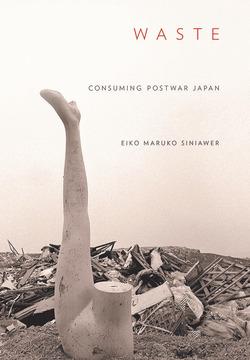
In Waste, Eiko Maruko Siniawer innovatively explores the many ways in which the Japanese have thought about waste—in terms of time, stuff, money, possessions, and resources—from the immediate aftermath of World War II to the present. She shows how questions about waste were deeply embedded in the decisions of everyday life, reflecting the priorities and aspirations of the historical moment, and revealing people's ever-changing concerns and hopes.
Over the course of the long postwar, Japanese society understood waste variously as backward and retrogressive, an impediment to progress, a pervasive outgrowth of mass consumption, incontrovertible proof of societal excess, the embodiment of resources squandered, and a hazard to the environment. Siniawer also shows how an encouragement of waste consciousness served as a civilizing and modernizing imperative, a moral good, an instrument for advancement, a path to self-satisfaction, an environmental commitment, an expression of identity, and more. From the late 1950s onward, a defining element of Japan's postwar experience emerged: the tension between the desire for the privileges of middle-class lifestyles made possible by affluence and dissatisfaction with the logics, costs, and consequences of that very prosperity. This tension complicated the persistent search for what might be called well-being, a good life, or a life well lived. Waste is an elegant history of how people lived—how they made sense of, gave meaning to, and found value in the acts of the everyday.
Before Memmo my notes were scattered across PDFs. Now a workspace pulls everything into one place — I see exactly what's still left to study.
Memmo's summaries are gold before exams. I don't have to re-read 800 pages two weeks before — just the important parts.
The AI chat has saved me the night before an exam more than once. I just keep asking until I get it — no waiting on a study group to reply.
The quizzes hit exactly what I need to know. Memmo tracks what I get stuck on — so I only practice what's worth it.
Flashcards with spaced repetition are magic. Memmo knows when I'm about to forget something and brings it back.
The AI podcasts are my favorite. I listen on my way to school and get a recap without sitting at a computer.

Handbok i kvalitativa metoder
281 kr

Hållbar utveckling: en introduktion för ingenjörer och andra problemlösare
334 kr

Brymans Samhällsvetenskapliga metoder
390 kr

Projektledning
491 kr

Den orättvisa hälsan: om socioekonomiska skillnader i hälsa och livslängd
326 kr

Vetenskapsteori för nybörjare
196 kr

Organizational Leadership
429 kr

På väg mot läraryrket
172 kr

Det sociala livet i skolan: Socialpsykologiska perspektiv
253 kr

Betygsättningens didaktik
151 kr

Personality
402 kr

Studying Leadership
404 kr

Managing Innovation
477 kr

Introduktion till samhällsvetenskaplig metod
347 kr

The Psychology of Sex and Gender
698 kr

Evidens och kunskap för socialt arbete
207 kr

Introduction to Leadership
605 kr