
Before Memmo my notes were scattered across PDFs. Now a workspace pulls everything into one place — I see exactly what's still left to study.
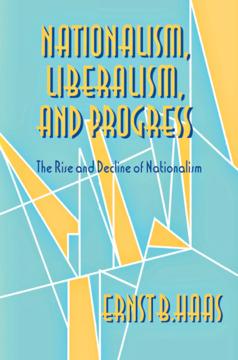
Has global liberalism made the nation-state obsolete? Or, on the contrary, are primordial nationalist hatreds overwhelming cosmopolitanism? To assert either theme without serious qualification, according to Ernst B. Haas, is historically simplistic and morally misleading.
Haas describes nationalism as a key component of modernity and a crucial instrument for making sense of impersonal, rapidly changing, and heterogeneous societies. He characterizes nationalism as a feeling of collective identity, a mutual understanding experienced among people who may never meet but who are persuaded that they belong to a community of kindred spirits. Without nationalism, there could be no large integrated state.
Nationalism comes in many varieties, some revolutionary in rejecting the past and some syncretist in seeking to retain religious traditions. Haas asks whether liberal nationalism is particularly successful as a rationalizing agent, noting that liberalism is usually associated with collective learning and that liberal-secular nationalism delivers substantial material benefits to mass populations. He also asks whether liberal nationalism can lead to its own transcendence. He explores nationalism in five societies that had achieved the status of nation-states by about 1880: the United States, Britain, France, Germany, and Japan.
Several of these nation-states became exemplars for later nationalists. A second, forthcoming volume will consider ten societies that modernized more recently, many of them aroused to nationalism by the imperialism of these "old" nation-states.
Before Memmo my notes were scattered across PDFs. Now a workspace pulls everything into one place — I see exactly what's still left to study.
Memmo's summaries are gold before exams. I don't have to re-read 800 pages two weeks before — just the important parts.
The AI chat has saved me the night before an exam more than once. I just keep asking until I get it — no waiting on a study group to reply.
The quizzes hit exactly what I need to know. Memmo tracks what I get stuck on — so I only practice what's worth it.
Flashcards with spaced repetition are magic. Memmo knows when I'm about to forget something and brings it back.
The AI podcasts are my favorite. I listen on my way to school and get a recap without sitting at a computer.

Handbok i kvalitativa metoder
281 kr

Hållbar utveckling: en introduktion för ingenjörer och andra problemlösare
334 kr

Brymans Samhällsvetenskapliga metoder
390 kr

Projektledning
491 kr

Den orättvisa hälsan: om socioekonomiska skillnader i hälsa och livslängd
326 kr

Vetenskapsteori för nybörjare
196 kr

Organizational Leadership
429 kr

På väg mot läraryrket
172 kr

Det sociala livet i skolan: Socialpsykologiska perspektiv
253 kr

Betygsättningens didaktik
151 kr

Personality
402 kr

Studying Leadership
404 kr

Managing Innovation
477 kr

Introduktion till samhällsvetenskaplig metod
347 kr

The Psychology of Sex and Gender
698 kr

Evidens och kunskap för socialt arbete
207 kr

Introduction to Leadership
605 kr