
Before Memmo my notes were scattered across PDFs. Now a workspace pulls everything into one place — I see exactly what's still left to study.
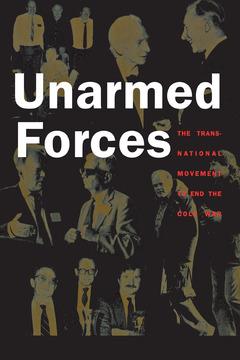
Throughout the Cold War, people worldwide feared that the U.S. and Soviet governments could not prevent a nuclear showdown. Citizens from both East-bloc and Western countries, among them prominent scientists and physicians, formed networks to promote ideas and policies that would lessen this danger. Two of their organizations—the Pugwash movement and the International Physicians for the Prevention of Nuclear War—won Nobel Peace Prizes. Still, many observers believe that their influence was negligible and that the Reagan administration deserves sole credit for ending the Cold War. The first book to explore the impact these activists had on the Soviet side of the Iron Curtain, Unarmed Forces demonstrates the importance of their efforts on behalf of arms control and disarmament.
Matthew Evangelista examines the work of transnational peace movements throughout the Khrushchev, Brezhnev, and Gorbachev eras and into the first years of Boris Yeltsin's leadership. Drawing on extensive research in Russian archives and on interviews with Russian and Western activists and policymakers, he investigates the sources of Soviet policy on nuclear testing, strategic defense, and conventional forces. Evangelista concludes that transnational actors at times played a crucial role in influencing Soviet policy—specifically in encouraging moderate as opposed to hard-line responses—for they supplied both information and ideas to that closed society.
Evangelista's findings challenge widely accepted views about the peaceful resolution of the Cold War. By revealing the connection between a state's domestic structure and its susceptibility to the influence of transnational groups, Unarmed Forces will also stimulate thinking about the broader issue of how government policy is shaped.
Before Memmo my notes were scattered across PDFs. Now a workspace pulls everything into one place — I see exactly what's still left to study.
Memmo's summaries are gold before exams. I don't have to re-read 800 pages two weeks before — just the important parts.
The AI chat has saved me the night before an exam more than once. I just keep asking until I get it — no waiting on a study group to reply.
The quizzes hit exactly what I need to know. Memmo tracks what I get stuck on — so I only practice what's worth it.
Flashcards with spaced repetition are magic. Memmo knows when I'm about to forget something and brings it back.
The AI podcasts are my favorite. I listen on my way to school and get a recap without sitting at a computer.

Handbok i kvalitativa metoder
281 kr

Hållbar utveckling: en introduktion för ingenjörer och andra problemlösare
334 kr

Brymans Samhällsvetenskapliga metoder
390 kr

Projektledning
491 kr

Den orättvisa hälsan: om socioekonomiska skillnader i hälsa och livslängd
326 kr

Vetenskapsteori för nybörjare
196 kr

Organizational Leadership
429 kr

På väg mot läraryrket
172 kr

Det sociala livet i skolan: Socialpsykologiska perspektiv
253 kr

Betygsättningens didaktik
151 kr

Personality
402 kr

Studying Leadership
404 kr

Managing Innovation
477 kr

Introduktion till samhällsvetenskaplig metod
347 kr

The Psychology of Sex and Gender
698 kr

Evidens och kunskap för socialt arbete
207 kr

Introduction to Leadership
605 kr