
Before Memmo my notes were scattered across PDFs. Now a workspace pulls everything into one place — I see exactly what's still left to study.
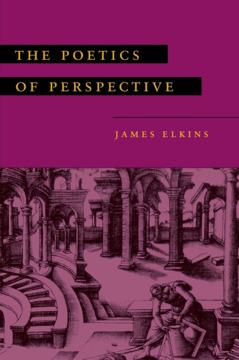
Perspective has been a divided subject, orphaned among various disciplines from philosophy to gardening. In the first book to bring together recent thinking on perspective from such fields as art history, literary theory, aesthetics, psychology, and the history of mathematics, James Elkins leads us to a new understanding of how we talk about pictures. Elkins provides an abundantly illustrated history of the theory and practice of perspective. Looking at key texts from the Renaissance to the present, he traces a fundamental historical change that took place in the way in which perspective was conceptualized; first a technique for constructing pictures, it slowly became a metaphor for subjectivity. That gradual transformation, he observes, has led to the rifts that today separate those who understand perspective as a historical or formal property of pictures from those who see it as a linguistic, cognitive, or epistemological metaphor. Elkins considers how the principal concepts of perspective have been rewritten in work by Erwin Panofsky, Hubert Damisch, Martin Jay, Paul Ricoeur, Jacques Lacan, Maurice Merleau-Ponty, and E. H. Gombrich. The Poetics of Perspective illustrates that perspective is an unusual kind of subject: it exists as a coherent idea, but no one discipline offers an adequate exposition of it. Rather than presenting perspective as a resonant metaphor for subjectivity, a painter's tool without meaning, a disused historical practice, or a model for vision and representation, Elkins proposes a comprehensive revaluation. The perspective he describes is at once a series of specific pictorial decisions and a powerful figure for our knowledge of the world.
Before Memmo my notes were scattered across PDFs. Now a workspace pulls everything into one place — I see exactly what's still left to study.
Memmo's summaries are gold before exams. I don't have to re-read 800 pages two weeks before — just the important parts.
The AI chat has saved me the night before an exam more than once. I just keep asking until I get it — no waiting on a study group to reply.
The quizzes hit exactly what I need to know. Memmo tracks what I get stuck on — so I only practice what's worth it.
Flashcards with spaced repetition are magic. Memmo knows when I'm about to forget something and brings it back.
The AI podcasts are my favorite. I listen on my way to school and get a recap without sitting at a computer.

Handbok i kvalitativa metoder
281 kr

Hållbar utveckling: en introduktion för ingenjörer och andra problemlösare
334 kr

Brymans Samhällsvetenskapliga metoder
390 kr

Projektledning
491 kr

Den orättvisa hälsan: om socioekonomiska skillnader i hälsa och livslängd
326 kr

Organizational Leadership
429 kr

Vetenskapsteori för nybörjare
196 kr

På väg mot läraryrket
172 kr

Det sociala livet i skolan: Socialpsykologiska perspektiv
253 kr

Betygsättningens didaktik
151 kr

Personality
402 kr

Studying Leadership
404 kr

Managing Innovation
477 kr

Introduktion till samhällsvetenskaplig metod
347 kr

The Psychology of Sex and Gender
698 kr

Evidens och kunskap för socialt arbete
207 kr

Introduction to Leadership
605 kr