
Before Memmo my notes were scattered across PDFs. Now a workspace pulls everything into one place — I see exactly what's still left to study.
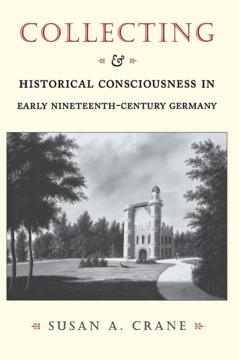
This provocative book challenges long-held assumptions about the nature of historical consciousness in Germany. Susan A. Crane argues that the ever-more-elaborate preservation of the historical may actually reduce the likelihood that history can be experienced with the freshness and individuality characteristic of the early collectors and preservationists. Her book is both a study of the emergence in late eighteenth- and early nineteenth-century Germany of a distinctively modern conception of historical consciousness, and a meditation on what was lost as historical thought became institutionalized and professionalized.
Public forms of remembering the past which are familiar today, such as historical museums and historical preservation, have surprisingly recent origins. In Germany, caring about the past took on these distinctively new forms after the Napoleonic wars. The Brothers Grimm gathered fairy tales and documented the origins of the German language. Historical preservationists collected documents and artifacts and organized the conservation of cathedrals and other historic buildings. Collectors formed historical societies and created Germany's historical museums. No single national consciousness emerged; instead, many groups used similar means to make different claims about what it meant to have a German past.
Although individuals were responsible for stimulating new interest in the past, they chose to band together in voluntary associations to promote collective awareness of German history. In doing so, however, they clashed with academic and political interests and lost control over the very artifacts, collections, and buildings they had saved from ruin. Examining the letters and publications of the amateur collectors, Crane shows how historical consciousness came to be represented in collective terms—whether regional or national—and in effect robbed everyone of the capacity to experience history individually and spontaneously.
Before Memmo my notes were scattered across PDFs. Now a workspace pulls everything into one place — I see exactly what's still left to study.
Memmo's summaries are gold before exams. I don't have to re-read 800 pages two weeks before — just the important parts.
The AI chat has saved me the night before an exam more than once. I just keep asking until I get it — no waiting on a study group to reply.
The quizzes hit exactly what I need to know. Memmo tracks what I get stuck on — so I only practice what's worth it.
Flashcards with spaced repetition are magic. Memmo knows when I'm about to forget something and brings it back.
The AI podcasts are my favorite. I listen on my way to school and get a recap without sitting at a computer.

Handbok i kvalitativa metoder
281 kr

Hållbar utveckling: en introduktion för ingenjörer och andra problemlösare
334 kr

Brymans Samhällsvetenskapliga metoder
390 kr

Projektledning
491 kr

Den orättvisa hälsan: om socioekonomiska skillnader i hälsa och livslängd
326 kr

Vetenskapsteori för nybörjare
196 kr

Organizational Leadership
429 kr

På väg mot läraryrket
172 kr

Det sociala livet i skolan: Socialpsykologiska perspektiv
253 kr

Betygsättningens didaktik
151 kr

Personality
402 kr

Studying Leadership
404 kr

Managing Innovation
477 kr

Introduktion till samhällsvetenskaplig metod
347 kr

The Psychology of Sex and Gender
698 kr

Evidens och kunskap för socialt arbete
207 kr

Introduction to Leadership
605 kr