
Before Memmo my notes were scattered across PDFs. Now a workspace pulls everything into one place — I see exactly what's still left to study.
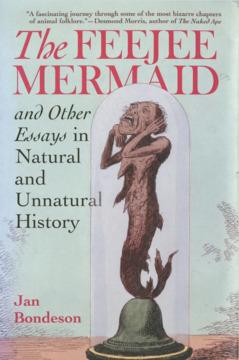
In his new collection of essays, Jan Bondeson tells ten fascinating stories of myths and hoaxes, beliefs and Ripley-like facts, concerning the animal kingdom. Throughout he recounts—and in some instances solves—mysteries of the natural world which have puzzled scientists for centuries.
Heavily illustrated with photographs and drawings, the book presents astounding tales from across the rich folklore of animals: a learned pig more admired than Sir Isaac Newton by the English public, an elephant that Lord Byron wanted to employ as his butler, a dancing horse whose skills in mathematics were praised by William Shakespeare, and, of course, the extraordinary creature known as the Feejee Mermaid. This object became the foremost curiosity of London in the 1820s and later in the century toured the United States under the management of P. T. Barnum. Bearing a striking resemblance to a wizened and misshapen monkey with a fishtail, the mermaid was nonetheless proclaimed a genuine specimen by 'experts.'
Bondeson explores other zoological wonders: toads living for centuries encased in solid stone, little fishes raining down from the sky, and barnacle geese growing from trees until ready to fly. In two of his most fascinating chapters, he uncovers the origins of the basilisk, considered one of the most inexplicable mythical monsters, and of the Vegetable Lamb of Tartary. With the head and body of a rooster and the tail of a snake, the basilisk was said to be able to kill a person with its gaze. Bondeson demonstrates that belief in this fabulous creature resulted from misinterpretations of rare events in natural history. The vegetable lamb, a mainstay of museums in the seventeenth century, was allegedly half plant, half animal: it had the shape of a little lamb, but grew from a stem. After examining two vegetable lambs still in London today, Bondeson offers a new theory to explain this old fallacy.
Before Memmo my notes were scattered across PDFs. Now a workspace pulls everything into one place — I see exactly what's still left to study.
Memmo's summaries are gold before exams. I don't have to re-read 800 pages two weeks before — just the important parts.
The AI chat has saved me the night before an exam more than once. I just keep asking until I get it — no waiting on a study group to reply.
The quizzes hit exactly what I need to know. Memmo tracks what I get stuck on — so I only practice what's worth it.
Flashcards with spaced repetition are magic. Memmo knows when I'm about to forget something and brings it back.
The AI podcasts are my favorite. I listen on my way to school and get a recap without sitting at a computer.

Handbok i kvalitativa metoder
281 kr

Hållbar utveckling: en introduktion för ingenjörer och andra problemlösare
334 kr

Brymans Samhällsvetenskapliga metoder
390 kr

Projektledning
491 kr

Den orättvisa hälsan: om socioekonomiska skillnader i hälsa och livslängd
326 kr

Vetenskapsteori för nybörjare
196 kr

Organizational Leadership
429 kr

På väg mot läraryrket
172 kr

Det sociala livet i skolan: Socialpsykologiska perspektiv
253 kr

Betygsättningens didaktik
151 kr

Personality
402 kr

Studying Leadership
404 kr

Managing Innovation
477 kr

Introduktion till samhällsvetenskaplig metod
347 kr

The Psychology of Sex and Gender
698 kr

Evidens och kunskap för socialt arbete
207 kr

Introduction to Leadership
605 kr