
Before Memmo my notes were scattered across PDFs. Now a workspace pulls everything into one place — I see exactly what's still left to study.
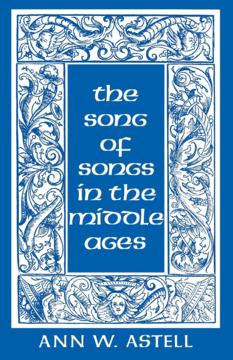
Included among the sacred books of Judaism and Christianity alike, the Song of Songs does not mention God at all; on the surface it is a lyrical exchange between unnamed lovers who articulate the range of emotions associated with sexual love. Ann W. Astell here examines medieval reader response, both interpretive and imitative, to the Song. Disputing the common view that the literal meaning of Canticles had no value for medieval readers, Astell points to twelfth-century commentaries on the Song, as well as an array of Middle English works, as evidence that the Song's sensuous imagery played an essential part in its tropological appeal.
Emphasizing the ways in which a complex fusion of the Song's carnal and spiritual meanings appealed rhetorically to a variety of audiences, Astell first considers interpretive responses to Canticles, contrasting Origen's dialectical exposition with the affective commentaries of the twelfth century—ecclesiastical, Marian, and mystical. According to Astell, these commentaries present Canticles as a marriage song that mirrors a series of analogous marriages, both within the individual and between human and divine persons. Astell describes interpretations of the Song of Songs in terms of the various feminine archetypes that the expositors emphasize—the Virgin, Mother, Hetaira, or Medium. She maintains that the commentat5ors encourage the auditor's identification with the figure of the Bride so as to evoke and direct the feminine, affective powers of the soul. Turning to literature influenced by the Song, she then discusses how the reading process is reinscribed in selected works in Middle English, including Richard Rolle's autobiographical writings, Pearl, religious love lyrics, and cycle dramas.
The Song of Songs in the Middle Ages provides an innovative model of reader response that opens the way for a deeper understanding of the literary influence of biblical texts.
Before Memmo my notes were scattered across PDFs. Now a workspace pulls everything into one place — I see exactly what's still left to study.
Memmo's summaries are gold before exams. I don't have to re-read 800 pages two weeks before — just the important parts.
The AI chat has saved me the night before an exam more than once. I just keep asking until I get it — no waiting on a study group to reply.
The quizzes hit exactly what I need to know. Memmo tracks what I get stuck on — so I only practice what's worth it.
Flashcards with spaced repetition are magic. Memmo knows when I'm about to forget something and brings it back.
The AI podcasts are my favorite. I listen on my way to school and get a recap without sitting at a computer.

Handbok i kvalitativa metoder
281 kr

Hållbar utveckling: en introduktion för ingenjörer och andra problemlösare
334 kr

Brymans Samhällsvetenskapliga metoder
390 kr

Projektledning
491 kr

Den orättvisa hälsan: om socioekonomiska skillnader i hälsa och livslängd
326 kr

Vetenskapsteori för nybörjare
196 kr

Organizational Leadership
429 kr

På väg mot läraryrket
172 kr

Det sociala livet i skolan: Socialpsykologiska perspektiv
253 kr

Betygsättningens didaktik
151 kr

Personality
402 kr

Studying Leadership
404 kr

Managing Innovation
477 kr

Introduktion till samhällsvetenskaplig metod
347 kr

The Psychology of Sex and Gender
698 kr

Evidens och kunskap för socialt arbete
207 kr

Introduction to Leadership
605 kr